.png)


.png)




.png)

.png)


.png)
Electrical System Setup for Restaurant Kitchens
link desc
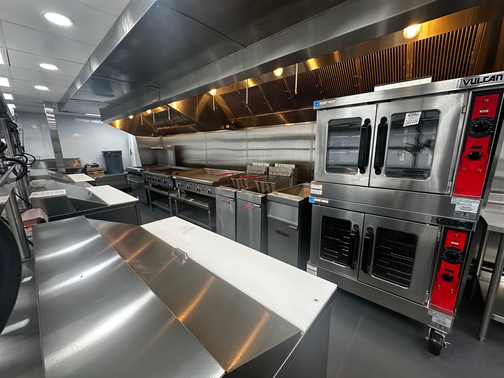


Power load planning for commercial kitchens is the process of calculating the total electrical demand of all equipment in the kitchen, determining the correct service size, and distributing that load across dedicated circuits that meet the National Electrical Code (NEC) and local inspection requirements. This article covers how NEC Article 220 governs commercial kitchen load calculations, what demand factors apply, which appliances need dedicated circuits, GFCI requirements, wiring type rules, and how your physical kitchen layout affects your electrical plan.
The electrical load of a commercial kitchen is the total amount of electrical power all equipment in the kitchen draws simultaneously, measured in kilowatts (kW) or kilovolt-amperes (kVA). This load includes cooking equipment, refrigeration, dishwashers, water heaters, and lighting. It does not include HVAC or ventilation systems, which are calculated separately under NEC Article 440.
According to the U.S. Department of Energy's Commercial Buildings Energy Consumption Survey (CBECS), the average restaurant in the United States uses approximately 43.5 kWh per square foot per year. Fast food restaurants, with dense, high-powered kitchens, average 62.8 kWh per square foot annually. The U.S. Energy Information Administration reports that restaurants use approximately 2.5 times more energy per square foot than most other types of commercial buildings. In some high-volume quick-service operations, that figure reaches up to 10 times the energy intensity of a typical commercial building.
Understanding the full electrical load of your kitchen before construction or renovation is the foundation of everything else. If you underestimate the load, your electrical panel is too small and circuits trip under normal service conditions. If you overestimate without applying proper demand factors, you pay to install a panel far larger than you need. Either mistake is expensive. A well-planned commercial kitchen build-out starts with the power plan, not the equipment placement.
The electrical circuit requirements for commercial kitchens are governed primarily by NEC Article 220, which covers branch circuit, feeder, and service load calculations. Under NEC Article 210, every major fixed appliance must be on a dedicated individual circuit sized to at least the appliance's nameplate rating. Circuits serving continuous loads, meaning loads that run for three hours or more at a stretch, must be sized at 125% of the load's rated amperage.
This 125% rule matters in commercial kitchens because most cooking equipment operates continuously during a service period. A commercial convection oven rated at 40 amps is treated as a 50-amp load for circuit sizing purposes. A commercial range rated at 50 amps is treated as a 62.5-amp load, which rounds up to a 70-amp circuit.
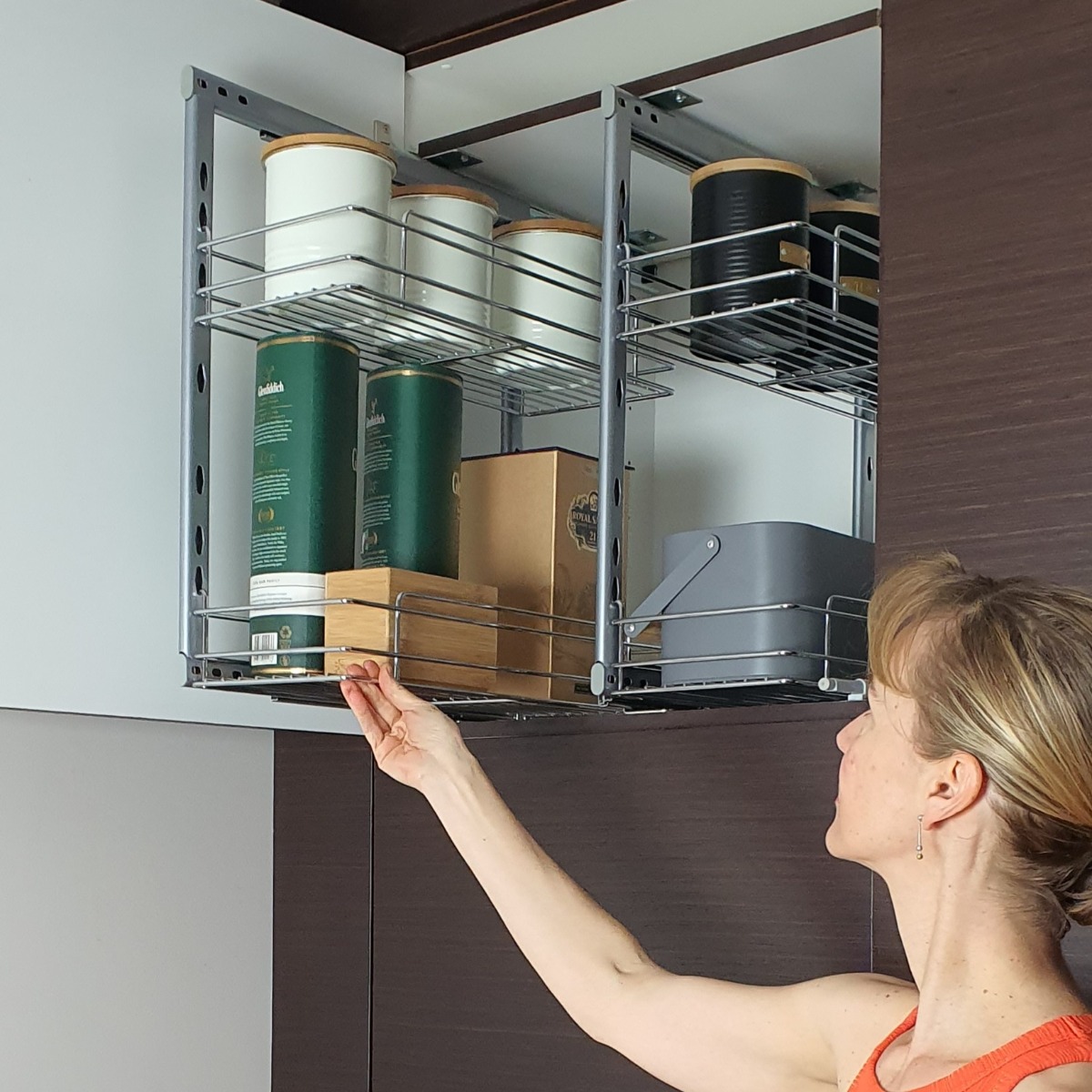
For small appliance circuits serving countertop receptacles in the prep and service areas, NEC Article 210 requires a minimum of two 20-amp circuits. In a commercial kitchen, the number of small appliance circuits typically exceeds this minimum because of the density of blenders, mixers, slicers, and other countertop tools used during prep. Plan for at least one 20-amp circuit for every 6 to 8 feet of prep counter to give your team flexibility during busy shifts. The way you organize storage space in your kitchen affects which countertop zones your team actually uses, which in turn affects where those circuits need to land.
Yes, a kitchen needs a minimum of two 20-amp circuits for countertop receptacle outlets, per NEC Article 210. These circuits cannot serve outlets in other rooms or lighting loads. They exist entirely to handle the portable appliances on the countertop, which typically draw between 12 and 15 amps continuously. In a commercial kitchen, these minimums are a floor, not a ceiling. Most commercial kitchens require significantly more 20-amp circuits than the residential code minimums because of the volume and variety of countertop equipment in use at once.
The NEC code for commercial kitchen equipment is found in NEC Section 220.56, which governs load calculations for commercial electric cooking equipment, dishwasher booster heaters, water heaters, and other fastened-in-place kitchen equipment rated at 1/4 horsepower or greater, or 500 watts or greater.
NEC 220.56 is built on a key principle: not all kitchen equipment runs at full load at the same time. Ovens cycle on and off to maintain temperature. Fryers reach target heat and coast. Some appliances are used only during prep hours, not during service. Because of this noncoincident use, NEC Table 220.56 allows you to apply a demand factor to the total connected kitchen equipment load rather than adding every appliance at 100% and sizing your service for the worst possible moment.
NEC Table 220.56 provides the following demand factors based on the number of equipment units in the kitchen:
Number of Equipment UnitsDemand Factor (%)1 unit100%2 units100%3 units90%4 units80%5 units70%6 or more units65%
Source: NEC Table 220.56, NFPA 70: National Electrical Code, as cited in ExpertCE Commercial Kitchen Load Calculation Guide, Electrical-Knowhow.com, and EC&M Magazine.
For a kitchen with six or more pieces of qualifying equipment, the total connected load is multiplied by 65% to arrive at the preliminary demand load. There is one critical check: the final feeder or service calculated load can never be less than the sum of the two largest individual kitchen equipment loads. If the demand-factored result is lower than those two loads added together, you must use the higher number. As the EC&M Magazine guide to commercial electrical load calculations explains, this safeguard prevents dangerously undersized panels even in large kitchens where the demand factor drops significantly.
To calculate the electrical load for a commercial kitchen, follow this five-step process, which aligns with NEC Article 220 requirements.
According to ExpertCE's commercial kitchen load calculation guide, a small kitchen with six pieces of equipment totaling 57 kW applies a 65% demand factor to arrive at a preliminary demand load of 37.05 kW. If the two largest equipment pieces total 28 kW, the 37.05 kW result is used. This is the load your licensed electrician uses to size the service entrance, feeders, and panel.
The occupancy load for a commercial kitchen refers to both the electrical service size needed to power the space and the rated personnel capacity under building and fire codes. From an electrical standpoint, most small-to-medium commercial kitchens in restaurants require a service between 200 and 400 amps at 120/240V or 208Y/120V three-phase, depending on the density and type of cooking equipment. High-volume operations with multiple combi ovens, large ranges, and extensive refrigeration often require 400-amp or larger three-phase service.
Single-phase power is common for smaller appliances and lighting. Larger equipment like commercial convection ovens and high-output mixers typically requires three-phase power for greater efficiency. Properly accounting for the mix of single-phase and three-phase loads is a critical part of load planning that requires a licensed commercial electrician or electrical engineer.
The food service equipment market in North America was valued at $10.74 billion in 2024, according to Grand View Research, with the food handling and storage equipment segment projected to grow at the fastest rate through 2030. As kitchens add more equipment, their power demand grows. Planning your service size with capacity for future equipment additions saves a very expensive panel upgrade later.
The 125% rule in electrical work means that branch circuit conductors and overcurrent protection devices for continuous loads must be sized at no less than 125% of the continuous load's rated amperage. This requirement comes from NEC Article 210.19(A) for branch circuits and NEC Article 215.3 for feeders.
The reason for the 125% rule is heat. A conductor rated for a specific amperage is tested and rated for that load under normal duty cycles, not for hours of continuous operation. A circuit running a commercial oven at its nameplate rating continuously for a full dinner service generates more heat than a circuit cycling on and off. Sizing at 125% gives the wire and breaker the thermal headroom to handle that sustained load safely without degrading or tripping.
In practice, this means a 40-amp commercial cooking appliance needs a 50-amp circuit, a 50-amp appliance needs a 62.5-amp circuit (rounded up to 70 amps), and a 30-amp appliance needs a 37.5-amp circuit (rounded up to 40 amps). Every licensed electrician sizing circuits for a commercial kitchen applies this rule to every continuously operating piece of equipment.
The 80% rule in electrical work is the practical application of the 125% continuous load rule, stated from the circuit's perspective rather than the load's perspective. A circuit breaker is only permitted to carry 80% of its rated amperage on a continuous basis. A 20-amp breaker, for example, should not be loaded above 16 amps continuously. A 30-amp breaker should not exceed 24 amps for continuous loads.
The 80% rule and the 125% rule describe the same requirement from different angles. Both are drawn from NEC Article 210 and ensure that circuits serving cooking equipment, lighting, and refrigeration in a commercial kitchen have adequate capacity for the long operating hours that a foodservice business demands.
Yes, outlets in a commercial kitchen need to be GFCI protected. Under the 2023 NEC (NEC Section 210.8(B)), GFCI protection is required for receptacles in non-dwelling unit kitchens, including nearly all commercial kitchen outlets. The 2023 NEC expanded the requirement significantly: in non-dwelling kitchens, GFCI protection is now required for all 125-volt through 250-volt receptacles supplied by single-phase branch circuits rated 150 volts to ground or less and 50 amps or less, and by three-phase branch circuits rated 150 volts to ground and 100 amps or less.
According to the IAEI Magazine analysis of the 2023 NEC changes, the practical effect is that nearly all commercial kitchen receptacles are required to be GFCI-protected. Even cord-and-plug connected appliances such as microwave ovens, wall-mounted ovens, electric ranges, and dishwashers now require GFCI protection under NEC 210.8(D).
GFCI outlets work by monitoring the flow of electricity and cutting power in as little as 1/40th of a second if current leaks down an unintended path, such as through standing water on a kitchen floor or a wet countertop. In a commercial kitchen where water, steam, and wet surfaces are constant, GFCI protection is not optional. It is a code requirement and a basic safety necessity for your staff.
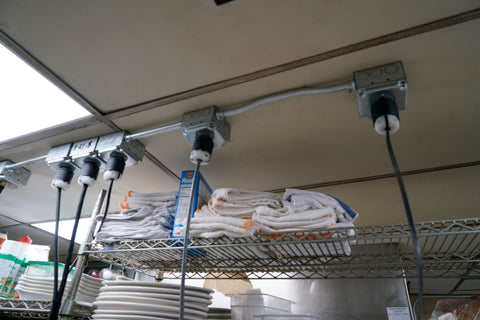
The electrical circuit requirements for commercial kitchens regarding wiring type depend on your local jurisdiction's adoption of the NEC and any local amendments. In most commercial kitchen installations, the preferred wiring methods are EMT (electrical metallic tubing) conduit with THHN conductors or MC cable (metal-clad cable). These methods provide physical protection against the heat, moisture, and mechanical abuse common in a busy kitchen environment.
Romex, which is non-metallic sheathed cable (NM cable), is generally not used in commercial kitchen applications. While NEC Article 334 does not outright prohibit NM cable in all commercial buildings, most local jurisdictions require conduit or MC cable in commercial kitchens because of the wet, high-heat environment. NM cable cannot be installed above suspended ceilings in non-dwelling occupancies per NEC 334.12(A)(2). In nearly all commercial kitchen remodels and new builds we see in North Alabama, licensed electricians use EMT conduit or MC cable to satisfy local inspection requirements and protect the wiring from physical damage.
You cannot use Romex (NM cable) in most commercial buildings because NM cable is not permitted above suspended ceilings in non-dwelling occupancies per NEC 334.12(A)(2), and many local jurisdictions require conduit or armored cable for commercial occupancies entirely. Commercial kitchens specifically present physical damage risks, high-heat environments, and significant moisture exposure that NM cable's plastic sheath is not rated to handle long-term.
Beyond the NEC, most commercial building inspectors require EMT conduit or MC cable in commercial kitchens because these wiring methods are more durable, easier to trace during inspections, and more resistant to the grease vapor, steam, and cleaning chemicals that are part of every kitchen's daily operation. Using the wrong wiring type fails inspection and requires costly rework. Always confirm the required wiring method with your local Authority Having Jurisdiction (AHJ) before any wiring begins. If you are setting up a full commercial kitchen from scratch, the commercial kitchen setup guide on our blog walks through the broader sequence of steps involved.
Kitchen layout affects power load planning because the physical location of each cooking zone, prep station, and refrigeration area determines where circuit homerun runs must go, where panels and subpanels should be placed, and how long runs affect voltage drop calculations. A poorly planned layout forces electricians to run long circuit runs from the panel to equipment, which increases wire cost, increases voltage drop risk, and complicates future service upgrades.
The best practice is to treat power planning and physical layout as one unified decision, not two separate steps. Cooking zones require the highest electrical loads. Placing your panel or subpanel adjacent to the cooking line shortens homerun lengths, reduces voltage drop, and keeps circuits within easy reach for maintenance. Refrigeration zones need continuous power but at lower demand levels. Prep zones need dense 20-amp receptacle coverage for countertop appliances.
According to the U.S. CBECS data from the U.S. Energy Information Administration, cooking accounts for approximately 40% of end-use energy consumption in food service buildings. Refrigeration is the second largest at 15%. These two zones should drive the layout conversation with your electrician and your cabinet designer simultaneously. Custom commercial cabinetry that integrates cleanly with your electrical plan reduces the number of exposed conduit runs, keeps inspectors happy, and creates a kitchen that functions as one clean, organized system.
Equipment placement affects the electrical service size because concentrated cooking zones pull high simultaneous demand from the same panel section, which can cause uneven phase loading in three-phase systems. A licensed commercial electrician balances loads across the three phases of the service entrance to keep demand evenly distributed and avoid overloading one leg of the service.
Refrigeration equipment adds a different challenge. Walk-in coolers and walk-in freezers draw 2 to 6 kW continuously and have motor startup surges that can momentarily pull several times their running current. Each refrigeration unit should be on its own dedicated circuit, and the startup surge must be factored into your load planning even though the running load is modest. Our post on stainless steel requirements in commercial kitchens covers related compliance points for the surfaces that surround this equipment.
The electrical requirements for a commercial kitchen build-out include a properly sized service entrance calculated per NEC Article 220, dedicated circuits for all major appliances sized at 125% of continuous loads, GFCI protection on all applicable receptacles, appropriate wiring type per local code requirements, and an electrical plan that has been reviewed and approved by the Authority Having Jurisdiction before any work begins.
Most jurisdictions require that a licensed electrical contractor or electrical engineer prepare the electrical plan for a new commercial kitchen. The plan is submitted along with the health department layout, plumbing plan, and building permit application. Many kitchen projects fail inspection because the electrical plan is treated as an afterthought after the kitchen design is finalized. The electrical plan and the kitchen design must be developed together. Related inspections that happen at the same time include plumbing requirements, which our post on floor drain requirements for commercial kitchens covers in detail.
According to the U.S. Department of Energy, restaurants use approximately 2.5 times more energy per square foot than most other commercial buildings, and cooking equipment accounts for approximately 35% of a full-service restaurant's total energy use. These numbers make the electrical plan one of the most consequential documents in any commercial kitchen project. Getting it right on the front end avoids costly change orders, failed inspections, and equipment that cannot run at full capacity because the circuit is too small.
If you are planning a kitchen build-out or renovation, our post on commercial kitchen build-out costs walks through the full scope of what goes into a complete project budget, including electrical, plumbing, ventilation, and cabinetry.
How many amps a commercial kitchen needs depends on its size, the number of pieces of cooking equipment, and the total connected load after applying NEC 220.56 demand factors. A small commercial kitchen with 6 pieces of qualifying equipment totaling 57 kW has a demand load of approximately 37 kW after applying the 65% demand factor. At 208V three-phase, that translates to roughly 103 amps of service for cooking equipment alone, before adding lighting, refrigeration, HVAC, and receptacle loads. Most small restaurant kitchens require a 200-amp three-phase service at minimum. High-volume operations typically require 400 amps or more.
The 6/12 rule for outlets in a commercial kitchen is a general installation practice in which commercial kitchen receptacles are placed no more than 6 feet apart horizontally along countertop and prep areas, with each outlet positioned no more than 12 inches above the countertop surface. The NEC specifies that countertop receptacles should be placed so no point along the wall line is more than 24 inches from an outlet, and that receptacles should not be mounted face-up in commercial settings. Always verify placement requirements with your local Authority Having Jurisdiction, as local amendments to the NEC may impose additional rules specific to your jurisdiction.
You need 20-amp outlets for commercial kitchen countertop receptacle circuits because most portable commercial kitchen appliances, including commercial mixers, slicers, and food processors, draw between 12 and 15 amps continuously. A 15-amp circuit is too close to the limit for the volume and duration of use in a commercial setting. NEC Article 210 requires small appliance branch circuits to be rated at 20 amps. In a commercial kitchen, all countertop receptacle circuits should be 20-amp dedicated circuits to provide adequate capacity for the equipment used during both prep and service hours.
No, a commercial dishwasher should not be on the same circuit as a commercial refrigerator in a commercial kitchen build-out. Both appliances are considered major fixed equipment and require dedicated individual circuits under NEC Article 210. A commercial dishwasher typically draws 20 to 30 amps, and high-temperature models with booster heaters draw significantly more. A commercial refrigerator or walk-in cooler draws 2 to 6 kW continuously plus motor startup current. Sharing a circuit between them creates an overload risk and fails NEC dedicated circuit requirements for fixed commercial equipment. For more on dishwasher compliance, see our post on dishwasher requirements for commercial kitchens.
The minimum electrical service size for a commercial kitchen depends entirely on the total calculated demand load per NEC Article 220. There is no single universal minimum, because a small cafe with a few pieces of equipment may function on 100-amp single-phase service, while a full-service restaurant requires 200 to 400-amp three-phase service or more. The correct approach is to complete the full NEC 220.56 load calculation for all kitchen equipment, add all other loads including lighting, HVAC, and receptacles, and size the service to the total demand. Always work with a licensed commercial electrician to determine the correct service size for your specific operation.
You can use Schedule 80 PVC conduit in some commercial kitchen applications, but it is generally not preferred in areas subject to physical damage, high heat, or frequent cleaning with harsh chemicals. EMT (electrical metallic tubing) conduit is the most common choice for commercial kitchen wiring because it is durable, easy to ground, and resistant to the mechanical abuse of a busy kitchen environment. Most commercial kitchen areas require metal conduit or MC cable rather than PVC, and local inspectors in many jurisdictions will require you to confirm the permitted wiring method before installation. Always check with your local AHJ for specific requirements.
To organize your commercial kitchen to reduce electrical load, stagger the startup times of high-draw equipment rather than turning everything on at the same time. According to energy guidance from ElectricityPlans.com and the U.S. Department of Energy, turning off a single unused commercial fryer for just four hours a day can save up to $350 per year. Refrigeration accounts for up to 45% of energy costs according to the U.S. Energy Information Administration, so proper door seals and regular maintenance on walk-in units deliver measurable savings. Custom commercial kitchen cabinetry that keeps your equipment organized and accessible also reduces the idle running time of appliances that staff leave on because they cannot easily reach the controls to shut them down.
The five types of commercial kitchens are assembly line, island, zone style, galley, and open kitchen. Their power needs differ primarily based on how cooking equipment is clustered. An assembly line kitchen concentrates high-draw cooking equipment along one wall, which can create uneven phase loading in a three-phase service if not carefully planned. An island kitchen places major cooking equipment in the center, requiring conduit homerun runs across the floor or through the ceiling that must account for physical damage protection. Zone-style kitchens distribute load across multiple stations, which can actually result in more balanced phase loading when designed well. All types benefit from electrical planning that happens at the same time as the physical layout design, not after it.
Power load planning for commercial kitchens is one of the most technical and most important steps in any kitchen build-out or renovation. The NEC 220.56 demand factor calculation, the 125% continuous load rule, dedicated circuit requirements, GFCI protection, and wiring type selection all work together to create a kitchen that runs safely at full capacity every single service.
According to the U.S. Department of Energy's CBECS data, food service buildings account for only 1% of total commercial floor space in the United States but over 5% of all commercial building energy consumption. That gap between size and consumption is driven almost entirely by the intensity of commercial cooking and refrigeration equipment. A well-designed electrical plan does not just satisfy code. It reduces demand charges, lowers your monthly utility bill, and builds a kitchen that does not force your team to manage around tripped breakers or undersized circuits during peak service.
At Classic Cabinetry, we work closely with clients on commercial kitchen projects to coordinate cabinet and cabinetry planning with the electrical layout from the very start.
If you are building or renovating a commercial kitchen and want to talk through how the physical layout and your power plan work together, reach out to our team for a free estimate.