.png)


.png)




.png)

.png)


.png)
Cold Storage Planning for Restaurants Kitchen
link desc
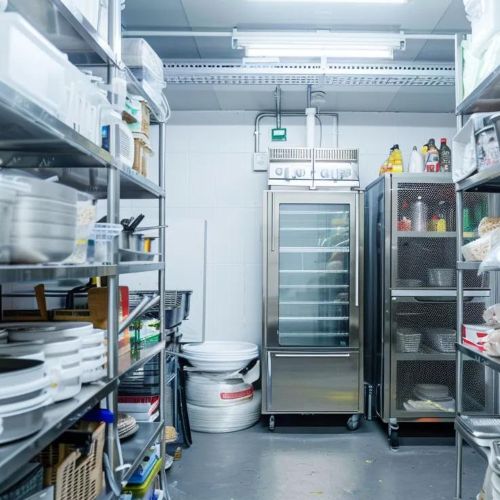


Cold storage planning for restaurant kitchens is the process of designing, sizing, and organizing refrigeration and freezer systems so that every perishable ingredient stays at a safe temperature, remains easy to access, and moves through the kitchen without waste or cross-contamination. The FDA Food Code requires all commercial refrigerators to hold food at 41 degrees Fahrenheit or below, and all freezers to hold food at 0 degrees Fahrenheit or below. According to the FDA, between 30 and 40 percent of all food in the United States goes uneaten, and a large portion of that waste happens because of improper storage. This blog covers FDA guidelines, proper shelf organization, sizing rules, temperature requirements, and the storage strategies that restaurant owners and commercial builders across North Alabama need to protect their inventory, pass health inspections, and reduce waste.
The FDA guidelines for cold storage require that all potentially hazardous foods, also called Time and Temperature Control for Safety (TCS) foods, be stored at 41 degrees Fahrenheit or below in refrigerators and 0 degrees Fahrenheit or below in freezers. These temperatures must be maintained at all times, and restaurants must monitor and log temperatures regularly using calibrated thermometers.
Per the FDA Food Code 2022, Section 3-501.16, walk-in coolers and commercial refrigerators must maintain a consistent temperature of 41 degrees or below for all TCS foods. Walk-in freezers must hold at 0 degrees or below. Any food that has been held above 41 degrees for more than two hours must be discarded. If the air temperature is above 90 degrees, the safe holding time drops to just one hour.
The FDA also requires that food be stored in a specific order inside the refrigerator to prevent cross-contamination. Ready-to-eat foods like salads, deli meats, and cooked leftovers go on the top shelf. Below that, pre-cooked and stored items. Below those, dairy products. Raw whole cuts of beef and pork go lower, followed by ground meats, and raw poultry always goes on the bottom shelf. This top-to-bottom hierarchy prevents raw juices from dripping onto items that will not be cooked again before serving.
According to the CDC, 48 million Americans get sick from foodborne illness every year, with 128,000 hospitalizations and 3,000 deaths. Proper cold storage is one of the most direct lines of defense against those numbers.
Restaurants across Huntsville, Alabama that take cold storage planning seriously from the design phase avoid the scramble of trying to retrofit refrigeration into a space that was not built for it. Working with experienced builders and commercial cabinetry partners who understand back-of-house storage needs keeps the cold storage zone organized and code-compliant from day one.
The 3 phase type cold storage refers to the three distinct temperature zones that a commercial kitchen needs to manage: refrigerated storage (35 to 41 degrees Fahrenheit), frozen storage (0 degrees or below), and dry storage (50 to 70 degrees). Each phase serves a different category of ingredients and requires its own dedicated space, equipment, and organizational system.
Refrigerated storage holds all perishable items that need to stay cold but not frozen. This includes fresh produce, dairy, raw meats, seafood, deli items, and prepared foods. Walk-in coolers are the most common refrigerated storage solution for full-service restaurants. According to industry sizing guidelines, a restaurant needs approximately 1.5 cubic feet of cooler and freezer space per meal served per day. A restaurant serving 200 meals daily would need roughly 300 cubic feet of total cold storage.
Frozen storage holds items that must remain solid, including frozen proteins, ice cream, frozen vegetables, and pre-made items. Walk-in freezers must maintain 0 degrees or below. Certain items like ice cream require temperatures of minus 10 degrees or lower to maintain proper texture. Freezer panels are typically thicker than cooler panels to provide better insulation.
Dry storage holds non-perishable items like canned goods, grains, spices, and shelf-stable packaged foods. The FDA recommends maintaining dry storage between 50 and 70 degrees Fahrenheit with good ventilation. All dry goods must be stored at least six inches off the floor and away from chemicals and cleaning supplies.
For restaurants in Huntsville and across North Alabama, planning all three storage phases during the kitchen design stage prevents the common problem of running out of space as the business grows. Custom pantries and cabinetry built for dry storage areas keep non-perishable items organized without taking up valuable refrigerator or freezer space.
No temperature inside a fridge kills bacteria. Refrigeration at 41 degrees Fahrenheit or below slows bacterial growth significantly, but it does not kill bacteria. According to the USDA, bacteria can double in number every 20 minutes in the temperature danger zone between 40 and 140 degrees Fahrenheit. Keeping food below 41 degrees slows that growth to a crawl, but the bacteria are still alive.
To actually kill bacteria, food must be cooked to the appropriate internal temperature. Poultry must reach 165 degrees Fahrenheit. Ground meats must reach 160 degrees. Whole cuts of beef and pork must reach 145 degrees with a three-minute rest time. These cooking temperatures, not refrigeration, are what destroy harmful pathogens.
The confusion between slowing bacteria and killing bacteria is one of the most common food safety misunderstandings. A refrigerator does not sterilize food. It simply buys time by keeping food out of the danger zone where bacteria multiply rapidly. That is why the FDA also mandates the seven-day rule: ready-to-eat TCS foods can only be stored in the refrigerator for a maximum of seven days from the date they were prepared or opened.
According to CDC EHS-Net research, 1 in 7 restaurants stored food in refrigerators above the FDA-mandated 41 degrees. That lapse is often caused by overcrowded refrigerators where air cannot circulate properly, malfunctioning equipment that goes unchecked, or doors that are opened too frequently during service.
Proper cold storage planning includes leaving enough space between items for air to circulate, using wire shelving instead of solid shelves, and placing temperature-sensitive items away from the door where warm air enters every time it opens.
The 80/20 rule in restaurants, also called the Pareto Principle, states that roughly 80 percent of a restaurant's revenue comes from 20 percent of its menu items. This concept applies directly to cold storage planning because the ingredients for those top-selling dishes need the most accessible, best-organized storage positions in the cooler and freezer.
When planning cold storage, place the ingredients you use most often closest to the door for quick access. Items that are used less frequently can go toward the back. This simple arrangement reduces the amount of time the cooler door stays open, which in turn reduces energy costs and temperature fluctuations.
The 80/20 rule also applies to food waste. In many restaurants, a small number of ingredients account for the majority of spoilage. Tracking which items get thrown away most often and adjusting order quantities accordingly can significantly reduce waste and improve the food cost percentage.
According to the National Restaurant Association, operators aim to keep food costs between 28 and 35 percent of revenue. For full-service restaurants where the average profit margin sits at about 9.8 percent according to OysterLink data, even a small reduction in food waste from better cold storage planning can make a meaningful difference to the bottom line.
Restaurants in Huntsville, Madison, and Decatur that organize their cold storage around their best-selling menu items see faster prep times, less waste, and more consistent food quality across every shift.
The three Cs in a restaurant are Cooking, Cleaning, and Cross-contamination prevention. All three connect directly to cold storage planning.
Cooking starts with properly stored ingredients. Raw proteins pulled from a well-organized cooler where they have been held at the correct temperature cook more consistently and safely than ingredients that have been temperature-abused.
Cleaning includes maintaining the cold storage units themselves. Walk-in coolers and freezers must be cleaned regularly to prevent mold, bacteria buildup, and pest problems. Spills must be wiped immediately. Shelving needs to be sanitized on a routine schedule. And the walls, floors, and door gaskets of the unit need periodic deep cleaning.
Cross-contamination prevention is built into the cold storage hierarchy. Raw poultry on the bottom shelf. Ground meats above that. Whole cuts of beef and pork above those. Dairy above the meats. And ready-to-eat foods on top. This vertical organization prevents raw juices from dripping onto items that will be served without further cooking.
According to the FDA, cross-contamination is one of the leading causes of foodborne illness in restaurants. A single drip from raw chicken onto a container of prepared salad can cause a serious health incident. Good cold storage organization is one of the most effective physical barriers against this risk.
Restaurants across North Alabama that install custom kitchen cabinets and shelving designed for the space around and near their cold storage units keep cleaning supplies, temperature logs, and labeling materials organized and accessible, which supports all three Cs.
You plan cold storage for a new restaurant kitchen by starting with the menu, calculating daily storage volume, selecting the right equipment, determining placement within the kitchen workflow, and organizing the interior for food safety and efficiency.
Start with the menu because it determines what needs to be stored and at what temperature. A seafood-focused restaurant needs more refrigerated space for fresh fish. A steakhouse needs a large freezer for bulk protein orders. A farm-to-table concept with frequent local deliveries may need less total storage but more organized short-term space.
Calculate the storage volume based on meal count. The industry standard is 1.5 cubic feet of combined cooler and freezer space per meal served per day. Small to medium restaurants typically need 100 to 500 cubic feet, while large operations may need 1,000 cubic feet or more. According to Culinary Depot, standard walk-in units for restaurants range from $5,000 to $20,000, with modular and custom options running $10,000 to $30,000.
Select equipment that fits the space and the concept. Walk-in coolers and freezers are the standard for full-service restaurants. Reach-in refrigerators work well as line-side support for the cooking stations. Refrigerated prep tables combine cold storage with counter space for assembly. Under-counter refrigerators tuck into tight spaces near individual stations.
Place the cold storage near the prep zone and the receiving area. Ingredients should flow from the delivery door to cold storage, then to prep, with minimal travel distance. According to restaurant workflow experts, the shortest possible path between the walk-in and the prep table reduces both wasted steps and the time food spends outside of safe temperature.
Organize the interior from day one. Install wire shelving for airflow. Label every section. Post the FDA-recommended storage hierarchy on the wall inside the walk-in. And set up a temperature logging system that staff use at the start and end of every shift.
For restaurant projects in Huntsville, Ardmore, and Decatur, working with local craftsmen who understand commercial cabinetry for the Huntsville area helps keep the dry storage, back-of-house shelving, and support areas around the cold storage units organized and efficient.
No common food turns toxic solely because it was refrigerated. However, some foods lose quality, change texture, or develop off-flavors when stored in the refrigerator. Tomatoes lose flavor and become mealy. Potatoes develop a gritty texture and may convert starch to sugar at cold temperatures, which can create a potentially harmful compound called acrylamide when fried at high heat. Bread goes stale faster in the refrigerator than at room temperature. Onions soften and absorb moisture. Honey crystallizes.
In a commercial kitchen context, the concern is different. The real danger is not that refrigeration makes food toxic but that improper refrigeration allows existing bacteria to grow. Food that is placed in the refrigerator while still hot can raise the temperature of surrounding items, pushing them into the danger zone. That is why the FDA requires cooked food to cool from 135 degrees to 70 degrees within 2 hours, and from 70 degrees to 41 degrees within an additional 4 hours.
According to CDC research, 504 foodborne illness outbreaks over a 10-year period were caused by food that was cooled too slowly. Placing hot food directly into a walk-in cooler without proper cooling methods, like shallow containers or ice baths, is a common mistake that can have serious consequences.
For restaurants in Huntsville, Alabama, proper cooling procedures before refrigeration are just as important as maintaining the correct storage temperature. Train staff to use shallow pans for cooling, ice baths for large batches, and blast chillers when available.
The two foods that never expire are honey and salt. Both have properties that prevent bacterial growth and allow them to be stored indefinitely when kept in proper conditions.
Honey has a very low moisture content and naturally acidic pH that inhibit bacterial growth. Archaeological discoveries have found pots of honey in ancient Egyptian tombs that were still edible thousands of years later. In a commercial kitchen, honey should be stored in dry storage at room temperature in sealed containers.
Salt is a mineral that does not support bacterial life. It can absorb moisture and clump over time, but it never becomes unsafe to consume. Salt should also be stored in dry storage, away from moisture and humidity.
While these two items do not expire, virtually everything else in a restaurant's inventory does. The FDA's seven-day rule for ready-to-eat TCS foods means that even properly refrigerated prepared items must be discarded after seven days. Date marking with the item name, preparation date, and use-by date is required by the FDA Food Code for all TCS foods held for more than 24 hours.
Organized dry storage with clear labeling helps staff track shelf life for every item. Custom mudroom and foyer cabinetry built around heavy-use entry areas uses the same durable organizational principles that restaurant dry storage areas need.
You should organize a walk-in cooler from top to bottom following the FDA food storage hierarchy: ready-to-eat foods on the top shelf, pre-cooked and stored items below that, dairy products below those, raw whole cuts of beef and pork below dairy, ground meats below whole cuts, and raw poultry always on the bottom shelf. All items must be stored at least six inches above the floor.
This hierarchy prevents cross-contamination by ensuring that the items with the highest risk of harboring harmful bacteria, like raw poultry, are always below everything else. If a container leaks, the drip falls onto nothing or onto items that will be cooked to a higher internal temperature.
Use wire shelving instead of solid shelving. Wire shelves allow cold air to circulate around every item, maintaining a consistent temperature throughout the unit. Solid shelving blocks airflow, creates warm pockets, and encourages mold growth.
Label everything. Every container in the walk-in should have a waterproof label with the item name, date of preparation or delivery, and use-by date. This practice supports FIFO (first in, first out) rotation, where older items get used before newer ones.
Place the most frequently used items near the door. According to cold storage experts, every second the walk-in door stays open, warm air rushes in and disrupts the temperature. Storing high-use items at the front reduces door-open time.
Keep raw proteins in leak-proof containers. Even with proper shelf hierarchy, an unsealed container of raw chicken juice is a contamination risk. Use clear, food-safe containers with tight lids and store them in drip-catching trays as an extra precaution.
Sources: FDA Food Code, USDA, WebstaurantStore, GlacierGrid
The 2 2 2 rule for food is a simplified guideline for managing leftovers and perishable food. It states that food should be refrigerated within 2 hours of cooking, can be kept in the refrigerator for up to 2 days, and can be stored in the freezer for up to 2 months. This rule provides an easy-to-remember framework for safe food storage.
In commercial kitchens, the FDA Food Code has more specific and stricter requirements. Cooked food must cool from 135 degrees to 70 degrees within 2 hours, and then from 70 degrees to 41 degrees within an additional 4 hours. Ready-to-eat TCS foods can be stored for up to 7 days, not just 2. And frozen food kept at 0 degrees is safe indefinitely, though quality degrades over time.
The 2 2 2 rule is a good starting point for staff training, especially for new hires who are learning the basics. Once they master the simple version, they can be trained on the more detailed FDA requirements that apply to commercial operations.
According to the FDA, confusion over date labeling accounts for an estimated 20 percent of consumer food waste. Clear, consistent date marking in a restaurant kitchen eliminates that confusion and ensures that nothing stays in storage longer than it should.
Pizza lasts in the fridge for 3 to 4 days when stored properly in an airtight container or wrapped tightly in plastic wrap or aluminum foil. After 4 days, the risk of bacterial growth increases to unsafe levels, and the pizza should be discarded.
In a commercial kitchen, any prepared TCS food including pizza must be date-marked with the preparation date and a use-by date. Per the FDA's seven-day rule, it can be stored for a maximum of 7 days at 41 degrees or below. However, for quality reasons, most restaurants use prepared pizza within 3 to 4 days.
Pizza stored in the freezer at 0 degrees can last 1 to 2 months while maintaining good quality, though it is safe indefinitely as long as the freezer temperature is maintained.
For pizza restaurants and other concepts in the Huntsville metro area, organized cold storage with clear date marking prevents waste and keeps food quality consistent for every customer.
The industry rule of thumb is 1.5 cubic feet of combined cooler and freezer space per meal served per day. A restaurant in Huntsville serving 200 meals daily needs approximately 300 cubic feet of total cold storage. This estimate should account for delivery frequency, menu mix, and seasonal volume changes. Less frequent deliveries require more storage space, while restaurants with daily local deliveries may need less. Always plan for at least 10 to 20 percent more capacity than current needs to allow for business growth.
Walk-in cooler temperatures should be checked at least twice per day, once during opening and once during closing. Many health departments recommend logging temperatures at the start of every shift. According to the FDA, any time a cooler reaches 41 degrees or above, all TCS food inside must be evaluated for safety. Digital monitoring systems that send real-time alerts when temperatures deviate from the safe range are becoming standard in restaurants across North Alabama.
The proper way to cool hot food before refrigerating is to transfer it to shallow containers no deeper than 3 inches, use an ice bath, stir frequently, or use a blast chiller. The FDA requires cooked food to cool from 135 degrees to 70 degrees within 2 hours, and from 70 degrees to 41 degrees within an additional 4 hours. According to CDC research, food cooled too slowly was responsible for 504 outbreaks over a 10-year period. Never place a large, deep container of hot food directly into the walk-in cooler because the center of the food will stay in the danger zone for too long.
No, bread should not be kept in the refrigerator in most cases. Refrigeration accelerates the staling process by causing the starches in bread to recrystallize faster than they would at room temperature. Bread stays freshest when stored at room temperature in a sealed container. For longer storage, bread can be frozen at 0 degrees and thawed when needed. In a restaurant kitchen in Huntsville or Decatur, bread should be stored in a clean, dry storage area between 50 and 70 degrees, not in the walk-in cooler.
Cold storage planning directly affects a restaurant's bottom line by reducing food waste, preventing health code violations, and improving kitchen efficiency. According to the FDA, 30 to 40 percent of food in the United States goes uneaten. Restaurants that use FIFO rotation, proper date marking, and organized cold storage reduce their share of that waste significantly. With full-service restaurant profit margins averaging just 9.8 percent, every dollar saved through better storage planning drops straight to the bottom line.
Yes, custom cabinetry plays an important role in restaurant cold storage organization by keeping the areas around walk-in coolers, reach-in refrigerators, and dry storage zones organized and efficient. Purpose-built shelving, labeled storage compartments, and durable back-of-house cabinetry keep cleaning supplies, temperature logs, labeling materials, and prep tools within reach of the cold storage zone. Restaurants in the Huntsville and Ardmore area that invest in durable commercial cabinetry from the start avoid the clutter and disorganization that lead to wasted food, slow prep times, and failed inspections.
During a power outage, a closed refrigerator will keep food safe for approximately 4 hours if the door remains shut. A full freezer will maintain safe temperatures for about 48 hours, or 24 hours if it is half full. According to the FDA, perishable food that has been above 41 degrees for more than 2 hours must be discarded. Restaurants in Huntsville should have an emergency plan that includes a list of nearby facilities with backup cold storage, a protocol for monitoring temperatures during the outage, and a procedure for documenting any food that must be discarded.
Cold storage planning is one of the most important decisions a restaurant owner makes during the kitchen design process. From FDA temperature requirements to proper shelf hierarchy, from the seven-day rule to daily temperature logging, every detail protects customers, prevents waste, and supports profitability. According to the CDC, 48 million Americans get sick from foodborne illness every year, and proper cold storage is one of the most direct ways to keep your restaurant from contributing to that number.
With Huntsville's dining scene booming, including a $240 million retail and restaurant development approved in late 2025 and dozens of new restaurant openings across the metro area, getting the cold storage zone right from the start gives operators a real edge over the competition.
Whether you are building a new commercial kitchen in Huntsville, upgrading storage in Decatur, or opening a restaurant in Ardmore, the right cabinetry and storage solutions around your cold storage equipment make compliance easier and operations faster. Classic Cabinetry has over 44 years of experience building durable, custom solutions for businesses across North Alabama. Their commercial cabinetry services are designed for the demands of restaurant kitchens, retail spaces, and professional environments. Call (256) 423-8727 today to schedule a free estimate and take the first step toward a kitchen that keeps food safe and business strong.