.png)


.png)




.png)

.png)


.png)
Electrical System Setup for Restaurant Kitchens
link desc
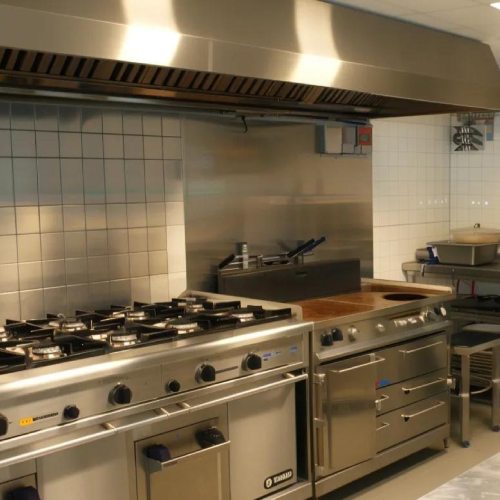


Building a commercial kitchen costs between $40,000 and $200,000 for most restaurants. This wide range depends on your kitchen size, the equipment you need, and where you're building. A small cafe might spend $40,000 while a full-service restaurant could easily hit $150,000 or more.
A commercial kitchen build-out includes everything you need to turn an empty space into a working kitchen. The costs add up quickly because you're not just buying equipment. You're also paying for installation, permits, construction work, and design services.
Most restaurant owners spend around $250 per square foot for their kitchen build-out, according to industry data from commercial contractors. This means a 1,000 square foot kitchen runs about $250,000 total. But your actual cost could be much higher or lower.
Small kitchens in the 300 to 500 square foot range often cost $30,000 to $80,000. Larger operations can easily top $300,000. The National Association of Home Builders reports that equipment alone takes up 40% to 60% of your total budget.
Your location makes a huge difference. Building in New York City or Los Angeles costs way more than building in smaller towns. Labor, permits, and materials all cost more in big cities.
The condition of your space matters too. Starting from scratch in a building that was never a kitchen before will cost the most. You'll need to run new plumbing lines, install electrical systems, and add ventilation from the ground up.
Second-generation restaurant spaces save you money. These are spots where another restaurant operated before. Much of the infrastructure is already there, so you're just updating what exists rather than building everything new.
Kitchen equipment is your biggest expense. You'll spend anywhere from $40,000 to $200,000 on appliances and tools, according to restaurant industry research.
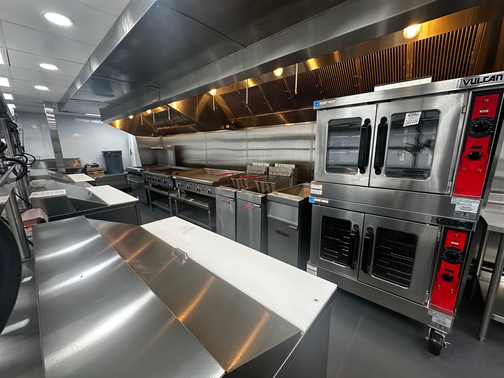
Every commercial kitchen needs basic equipment to function. Commercial ranges and ovens cost $5,000 to $15,000 each. Walk-in coolers and freezers run $8,000 to $25,000. You'll need prep tables and work surfaces at $1,000 to $5,000 each, plus three-compartment sinks required by health codes that cost $800 to $2,500.
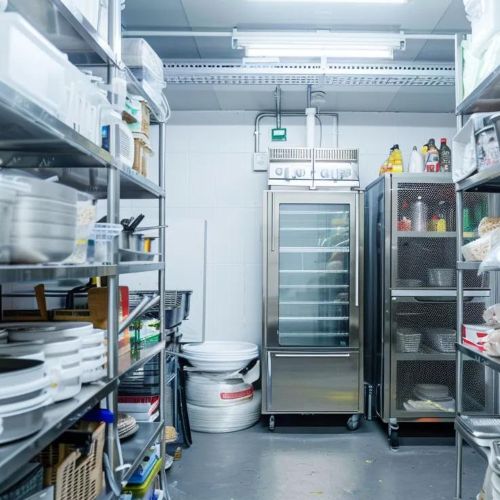
Commercial dishwashers run $3,000 to $15,000 depending on size and features. Food storage shelving adds another $500 to $3,000 to your budget. These are just the basics that every kitchen needs.
Specialized equipment costs more. A commercial combi oven can run $20,000 or higher. These combination units cook with heat, steam, or both, making them super useful but pricey.
Buying used equipment cuts costs dramatically. Many restaurants upgrade their equipment regularly, which means you can find quality used items for 40% to 60% less than new.
Just make sure any used equipment you buy works properly and has been tested. It needs to meet current health and safety codes. Get at least a short warranty if possible, and have it inspected by a technician before you pay.
Combo units save money too. A range with a built-in oven might cost $7,000, while buying them separately could run $10,000 total. Look for equipment that does multiple jobs in one unit.
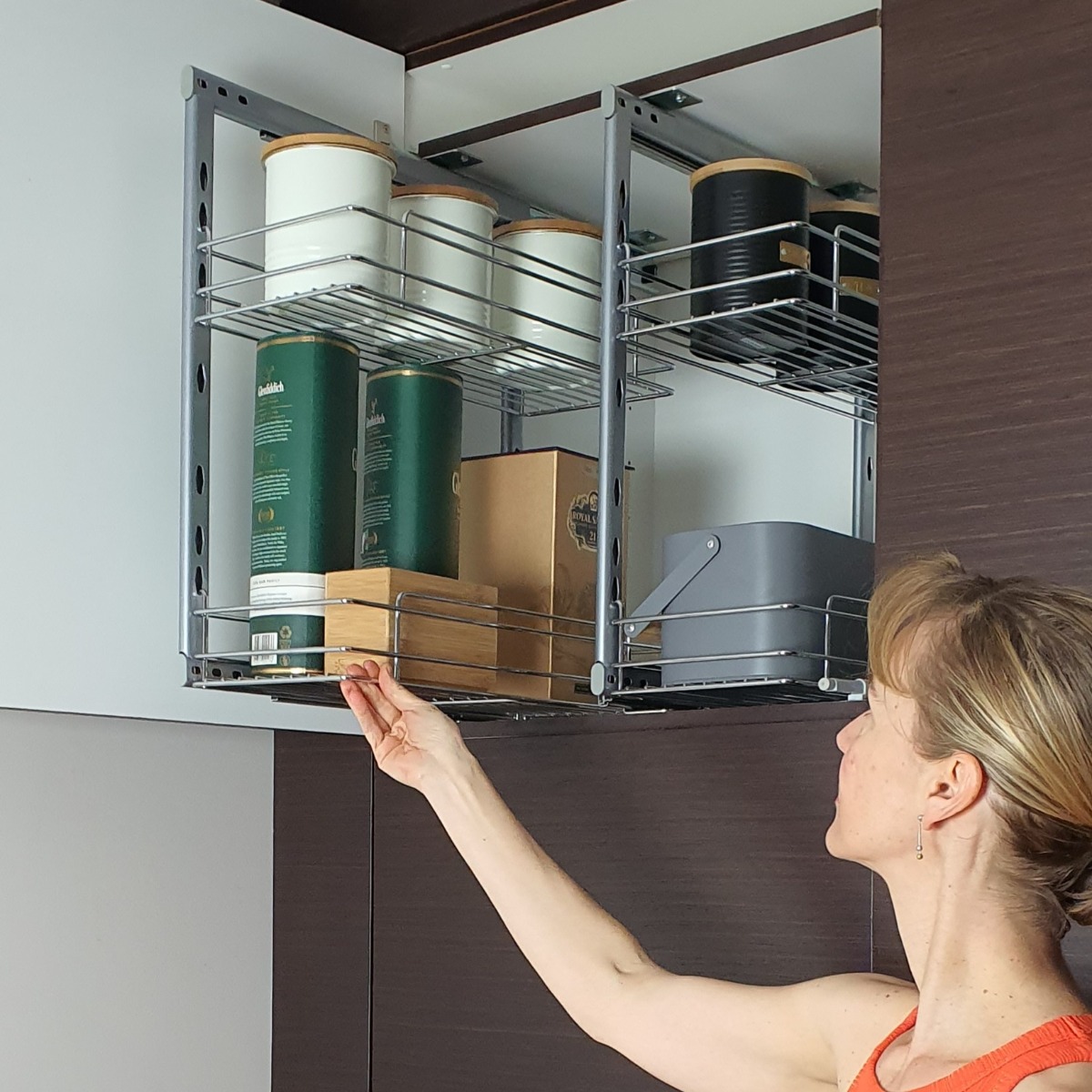
Professional storage solutions make a big difference in commercial kitchens. Custom cabinetry for commercial spaces helps maximize every inch while keeping your kitchen organized and code-compliant.
At Classic Cabinetry, we help businesses create functional commercial spaces with custom cabinetry that maximizes storage and workflow. Our commercial cabinetry solutions work perfectly with your kitchen equipment to create an organized, efficient space.
Construction work often surprises new restaurant owners. These "behind the walls" costs add up fast but you can't skip them.
Commercial kitchens need serious plumbing. You'll need multiple water lines, floor drains, and grease traps to meet health codes.
Plumbing installation typically costs $8,000 to $18,000 for small to medium kitchens. This includes installing new water supply lines, adding drainage systems and floor drains, putting in grease traps that cost $1,000 to $3,000, setting up backflow prevention devices, and connecting all sinks and equipment.
If your building has old pipes or limited water capacity, expect to pay more. Upgrading the main water lines can add $5,000 to $10,000 to your budget.
Commercial kitchen equipment needs a lot of power. Way more than regular household circuits can handle.
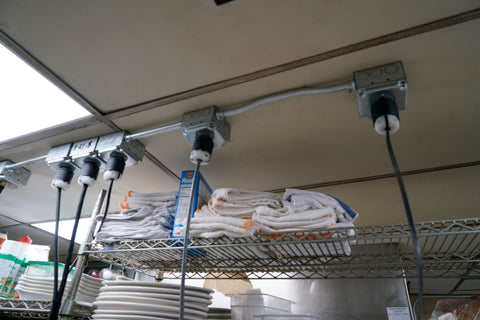
Electrical work costs $2,000 to $5,000 for basic installations. Bigger kitchens with more equipment can hit $15,000 or more. Your electrician will need to install new circuits for each piece of equipment, upgrade your electrical panel if needed, add proper outlets in the right spots, make sure everything meets building codes, and install proper grounding for safety.
Some equipment, like large ovens and coolers, need special high-voltage circuits. These cost extra to install.
Your ventilation system removes smoke, heat, and grease from the air. It's required by law and expensive to install properly.
Ventilation systems cost $7,000 to $27,000 depending on your kitchen size and equipment. A medium-sized restaurant typically spends $15,000 to $22,000.
The hood system includes commercial exhaust hoods over cooking equipment, ductwork to move air outside, makeup air systems to bring fresh air in, fire suppression systems required by code, and grease filters with cleaning access.
Don't cheap out on ventilation. A system that's too small makes your kitchen unbearably hot. Staff will quit, and you might fail inspections. Worse, inadequate ventilation can lead to grease fires.
Keeping your kitchen at the right temperature matters for food safety and worker comfort. Commercial kitchen HVAC systems cost $4,000 to $12,000 or more.
Your HVAC needs to keep food storage areas cold enough, prevent the dining room from getting too hot, remove excess humidity, work with your ventilation system, and meet energy efficiency standards.
Larger kitchens need bigger, more powerful systems. These cost more upfront but save money on energy bills over time.
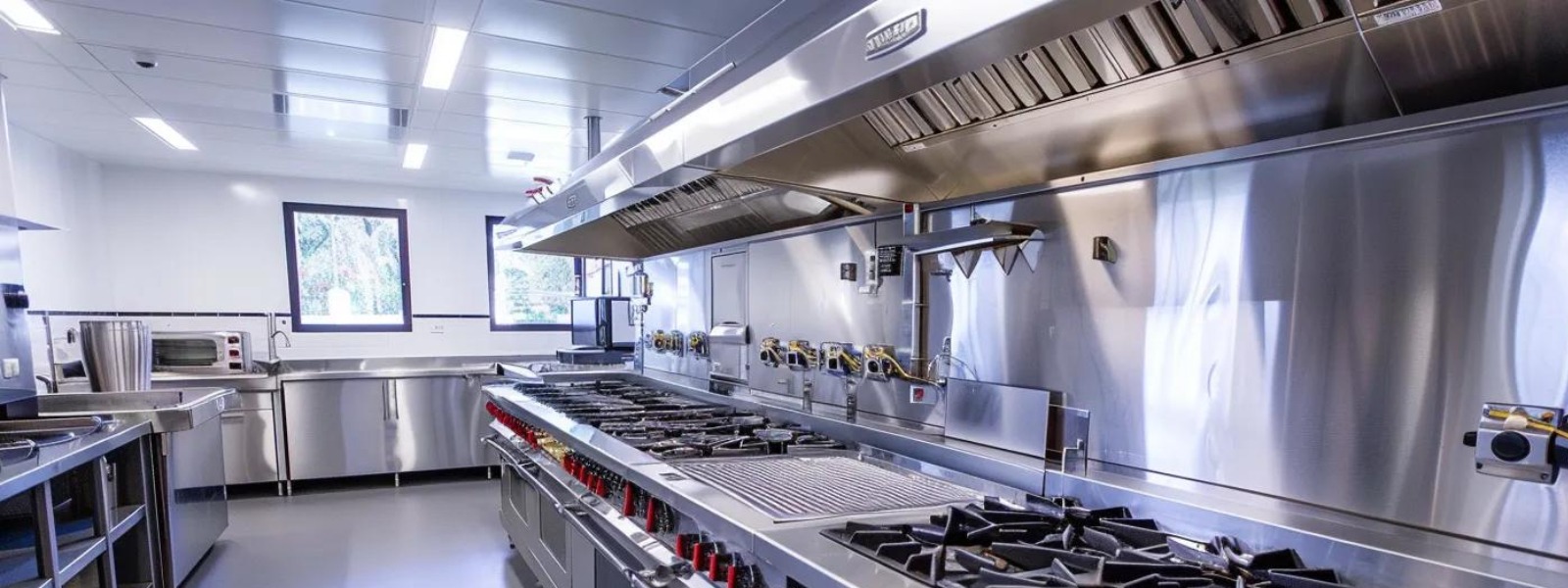
Good design saves you money in the long run. Poor kitchen layout leads to wasted time, burned-out staff, and food that takes too long to prepare.
Hiring a commercial kitchen designer costs 10% to 20% of your equipment budget. For a $50,000 equipment purchase, that's $5,000 to $10,000 in design fees.
This investment pays for itself by helping you place equipment in the most efficient spots, meet all health and building codes, avoid buying equipment you don't need, create smooth workflow between stations, and maximize your kitchen's productivity.
One restaurant owner saved $24,000 by spending $4,800 on a designer. The designer showed him exactly what equipment he actually needed versus what salespeople tried to sell him.
Some projects need architectural drawings and engineering plans. This is especially true if you're doing major construction or working with old buildings.
Architectural fees run $5,000 to $20,000 depending on project size. You'll need these services if you're making structural changes to the building, adding or moving walls, changing the building's footprint, or working in historic buildings with special requirements.
Engineers design your MEP systems, which stands for mechanical, electrical, and plumbing. These plans make sure everything works together safely and efficiently.
Well-designed storage is critical in commercial environments. If you need organized workspace solutions, custom home office cabinetry provides professional storage that works for business settings too.
If you're also updating your commercial space with custom cabinetry for offices or retail areas, our team at Classic Cabinetry helps create professional, organized workspaces.
You can't legally open without the right permits. These costs vary by location but you'll need several types.
Every commercial kitchen needs health department approval. The initial permit costs $200 to $1,000 depending on your city and state.
Your health department will inspect food storage and preparation areas, handwashing and three-compartment sinks, food temperatures and cooling systems, waste disposal and grease management, and overall cleanliness and safety practices.
Failed inspections mean delays and potential re-inspection fees. Getting it right the first time saves money and headaches.
Building permits cover your construction work. Costs range from $500 to $5,000 based on the scope of your project.
You'll need separate permits for general construction and remodeling, plumbing installations and changes, electrical work and panel upgrades, HVAC system installation, and fire suppression systems.
Each permit comes with required inspections. The inspector checks that work meets building codes before you can move forward. Budget extra time and money for potential corrections.
Fire suppression systems are required over all cooking equipment. Installation costs $2,000 to $5,000 depending on your kitchen size.
These systems automatically spray chemicals if they detect a fire. They can save your business, but they need professional installation by licensed contractors, annual inspections and maintenance, quick response training for your staff, and integration with your hood system.
Some cities require sprinkler systems throughout the building too. This adds thousands more to your budget.
Smart restaurant owners plan for expenses beyond the obvious ones. These "hidden" costs catch many people off guard.
Always set aside 10% to 15% of your total budget for unexpected problems. Old buildings especially hide surprises.
Common unexpected expenses include structural issues discovered during construction, asbestos or mold that needs removal, outdated utilities that must be replaced, equipment delivery delays requiring rentals, and code violations that need immediate fixes.
That 15% buffer could mean the difference between finishing on time or running out of money halfway through.
Commercial kitchen floors must be slip-resistant, easy to clean, and durable. Good flooring costs $10 to $25 per square foot installed.
Popular options include epoxy flooring at $8 to $12 per square foot, quarry tile at $15 to $25 per square foot, and sealed concrete at $5 to $12 per square foot.
Don't forget walls and backsplashes. Stainless steel panels and FRP, which stands for fiberglass reinforced plastic, meet health codes. Budget $10 to $30 per square foot for wall finishes.
Smart storage planning prevents clutter in professional kitchens. Custom pantry cabinetry in Huntsville offers solutions that work for both commercial and residential food storage needs.
You'll need more than just cooking equipment. Small items add up quickly.
Pots, pans, and cooking utensils run $2,000 to $5,000. Cutting boards and knife sets cost $500 to $1,500. Food storage containers add $300 to $800. Measuring tools and thermometers run $200 to $500. Cleaning supplies and chemical storage cost another $500 to $1,000.
Storage solutions like shelving and modular units cost $1,000 to $5,000 depending on your needs.
Don't forget about utility setup costs. Gas, electric, and water companies often require deposits for new commercial accounts.
Expect to pay electrical service deposits of $500 to $2,000, gas service setup of $300 to $1,000, and water and sewer connection fees of $500 to $1,500.
Monthly utility bills for commercial kitchens run high too. Budget $1,500 to $5,000 per month depending on your equipment and hours of operation. Energy-efficient equipment costs more upfront but saves hundreds monthly on utilities.
You can build a quality commercial kitchen without breaking the bank. These strategies help you spend wisely.
Your menu drives your equipment needs. Starting with a simple menu means less equipment to buy initially.
A pizza place might only need a few ovens, prep tables, coolers, and basic mixing equipment. As your business grows and brings in money, you can expand your menu and buy additional equipment. This phased approach keeps your startup costs manageable.
Finding a space that already has some commercial kitchen infrastructure saves big money. Look for buildings that housed restaurants before, spaces with existing plumbing and electrical rough-ins, locations with proper ventilation already installed, and areas where health department requirements are easier to meet.
Renovating an existing commercial kitchen costs 30% to 50% less than building from scratch.
Put your money where it matters most. Some things you can upgrade later, but critical systems need to be right from day one.
Spend more on ventilation and air quality systems, proper plumbing and drainage, quality flooring that lasts, and reliable refrigeration. You can always upgrade to fancier equipment later. But redoing plumbing or ventilation after opening costs way more and disrupts your business.
Choosing the cheapest contractor often costs more in the end. Experienced commercial kitchen contractors might charge more hourly, but they get things done right the first time, know all the code requirements, have relationships with inspectors, finish projects faster, and prevent expensive mistakes.
Get quotes from at least three contractors who specialize in commercial kitchens. Check their references and look at their past work before deciding.
Quality cabinetry matters in any commercial environment. Custom kitchen cabinets in Huntsville showcases the level of craftsmanship you should expect in professional installations.
For your storage and cabinetry needs, working with experienced professionals helps you avoid costly mistakes and creates solutions that last.
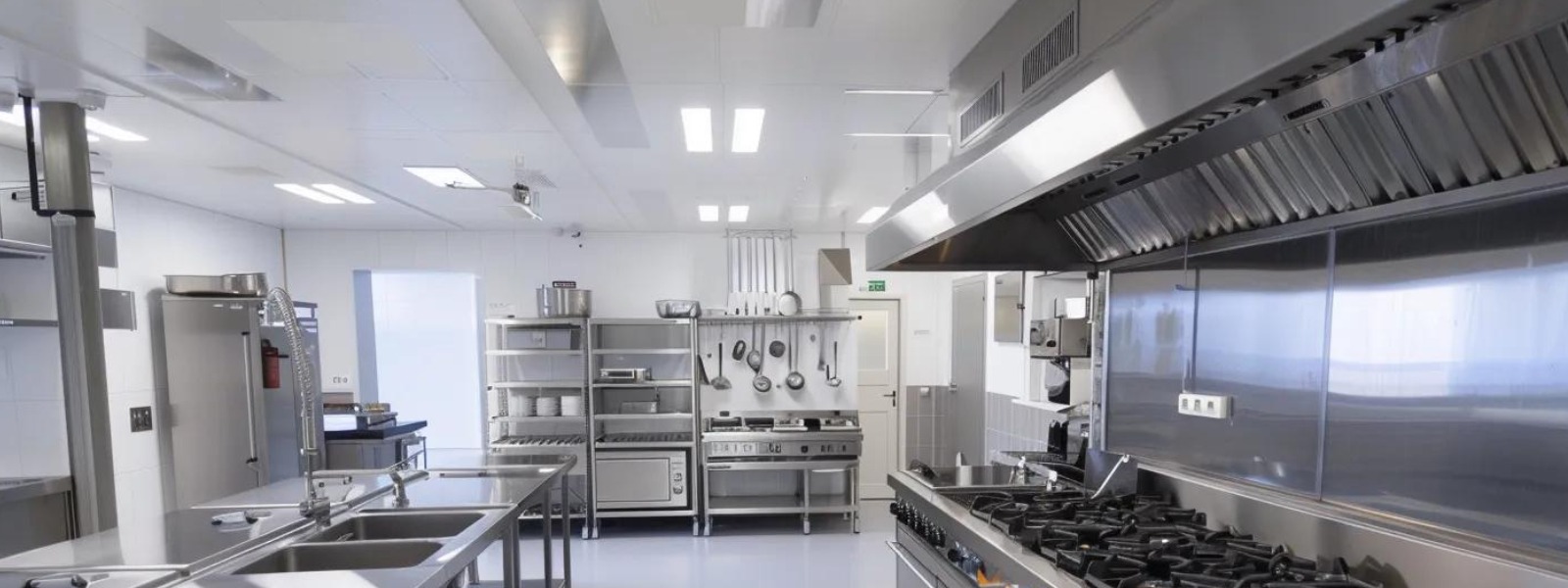
Not all commercial kitchens cost the same. Your restaurant type and size make a huge difference in your budget.
Small kitchens like cafes, food trucks, or bakeries typically cost $30,000 to $80,000 total. These compact spaces work for coffee shops and cafes, small bakeries, juice bars and smoothie shops, ghost kitchens and food trucks, and pop-up restaurants.
Equipment costs stay lower because you need fewer pieces. But don't underestimate how expensive the basics are. Even small kitchens need proper ventilation, sinks, and refrigeration.
Medium-sized kitchens serve most casual dining restaurants, pizzerias, and family-style eateries. Expect to spend $100,000 to $250,000.
These kitchens need multiple cooking stations, larger prep and storage areas, walk-in coolers or freezers, more powerful ventilation, and additional staff workspace.
The average restaurant kitchen runs about 1,000 square feet, making this the most common size range.
Full-service restaurants, hotels, and catering operations need large kitchens. These projects cost $300,000 to $650,000 or more.
Large commercial kitchens include separate hot and cold prep areas, multiple cooking lines, specialized equipment stations, large walk-in refrigeration, extensive storage space, and dishwashing areas with commercial machines.
High-end restaurants with custom equipment and specialized needs can exceed $1 million in build-out costs.
Where you build matters almost as much as what you build. Costs vary wildly across different parts of the country.
Building in major cities costs 20% to 40% more than the national average. The most expensive cities for commercial kitchen build-outs include New York City, San Francisco and Los Angeles, Boston, Seattle, Chicago, and Miami.
Everything costs more in these areas. Labor runs $75 to $150 per hour. Permits take longer and cost more. Real estate prices mean higher rent during construction.
Most mid-sized cities fall into the average cost range. Places like Atlanta, Denver, Portland, Austin, and Nashville have plenty of contractors, reasonable permit costs, and moderate labor rates around $50 to $85 per hour.
Small towns and rural areas offer the lowest build-out costs. You might save 15% to 30% compared to big cities.
But consider the trade-offs. Fewer specialized contractors are available. Equipment shipping times run longer. Less competition exists among suppliers. You might face travel costs for experts.
Professional build quality matters regardless of location. Custom closets in Huntsville demonstrates the attention to detail that separates quality contractors from budget options.
If you're building in North Alabama, you're in luck. Our region offers reasonable construction costs compared to major metro areas.
Time is money in construction projects. Understanding typical timelines helps you budget properly.
Most commercial kitchen projects take 2 to 6 months from start to finish. Simple renovations might finish in 8 weeks. Complex builds can take a year or more.
Your timeline includes design and planning that takes 2 to 4 weeks, permit approvals that need 2 to 8 weeks, construction and installation requiring 4 to 12 weeks, equipment setup and testing taking 1 to 2 weeks, and inspections with final approvals needing 1 to 3 weeks.
Delays happen on nearly every project. Weather, material shortages, and inspection issues can add weeks to your schedule.
You'll pay rent or mortgage payments while construction happens. Budget for 3 to 6 months of carrying costs even if work gets delayed.
Additional holding costs include insurance on the building, utilities during construction, security services if needed, and storage fees for equipment delivered early. These costs can add $10,000 to $30,000 to your total project expense.
Some contractors include project management in their bids. Others charge separately. Expect to pay 10% to 15% of construction costs for professional project management.
A good project manager coordinates all trades and deliveries, keeps the project on schedule, handles permit inspections, solves problems before they delay work, and makes sure everything meets codes.
This cost pays for itself by preventing expensive delays and mistakes.
Most restaurant owners need financing to cover build-out costs. Several options exist.
Commercial bank loans offer competitive interest rates but require strong credit and business plans. Banks typically lend 70% to 80% of project costs, require detailed financial projections, want to see your personal investment of 20% to 30% down, and take 4 to 8 weeks for approval.
Interest rates for commercial loans currently range from 7% to 12% depending on your creditworthiness.
Small Business Administration loans help small restaurant owners secure better financing terms. The SBA 7(a) loan program can cover equipment, working capital, and construction costs.
Benefits include lower down payment requirements of 10% to 20%, longer repayment terms up to 25 years, more flexible qualification requirements, and competitive interest rates. The application process takes longer, often 6 to 12 weeks.
Many equipment suppliers offer financing directly. This works well for the equipment portion of your build-out.
Equipment loans typically cover 80% to 100% of equipment costs, approve faster than traditional loans, use the equipment as collateral, and charge slightly higher interest rates.
Some suppliers offer lease-to-own options that keep your upfront costs even lower.
Bringing in investors means giving up some ownership in exchange for cash. This option works if you have a strong business concept, you're willing to share control and profits, you need more money than loans will cover, and you want to avoid taking on debt.
Always work with a lawyer when structuring investor deals. Getting the agreement right from the start prevents problems later.
Most commercial kitchens cost $200 to $450 per square foot including equipment and installation. Simple layouts on the lower end might run $150 per square foot, while high-end restaurants can exceed $650 per square foot. Your actual cost depends on equipment quality, kitchen complexity, and local labor rates.
Not really. Commercial kitchens require licensed contractors for plumbing, electrical, and gas work. Health departments won't approve work done by unlicensed people. You can save money by doing non-technical work like painting or basic cleaning, but the savings are minimal. Focus on smart planning and equipment choices instead.
Quality used equipment costs 40% to 60% less than new. A $10,000 oven might cost $4,000 to $6,000 used. But factor in potential repair costs and shorter lifespans. A good mix is buying new for critical items like refrigeration and used for items like prep tables and storage racks.
You'll need building permits for construction, plumbing permits, electrical permits, and health department approval. Some areas require separate fire marshal approvals. Your contractor should know which permits apply in your location. Budget $2,000 to $10,000 for all permits and inspection fees.
Most projects take 3 to 6 months from design to opening. Simple renovations in existing restaurant spaces might finish in 2 months. Building from scratch in a new space can take 8 to 12 months. Permit approval times vary widely by city and can add weeks or months to your timeline.
Building out a commercial kitchen is a major investment that requires careful planning. The costs range widely based on your location, kitchen size, and equipment needs, but most restaurant owners should budget $40,000 to $200,000 for the complete project.
Start by defining exactly what type of food service you'll offer. This drives every other decision about equipment and layout. Work with experienced designers and contractors who understand commercial kitchens. Their expertise prevents costly mistakes that eat into your budget.
Don't forget to plan for hidden costs like permits, contingencies, and carrying costs during construction. Setting aside an extra 15% for unexpected expenses keeps your project on track even when problems pop up.
Ready to create a commercial space that works as hard as you do? At Classic Cabinetry, we design and build custom commercial cabinetry in Alabama for offices, retail spaces, and professional environments throughout North Alabama. Our experienced team helps businesses maximize their space with quality craftsmanship built to last. Contact us today for a free consultation on your commercial project.