.png)


.png)




.png)

.png)


.png)
What Kind of Walls Are Required in a Commercial Kitchen?
link desc
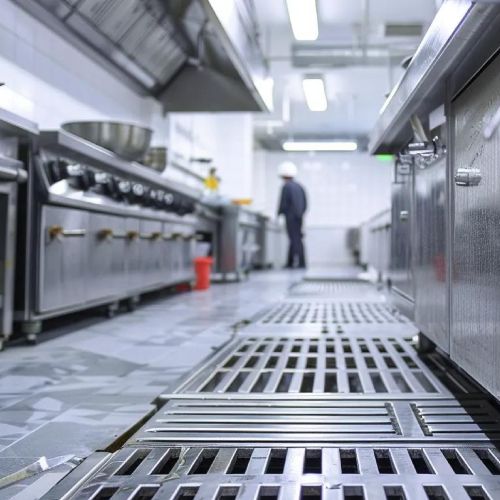


Floor drain requirements for commercial kitchens are designed to prevent standing water, contamination, and sanitation issues. Health codes typically require floor drains in areas with heavy water use, such as dishwashing stations, food prep zones, and walk-in coolers. Drains must be properly sloped, trapped, and connected to an approved sanitary system. Correct placement and regular maintenance help kitchens stay compliant and reduce slip and health hazards.
Floor drains are not just a convenience. They are a critical part of any food service operation. Think of them as the unsung heroes that work behind the scenes every single day.
Commercial kitchens produce large amounts of water, grease, and food debris. This waste comes from dishwashing, food prep, cleaning, and equipment like ice machines and steamers. Without floor drains, this water would pool on the floor. Standing water creates serious problems that no business owner wants to face.
Wet, slippery floors are dangerous. Kitchen staff move fast during busy service times. A puddle of water can lead to slips and falls in seconds. These accidents cause injuries that range from minor bruises to broken bones. Some workplace injuries lead to costly lawsuits and workers' compensation claims.
Floor drains remove water quickly before it becomes a hazard. When positioned in the right spots, they catch spills and rinse water as soon as they hit the floor.
The FDA and USDA set strict standards for commercial kitchens. According to federal sanitation standards, facilities must provide adequate floor drainage in all areas where floors are subject to flooding-type cleaning or where normal operations release or discharge water or other liquid waste on the floor.
Standing water is a breeding ground for bacteria. It attracts pests like flies and cockroaches. It also creates foul odors that can drive away customers. Health inspectors evaluate drain system cleanliness, flow capacity, proper maintenance documentation, and absence of foul odors during routine inspections.
Poor drainage leads to expensive problems. Once you get hit with health code violations, all operations must stop, which means your business gets shut down until the problem is resolved. You will need to fix the drainage issue, clean everything thoroughly, and pass a new inspection before reopening.
The cost goes beyond repairs. You lose revenue every day you are closed. Your reputation suffers too. Customers may not return after hearing about health violations. This is why smart business owners plan their commercial kitchen spaces carefully from the start.
Commercial kitchen floor drains fall under several overlapping rules. Federal agencies, state governments, and local authorities all have requirements. Understanding these rules helps you plan your kitchen correctly from the start.
The FDA Food Code serves as a model for states to follow. According to federal standards, facilities must also prevent back-flow conditions and cross-connections between piping systems that discharge waste water and piping systems that carry water for product manufacturing. This protects food from contamination.
The USDA has additional rules for facilities that process meat and poultry. These rules are often stricter than standard restaurant requirements.
Most states adopt either the International Plumbing Code (IPC) or the Uniform Plumbing Code (UPC). The California Plumbing Code section 411.2 requires floor drains to be installed in commercial kitchens. New York has similar requirements under their plumbing code.
Some states, like Florida, have specific rules about floor slopes and materials. Floors must slope 1/8 to 1/4 inch per foot toward drains to ensure rapid water removal.
Your local health department has the final say on what your kitchen needs. They may have rules that go beyond state requirements. Miami-Dade adds specific mandates for drainage in liquid-prone zones, requiring floor drains to accompany sloped surfaces in these regions.
Always check with your local authority having jurisdiction (AHJ) before starting any kitchen project. Getting their approval early saves you from costly changes later.

Not all floor drains are the same. Different types work better for different areas of your kitchen. Choosing the right drain for each location makes a big difference in how well your drainage system works.
Point drains are the most common type. They are round or square openings set into the floor. Area drains are point drains designed for either indoor or outdoor use and are generally constructed with a removable grate to allow for access and cleaning of the underground piping.
These drains work best in smaller areas where water flows from one direction. You might place them near a single piece of equipment or in a corner where water naturally collects. The floor around the drain must slope toward it from all sides.
Point drains are affordable and easy to install. They handle moderate water flow well. However, they may not be the best choice for areas with heavy water volume or lots of solid debris.
Trench drains are long, narrow channels covered with grates. Trench drain systems are above-the-ground floor drains composed of a trough drain or channel-style body with a grooved grate on top to keep large solids out of the drainage system.
These drains excel in high-volume areas. They capture water across a wide area instead of just one point. This makes them perfect for dishwashing stations, cooking lines, and walk-in cooler entrances.
The wide channel of a trench drain offers a higher capacity that allows it to handle larger amounts of wastewater and can also handle solid waste without backing up or clogging. You can install them in various lengths to fit your kitchen layout.
Slot drains look like thin lines in the floor. They have a narrow opening without a visible grate. A slot drain is a linear drainage system characterized by a narrow, elongated slot-like opening that allows water to enter the drainage channel, unlike traditional trench drains which have a grated cover.
The sleek design of slot drains makes cleaning easier. There are no grates to remove and scrub. Squeegees glide right over them. They also look more modern than traditional drains.
However, slot drains have limitations. The narrow opening can clog more easily with solid debris. They work best when you have good pre-filtering systems in place.
Floor sinks are different from floor drains, though people often confuse them. A floor sink is ideal if you have commercial appliances requiring drainage, especially if the equipment requires an air gap.
An air gap is a physical space between the drain outlet and the floor sink. This gap prevents sewage from backing up into your equipment. Ice machines, refrigerators, and dishwashers typically drain into floor sinks rather than directly into floor drains.
The materials you choose for your floor drains matter as much as the type. Commercial kitchens are tough environments. Your drains must withstand daily abuse from heat, chemicals, and heavy traffic. Just like choosing the best materials for high humidity cabinets, selecting the right drain materials prevents premature wear and failure.
Stainless steel is the best choice for commercial kitchen floor drainage. It is the most sanitary choice and offers the most durability in terms of load-bearing capability, corrosion resistance, and temperature resistance.
Think about what your drains face every day. Hot water from dishwashers. Acidic foods like tomatoes and citrus. Strong cleaning chemicals including chlorine and ammonia. Stainless steel handles all of this without breaking down.
Look for drains made from T304 or T316 stainless steel. T316 offers even better corrosion resistance, which is helpful in high-salt environments. Drains fabricated with 12GA stainless steel are USDA-FDA approved for the food, beverage, and dairy industry.
Kitchen floors support heavy equipment and constant foot traffic. Staff roll heavy carts over drains daily. Your drains must handle this weight without cracking or warping.
Drain grates come with different load ratings. Light-duty grates work for pedestrian traffic only. Medium-duty grates handle hand carts and light equipment. Heavy-duty grates support forklifts and loaded trucks.
Match the grate rating to how your kitchen operates. It is better to choose a higher rating than you think you need. A crushed drain grate creates a safety hazard and an expensive repair.
Look for drains that carry NSF certification. The National Sanitation Foundation tests products for use in food service environments. NSF-certified drains meet strict standards for sanitation, durability, and cleanability.
Many health departments require NSF-certified equipment. Even if yours does not, choosing certified products shows inspectors you take sanitation seriously.
Installing drains in the wrong spots defeats their purpose. Water will pool in areas away from the drains, creating the exact problems you are trying to avoid. Proper planning before installation saves headaches later.
Water does not flow uphill. Your floor must slope toward each drain so gravity can do its job. Floors must slope 1/8 to 1/4 inch per foot toward drains to ensure rapid water removal.
This slope is subtle enough that it does not create walking hazards. But it is steep enough to move water efficiently. Picture a very gentle ramp leading to each drain.
Where floor drains receive indirect waste or other drainage on a regular or frequent basis, the elevation of the floor drain shall be set so that the floor within a 2 foot radius can be sloped to the drain.
Place drains where water naturally collects. This includes areas near dishwashing stations and three-compartment sinks, under steam equipment and cooking lines, near ice machines and refrigeration units, at entrances to walk-in coolers and freezers, and in mop sink areas. Standing water is dangerous for both appliances and people, so it's important for restaurant floors to slope towards floor drains that allow spills to drain away safely.
Consider your cleaning routine too. You will hose down the floor regularly. Drains should be positioned so water flows toward them naturally during cleaning.
Do not place drains under heavy equipment that cannot be moved. You need access for cleaning and maintenance. Do not position drains where they could receive direct food waste. This leads to clogs and sanitation issues. Instead, use strainers and pre-rinse systems to capture solids before they reach the drain.
Think about your traffic patterns. Drains in the middle of busy walkways can trip staff. Position them along walls or under equipment when possible.
Grease is the enemy of any drainage system. It coats pipes, solidifies, and creates blockages. Commercial kitchens must have systems to capture grease before it enters the sewer system.
Restaurants, hotels, hospitals, school kitchens, or other establishments where grease may be introduced into the drainage system in quantities that can effect line stoppage or hinder sewage treatment require grease interceptors.
Local wastewater authorities strictly enforce these requirements. Grease clogs city sewer lines and damages treatment plants. The fines for non-compliance are steep.
Floor and trench drains in grease-prone prep and cooking areas must connect to grease interceptors. This includes drains near cooking equipment, prep sinks, and dish stations.
Fats, oils, and grease are introduced through every kitchen fixture, underscoring the need for precise regulations about which fixtures must be connected to an interceptor.
However, not everything goes through the grease interceptor. Waste in excess of 140°F shall not discharge into a grease trap. High-temperature dishwasher discharge may need separate handling depending on your local codes.
Interceptors come in different sizes based on flow rate. An undersized interceptor fills up too fast and stops working. An oversized one wastes money and space.
Proper sizing of grease separators is critical for effective operation. Calculate the appropriate interceptor size based on factors like peak flow rate and grease production.
Work with a licensed plumber or engineer to size your system. They will consider the number of fixtures, your menu type, and your peak business hours.
Grease traps should be cleaned when 25% of the liquid level of the trap is grease or oil, once a month minimum for point-of-use traps, and quarterly for large in-ground grease interceptors.
Keep detailed records of every cleaning. Health inspectors review these records during inspections to verify facilities meet minimum service frequency requirements. Missing or incomplete documentation can result in violations even when drainage systems function properly.
Some equipment in your kitchen cannot connect directly to the sewer system. This is a safety requirement that prevents contamination of food and equipment.
One of the most important requirements in commercial kitchen plumbing is knowing when to use direct or indirect connections to the main sewer line. Although plumbing fixtures such as floor drains can connect directly to the sewer, food storage or preparation equipment must connect to the sewer indirectly through a private drain.
An indirect connection has a physical gap between the equipment drain and the floor sink or drain. This gap prevents sewer backup from contaminating food equipment.
Most food-related equipment needs indirect drainage. This includes ice machines and ice bins, walk-in coolers and freezers, food prep sinks, refrigerated cases, and steam tables. Ice machines always need to discharge into a floor sink with an air gap, not a floor drain.
The air gap must be at least one inch or twice the diameter of the drain pipe, whichever is larger. An air gap between the water supply inlet and the flood level rim of the plumbing fixture shall be at least twice the diameter of the water supply inlet and may not be less than 25 mm (1 inch).
Imagine a sewer backup in your kitchen. Without air gaps, that sewage could flow back into your ice machine or refrigerator. This would contaminate everything inside and create a serious health emergency.
Air gaps make this impossible. The physical separation means sewage has nowhere to go but into the floor sink. Your equipment stays protected.
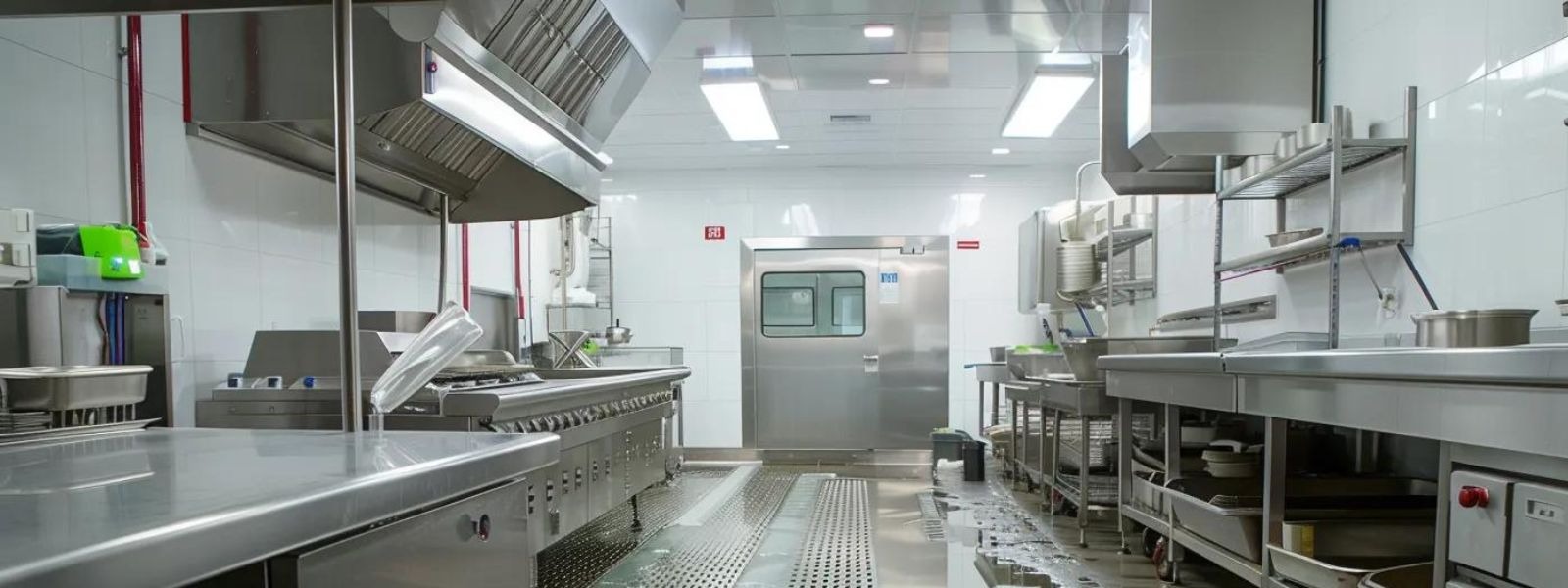
Installing the right drains is only the beginning. Keeping them working properly requires ongoing attention. Regular maintenance prevents clogs, odors, and health code violations. Think of drain maintenance like cabinet maintenance consistent care extends lifespan and prevents costly problems.
Floor drain maintenance standards require that all commercial kitchen floor drains remain clean, functional, and free from debris or standing water.
Every day, your staff should remove and clean drain strainers, clear visible debris from drain openings, and pour hot water down floor drains to prevent grease buildup.
These simple tasks take just a few minutes but prevent most common drain problems.
Once a week, do a deeper cleaning. Weekly enzyme dosing helps break down food and grease buildup before it hardens. Enzyme treatments use natural bacteria to digest organic matter in your drain lines.
Remove grates and scrub the drain body. Check that water flows freely. Note any slow drains that might need professional attention.
Monthly service typically includes drain line hydro jetting, grease trap evaluation, and floor drain cleaning. Professional plumbers have equipment that cleans deeper than your staff can reach.
Routine maintenance can cut equipment costs by up to 50% and extend the life of your plumbing systems by 25%. The money you spend on maintenance is far less than emergency repairs.
Document every cleaning, every service call, and every repair. Keep these records organized and easy to access. Health inspectors will ask to see them. Good records show you take maintenance seriously.
Create a simple log that includes the date, what was done, who did it, and any problems noted. This helps you spot patterns before they become major issues.
Even well-maintained drains have problems sometimes. Knowing how to handle common issues keeps your kitchen running smoothly.
Slow drains usually mean a partial blockage is forming. Scraps from food preparation and debris from plates, utensils, and cookware all end up in the drain, where they begin to accumulate. As more debris accumulates, it creates obstructions that impede the flow of wastewater.
Start with hot water and a plunger. If that does not work, try a drain auger (snake) to break up the blockage. For stubborn clogs, call a professional plumber who can use hydro jetting to clear the line completely.
Bad smells from drains come from two main sources: dried-out traps or organic buildup. Floor drains are equipped with traps that must remain full of water to uphold the trap seal, which prevents sewer odors from entering the occupied area. If no water flows down the drain, the trap will eventually dry out.
For rarely-used drains, pour water down them weekly to maintain the trap seal. For drains with organic buildup, enzyme treatments break down the odor-causing material.
A backup is a serious problem that needs immediate attention. It indicates a major blockage somewhere in your system. Stop using water in that area and call a professional plumber right away.
Overflowing drains create many safety hazards. Foodborne illnesses from contamination are one thing that could happen. More common are accidents caused because of the slippery floors themselves.
Cracked or warped grates are safety hazards. They can catch shoes and cause trips. They also allow debris into the drain that should stay out.
Replace damaged grates immediately. Keep spare grates on hand so you are never stuck waiting for a replacement to arrive.
Health inspections can feel stressful, but they should not be. If you maintain your drains properly, you have nothing to worry about. Here is what inspectors look for.
Visible cleanliness matters substantially to inspectors. Floor drains free from debris and standing water, clean drain grates properly installed, and absence of grease accumulation around sink drains all contribute to a passing inspection.
Before any inspection, walk through your kitchen. Look at every drain with fresh eyes. Would you be proud of what you see?
Inspectors may run water to check that drains flow properly. Slow drains or any sign of backup raises red flags. They also check that grates are secure and in good condition.
Have your maintenance records ready. Health inspectors review records during inspections to verify facilities meet minimum service frequency requirements. Organized records show you are a responsible operator.
The most frequent drain-related violations include standing water around drains, missing or damaged grates, visible grease buildup, foul odors from drains, and missing maintenance documentation.
Address these issues proactively. Regular inspections of your own catch problems before the health inspector does.
Floor drains are just one piece of a well-designed commercial kitchen. The overall layout affects how efficiently your drainage works. Poor planning leads to drainage problems that are expensive to fix later.
Think about how your kitchen flows. Prep areas, cooking stations, dishwashing zones, and storage all have different drainage needs. Each zone should have drains positioned to capture water from that specific area.
High-volume zones like dish pits need larger drains or trench systems. Prep areas may only need point drains. Storage areas for dry goods may not need drains at all.
Your cabinetry and equipment placement affects drainage accessibility. Heavy base cabinets should not block access to drain cleanouts. Equipment with drainage requirements needs floor sinks positioned correctly underneath.
When planning custom kitchen cabinets for commercial spaces, consider how they interact with your plumbing infrastructure. Smart design integrates storage solutions without compromising maintenance access.
Kitchens evolve over time. Menu changes might require new equipment. Business growth might mean higher volume. Design your drainage system with some extra capacity.
Adding drains later means cutting concrete and major construction. It is much easier and cheaper to install extra capacity during initial construction.
Yes, most state and local plumbing codes require floor drains in commercial kitchens. The California Plumbing Code section 411.2 specifically requires floor drains to be installed in commercial kitchens. New York and many other states have similar requirements. Check with your local health department and plumbing authority to confirm the specific requirements in your area before starting any kitchen project.
Clean drain strainers daily to remove food debris. Pour hot water down drains at the end of each day to prevent grease buildup. Monthly professional service typically includes drain line hydro jetting, grease trap evaluation, and floor drain cleaning. High-volume kitchens with heavy grease production may need weekly professional cleaning to stay compliant with health codes.
Floors must slope 1/8 to 1/4 inch per foot toward drains to ensure rapid water removal. This slope allows water to flow naturally toward drains without creating walking hazards for staff. Where floor drains receive indirect waste on a regular basis, the floor within a 2 foot radius must be sloped to the drain. Work with a professional installer to achieve the correct slope.
No, ice machines should never connect directly to floor drains. Ice machines always need to discharge into a floor sink with an air gap, not a floor drain. The air gap prevents sewage from backing up into the ice machine and contaminating your ice supply. This air gap must be at least one inch or twice the diameter of the drain pipe, whichever is larger.
Once you get hit with health code violations, all operations must stop, which means your business gets shut down until the problem is resolved. You will need to fix the drainage issue, clean and sanitize the entire kitchen, and pass a reinspection before reopening. The entire process can mean weeks of lost business and revenue, plus damage to your reputation that takes much longer to repair.
Floor drains may not be the most exciting part of your commercial kitchen. But they are one of the most important. Good drainage keeps your staff safe, your kitchen sanitary, and your business compliant with health codes.
Getting floor drains right starts with understanding the requirements. Choose the correct drain types for each area. Use quality materials that will last. Install them in the right locations with proper slopes. Then maintain them consistently.
The investment you make in proper drainage pays off every day. You avoid slip accidents. You pass health inspections with confidence. You keep your kitchen running smoothly without emergency plumbing calls.
If you are planning a new commercial kitchen or renovating an existing one, consult with professionals who understand your local codes. A licensed plumber and your local health department can guide you through the specific requirements for your situation.
For businesses in the Huntsville area looking to create functional, professional kitchen spaces, partnering with experienced craftsmen makes all the difference. At Classic Cabinetry, we understand that commercial spaces need solutions built for daily demands. Whether you need custom bathroom cabinets for a restaurant restroom or specialized storage for your commercial kitchen, our team delivers quality that lasts.
Start your commercial kitchen project with proper planning, and you will enjoy a safe, efficient workspace for years to come.