.png)


.png)




.png)

.png)


.png)
Backup Power Solutions for Commercial Kitchens
link desc
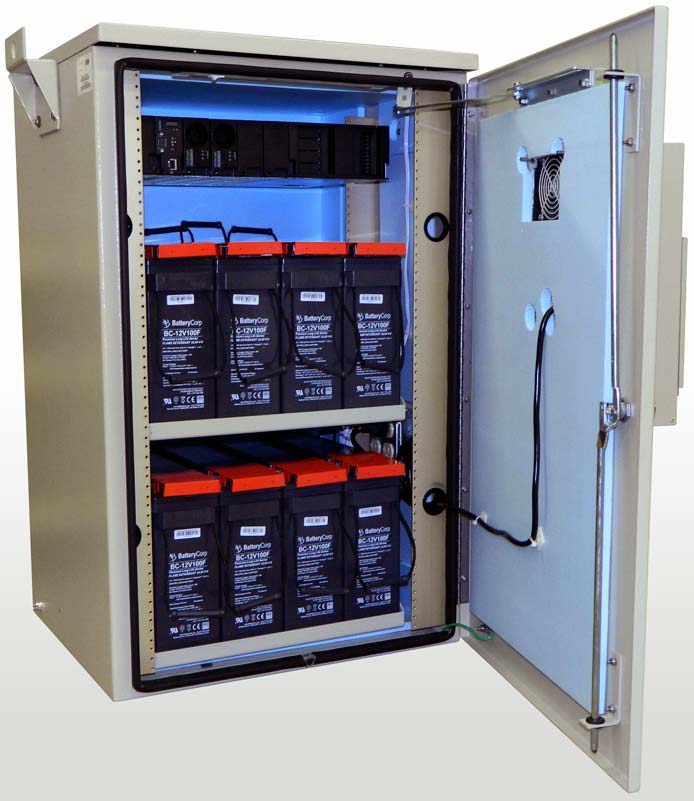


Backup power solutions for commercial kitchens include standby generators, uninterruptible power supply (UPS) systems, battery energy storage, and automatic transfer switches that keep your refrigeration, cooking equipment, and point-of-sale systems running when the grid goes down. A power outage in a commercial kitchen is not just an inconvenience. It is a financial emergency that can mean thousands of dollars in spoiled food, lost revenue, and potential health code violations within hours. This guide covers every major backup power option, how to size your system correctly, what equipment to prioritize, and how the right physical setup inside your kitchen keeps everything running smoothly when the lights go out.
The power needed for a commercial kitchen is significant. Most full-service commercial kitchens draw between 50 kilowatts (kW) and 200 kW or more depending on the size of the operation and the number of appliances running at peak hours. According to the U.S. Energy Information Administration (EIA), the food service industry uses more than 61 trillion BTUs of electricity per year across the United States.
Restaurants and bars use between five and seven times more energy per square foot than other commercial building types, according to Society Insurance. That high energy demand means your backup system must be sized carefully. A commercial freezer alone can draw over 2,000 kilowatt-hours annually. Electric deep-fat fryers use between 13,700 and 18,200 kWh per year, and commercial dishwashers consume between 9,400 and 17,200 kWh per year, according to data published by Thompson Power Systems.
When planning your kitchen layout, knowing your total power draw helps you plan not just for daily operations, but for which backup system will cover your real load when the grid fails. A smart physical design, including well-positioned commercial cabinets, keeps equipment accessible and utility panels clear so your backup systems can actually do their job.
Yes, outlets in a commercial kitchen need to be GFCI (Ground Fault Circuit Interrupter) protected in areas where water is present. The National Electrical Code (NEC) requires GFCI protection for receptacles near sinks, wet areas, and anywhere water and electricity are in close proximity. This is true for both standard operations and for any outlets connected to your backup power system. When installing a generator or battery backup, a licensed electrician must verify that all connected circuits comply with GFCI requirements and local codes.
The best backup source for a power outage in a commercial kitchen is a combination of a standby generator and an uninterruptible power supply (UPS) system working together. The UPS provides instant power the moment the grid fails, while the generator handles the sustained, heavy load of full kitchen operations for hours or even days. Neither one alone is as effective as both working in tandem.
According to the U.S. Department of Energy, power outages cost American businesses at least $150 billion every year. Restaurants feel that impact faster than almost any other industry because their entire operation depends on power from the moment service begins. Refrigerators start warming, POS systems go dark, and cooking stops, all at once.
Using a layered approach means your freezers and walk-in coolers stay cold from the instant the outage hits, your generator fires up within seconds, and service can continue with minimal interruption. The two systems complement each other in a way that neither can replace on its own.
Instead of a generator, you can use a Battery Energy Storage System (BESS), a solar-plus-storage hybrid, or a large-capacity UPS system for shorter outages. Each option has real limitations. A UPS typically provides power for only minutes to a few hours depending on load size. Battery storage systems can power critical equipment longer, but the runtime still depends on how much energy is stored and how much your kitchen draws. For extended outages lasting several hours or more, a standby generator remains the most reliable and cost-effective solution for a commercial kitchen.
The generator that is best for commercial use is a natural gas or diesel-powered standby generator sized at 20 to 25 percent above your kitchen's peak load, with an automatic transfer switch for hands-free activation. According to generator sizing experts at Blanchard Power Systems, retail and restaurant applications should plan on 50 kW plus 10 watts per square foot as a baseline starting point for sizing.
Natural gas generators connect directly to the gas pipeline so you never run out of fuel during normal outages. Diesel generators start up and assume a full electrical load in under 10 seconds, making them excellent for rapid-response situations. Both types are widely used in commercial food service environments. The right choice depends on your fuel access, space, local permitting rules, and how long you need the backup to run. If you are still in the planning phase of a full commercial kitchen build-out, accounting for backup power early in the design saves time and money later.
Diesel generators do have a practical advantage for total runtime. A full diesel tank provides more energy per volume than gasoline because diesel fuel has a higher energy density. For a kitchen that needs 24 to 48 hours of continuous operation during a major weather event, a diesel standby unit gives you the most flexibility.
A commercial generator can run for 24 to 48 hours on a single tank of diesel or propane fuel, and indefinitely when connected to a natural gas pipeline. Generator runtime depends on the fuel type, tank size, and the load placed on the generator. A generator running at 50 percent of its rated capacity will use far less fuel than one running at full load. For planning purposes, always calculate runtime at your expected peak load, not at half load, so you are not caught short during an extended outage.
A UPS (Uninterruptible Power Supply) works in a commercial kitchen by detecting a loss of grid power and switching to battery backup in less than one second, with zero interruption to connected equipment. This instant switchover is what makes a UPS so valuable. It bridges the gap between the moment the power goes out and the moment your generator comes online, which typically takes between 10 and 30 seconds.
In a commercial kitchen, a UPS is most valuable for protecting point-of-sale systems, order displays, and other sensitive electronics that cannot tolerate even a brief power interruption without losing data or resetting. According to Global Power Supply, most smaller UPS units sized up to 60 kVA use internal batteries, while larger systems require external battery banks for extended runtime. Small UPS systems typically run computers and electronics for five to 15 minutes. Larger systems with extended battery packs can run for 30 minutes to several hours depending on the load. Integrating your UPS near your primary commercial kitchen equipment stations makes emergency access simple.
A UPS also protects against power surges and voltage fluctuations that a generator alone cannot prevent. Dirty power from the grid or from a generator can damage sensitive kitchen electronics over time. A UPS acts as a clean power buffer between your electrical source and your most vulnerable equipment.
The best backup power supply for a commercial kitchen is a system that pairs a standby generator with a UPS and an automatic transfer switch. The UPS handles the instant transition, the generator sustains operations, and the automatic transfer switch manages the handoff between grid power and backup power without any human action required. This three-part setup gives you continuous protection from the second an outage begins to the moment utility power is restored.
For kitchens that also use solar panels, a solar-plus-battery hybrid can add a third layer of resilience. The battery stores daytime solar generation and can power refrigeration and lighting overnight or during an outage. According to Integrity Energy, lithium-ion battery backups have a high energy density and are commonly used in modern commercial energy systems for their fast charging and long lifespan.
System TypeResponse TimeRuntimeBest ForKey LimitationStandby Generator (Natural Gas)10-30 secondsIndefinite (gas line)Extended outagesGas line cutoff in emergenciesStandby Generator (Diesel)Under 10 seconds24-48 hrs per tankRapid-response, long durationFuel storage and refill neededUPS SystemUnder 1 second5 min to several hoursElectronics, POS, bridge powerLimited runtime on heavy loadsBattery Energy Storage (BESS)Near-instantHours (depends on capacity)Medium-duration outages, peak shavingHigh upfront cost, finite capacityGenerator + UPS HybridSeamless (zero gap)Unlimited (with fuel)Full kitchen operationsHigher installation complexitySolar + Battery StorageNear-instantVaries with sun and capacityDaytime resilience, cost reductionDependent on solar generation
Sources: Global Power Supply, Woodstock Power Company, Integrity Energy, Elexity.io, EIA.
Yes, you need a permit to install a battery backup or generator in most U.S. jurisdictions. Commercial standby generator installations require an electrical permit, a site inspection, and in many cases an engineer-reviewed plan to ensure compliance with the National Electrical Code (NEC) and National Fire Protection Association (NFPA) standards. Battery backup systems also typically require permits and professional installation for anything beyond a small plug-in unit.
According to generator sizing guidelines from General Power Limited, large-scale commercial generator installations require an engineering plan and engineer supervision to comply with NEC Articles 700, 701, 702, and 708, which govern emergency and standby power systems. Working without permits creates liability, insurance problems, and potential health code issues. Always hire a licensed electrician and pull the proper permits before installation.
Sizing a backup power system for a commercial kitchen starts with calculating your peak electrical load. List every piece of equipment you need to keep running during an outage, including walk-in coolers, freezers, cooking equipment, ventilation, lighting, POS systems, and security. Add up the running watts for all items, then add the starting watts for the largest motor, since compressors and motors can draw up to six times their running wattage at startup. For more context on what a full build-out involves, see our overview of full commercial kitchen costs, which covers equipment, layout, and infrastructure planning.
According to Turnkey Industries and Blanchard Power Systems, restaurants should use a square footage estimate of 50 kW plus 10 watts per square foot as a baseline. Once you have your total load in kilowatts, add 25 percent for reserve and surge capacity. If your calculated load is 80 kW, you should select a 100 kW generator. Generator sizing expert sources consistently recommend choosing the next highest capacity if your needs fall between standard ratings.
A key rule from Generac and Home Power Systems is to select a generator rated at 20 to 25 percent above your peak load. A higher-rated generator running at 80 percent of capacity is more efficient, lasts longer, and handles unexpected load spikes better than one running at full capacity all the time. Never run a commercial generator at its maximum rated output for more than 30 minutes continuously.
A priority load list is a document that identifies which equipment must stay powered during an outage and which can be shut down to reduce the burden on your backup system. In a commercial kitchen, the top priority loads are almost always walk-in coolers and freezers, since food safety timelines begin the moment refrigeration fails. According to the U.S. Department of Agriculture, a refrigerator without power keeps food safe for only about four hours. Freezers hold temperature longer if kept closed.
Your priority list should also include ventilation hoods (required by code in most states when cooking), POS systems, emergency lighting, and security systems. Non-critical loads like decorative lighting, music systems, and charging stations can be shut off to preserve generator runtime and fuel. Planning your priority list before an outage happens means your staff knows exactly what to do the moment the power goes out, without confusion or delay.
The physical layout of your kitchen affects this planning significantly. Well-organized commercial kitchen cabinetry with dedicated storage zones, accessible panels, and logical equipment placement makes it easier to manage any emergency response, including a power outage. A cluttered, disorganized kitchen wastes critical minutes when every second counts.
Surviving a commercial kitchen power outage without full backup power means acting quickly and following a clear plan. The first priority is food safety. Keep walk-in cooler and freezer doors closed as much as possible. A full, sealed walk-in freezer can hold safe temperatures for 24 to 48 hours. A refrigerator holds safe temperatures for about four hours according to USDA guidelines. If your kitchen is part of a larger commercial space, understanding how a commercial kitchen is permitted and structured on a property helps you know which systems are your responsibility versus the building owner's.
Contact your utility provider immediately to find out how widespread the outage is and what the estimated restoration time looks like. In some jurisdictions, local health codes require you to close the kitchen as soon as power goes out. Knowing your local rules before an emergency happens prevents violations and fines.
If you have even a partial backup system, prioritize refrigeration above all else. Society Insurance reports that the indirect losses from a commercial kitchen outage, including lost wages, missed revenue, and customer trust damage, often exceed the direct cost of the spoiled food itself. Small restaurants and grocery stores in Washington State reported spoilage losses of $5,000 to $20,000 per business during a single major outage event, according to research cited by Huckleberry Electric.
An automatic transfer switch (ATS) is a device that monitors your utility power and automatically disconnects your building from the grid and connects it to your generator or battery system within seconds of a power failure, without any human action required. The ATS ensures the generator and the utility grid are never connected at the same time, which would be dangerous. It manages the entire transition automatically and reconnects to grid power when utility service is restored.
For a commercial kitchen where severe weather, thunderstorms, and summer storm season regularly knock out power, an automatic transfer switch is not optional. It is the difference between your walk-in cooler staying cold and waking up to thousands of dollars in spoiled inventory. Without it, someone must manually start the generator and throw a switch, which costs time and creates risk. According to the U.S. Energy Information Administration, U.S. electricity customers experienced an average of 11 hours of power interruptions in 2024, nearly double the average of the previous decade, largely driven by major weather events.
Battery Energy Storage Systems (BESS) are increasingly popular in commercial kitchens as a complement to generators or as a standalone short-duration backup for smaller operations. A BESS stores electrical energy and provides instant power when the grid fails. Unlike a generator, it produces no noise, no emissions, and requires no fuel.
According to Elexity.io, the most advanced hybrid configurations use the battery system as the grid-forming source during an outage. The battery's inverter creates a stable local grid for the building, and the generator then syncs to the battery's rhythm once it starts up. This setup can provide zero power interruption. For a commercial kitchen with sensitive electronics and POS systems, that seamless transition is the gold standard.
The practical limitations of BESS are real. The upfront investment is higher than a standalone generator. Runtime is finite and depends entirely on how much energy was stored before the outage and how much load the kitchen places on the system. For outages lasting more than a few hours, a BESS alone is usually not enough without a generator or solar recharge source alongside it. Lithium-ion batteries in BESS systems also require proper thermal management to prevent overheating, especially in a commercial kitchen environment that already generates significant heat.
Yes, solar power can help back up a commercial kitchen when paired with a battery storage system. Solar panels generate electricity during daylight hours, and the excess energy charges a battery bank that can power critical equipment during outages or overnight. This setup also reduces your daily electricity costs by reducing peak demand charges from the utility grid.
According to data from the EIA, food service electricity consumption accounts for more than 61 trillion BTUs per year in the United States, making commercial kitchens among the largest electricity consumers per square foot of any commercial building category. A solar-plus-storage system can meaningfully reduce those ongoing energy costs while adding resilience. The combination is most effective for kitchens in sun-rich climates, kitchens with large roof space for panels, and operations with high daytime electricity usage.
Maintaining your commercial kitchen backup power system means treating it like any other critical piece of equipment. A generator that has not been tested in six months is not a reliable generator. Most manufacturers and industry best practices recommend running your standby generator under load for at least 30 minutes every month to keep the engine conditioned, the battery charged, and the fuel system free of sediment.
UPS systems require battery replacement on a regular cycle. Most commercial UPS batteries have a service life of three to five years. After that, battery capacity drops and the system may not provide the full runtime it originally promised. Many facilities managers do not track battery replacement dates and discover the failure only when a real outage occurs. Schedule annual inspections with a qualified electrician and keep battery replacement dates on your maintenance calendar. Regular maintenance on all kitchen systems, including cabinetry and storage, is what keeps a commercial space performing at its best long term.
Automatic transfer switches should be tested regularly as well. Test the full sequence including the utility outage simulation, the generator start, the transfer, the generator run, and the retransfer back to utility power. Each step should happen smoothly and within the expected time. Any hesitation, failure to start, or slow transfer is a problem that needs to be fixed before a real outage happens.
The physical organization of your kitchen plays a role here too. Circuit breaker panels, transfer switch locations, generator connection points, and emergency shutoff controls should all be clearly labeled, accessible, and free of obstructions. Properly designed commercial cabinet systems can help keep critical utility areas organized and accessible so your team can act quickly during any emergency.
Power planning for a commercial kitchen is not just about choosing equipment. It is about designing a system that meets code, passes inspection, and works reliably when it is needed most. The National Electrical Code (NEC) sets the baseline standards for all electrical installations in the United States, including backup power systems. The National Fire Protection Association (NFPA) adds additional requirements for emergency power in commercial occupancies.
Beyond the NEC and NFPA, your local health department may have specific requirements about what equipment must remain powered to maintain food safety compliance during an outage. Some municipalities require restaurants to close immediately when power is lost. Others allow continued operation if refrigeration is maintained by backup power. Knowing your local rules before you design your backup system ensures you build a solution that actually allows you to stay open during an outage, not one that only partially meets the legal requirements. For restaurants considering a full build-out, knowing the floor drain requirements and other code essentials from the start makes the entire build-out process smoother.
OSHA also has standards for working safely with standby generators, including proper ventilation to prevent carbon monoxide buildup and grounding requirements. Commercial generators produce carbon monoxide and must be installed outdoors or in a properly ventilated enclosure, never inside a kitchen or building. This is a life-safety requirement, not a suggestion.
A 50,000 mAh power bank will last only a few minutes to a couple of hours in a commercial kitchen depending on the equipment connected to it. A 50,000 mAh power bank stores approximately 185 watt-hours of energy. A single commercial refrigerator compressor can draw 200 to 500 watts. This means a standard power bank is not a viable backup solution for commercial kitchen equipment. Power banks are suited for charging phones and laptops, not for sustaining commercial-grade appliances.
A 1,000-watt solar generator will run a standard commercial refrigerator for approximately four to eight hours depending on the refrigerator's draw and the generator's battery capacity. Most commercial refrigerators cycle on and off and average between 100 and 400 watts of running consumption. A 1,000-watt solar generator with a 1,000 Wh battery might sustain a single refrigerator during a moderate outage. For a full commercial kitchen with multiple coolers, freezers, and cooking equipment, a solar generator in this range is far undersized. A commercial kitchen typically requires 50 kW or more at peak load.
A 20kW generator will not run a whole commercial kitchen in most cases. A full-service restaurant kitchen commonly requires 50 kW to 150 kW or more at peak demand. A 20kW generator can power critical refrigeration and emergency lighting in a small operation, but it cannot handle cooking equipment, HVAC, dishwashers, and refrigeration simultaneously. According to generator sizing guidelines from Blanchard Power Systems, a restaurant should start with 50 kW plus 10 watts per square foot as a planning baseline. A 20kW unit may work for a very small food prep area, but not for a full commercial service kitchen.
We do not provide specific cost figures because equipment and installation prices vary widely based on generator size, fuel type, location, and electrical infrastructure. A licensed electrician and generator specialist in your area can give you an accurate quote based on your kitchen's specific load requirements, available space, and local permitting costs. The cost of not having backup power, including food spoilage, lost revenue, and potential health code violations, is a factor many kitchen operators underestimate when deciding whether to invest in a backup system.
Permit requirements for installing a standby generator vary by city and state, but most jurisdictions require an electrical permit, a mechanical permit for fuel connections, a site plan, and a licensed electrician to perform and sign off on the installation. Large commercial standby generator installations typically also require compliance with NEC Articles 700, 701, 702, and 708, which cover emergency and legally required standby power systems. Some localities require a fire marshal inspection as well. Always check with your local building authority before beginning any generator installation to avoid costly delays or violations.
You test a commercial kitchen backup power system by simulating a utility outage and verifying that the automatic transfer switch, generator, and UPS all perform correctly through the full cycle. Start the test during a low-activity period to minimize disruption. Simulate the grid failure, confirm the transfer switch disconnects from the utility and connects to the backup source within the specified time, verify that all priority loads are powered, run the system under load for at least 30 minutes, and then confirm the smooth retransfer back to utility power when it is restored. Log the results and note any issues for immediate follow-up.
Yes, a commercial kitchen can stay open during a power outage if it has a properly sized and code-compliant backup power system that maintains refrigeration, ventilation, cooking capability, and point-of-sale systems. Without backup power, many local health codes require immediate closure. With an adequate backup system, you can continue limited or full service depending on what equipment your generator supports. Restaurants that stay open when competitors close build stronger customer loyalty. According to QSR Magazine, remaining open and stable during disruptions is one of the most effective ways a restaurant can strengthen its reputation with customers.
A power outage in a commercial kitchen is a race against the clock. Refrigerators start warming the moment the power goes out. Revenue stops. Food safety timelines begin immediately. The businesses that come through outages without major losses are the ones that planned ahead with the right combination of standby generators, UPS systems, automatic transfer switches, and a clear priority load list. According to the U.S. Energy Information Administration, Americans experienced an average of 11 hours of power interruptions in 2024, nearly double the previous decade's average. That trend is not reversing. Building a reliable backup power plan is not optional for any serious food service operation.
A well-planned kitchen also starts with a well-built physical space. Organized, professionally built commercial cabinetry keeps your kitchen running efficiently every day and helps your team act quickly when the unexpected happens. At Classic Cabinetry, we work with restaurants, fine dining establishments, and commercial spaces. If you are planning a commercial kitchen build-out or renovation and want cabinetry that is built to perform for the long haul, we would love to talk. Reach us at (256) 423-8727 or stop by our showroom in Ardmore, Alabama.