How Deep Should Closet Shelves Be
link desc
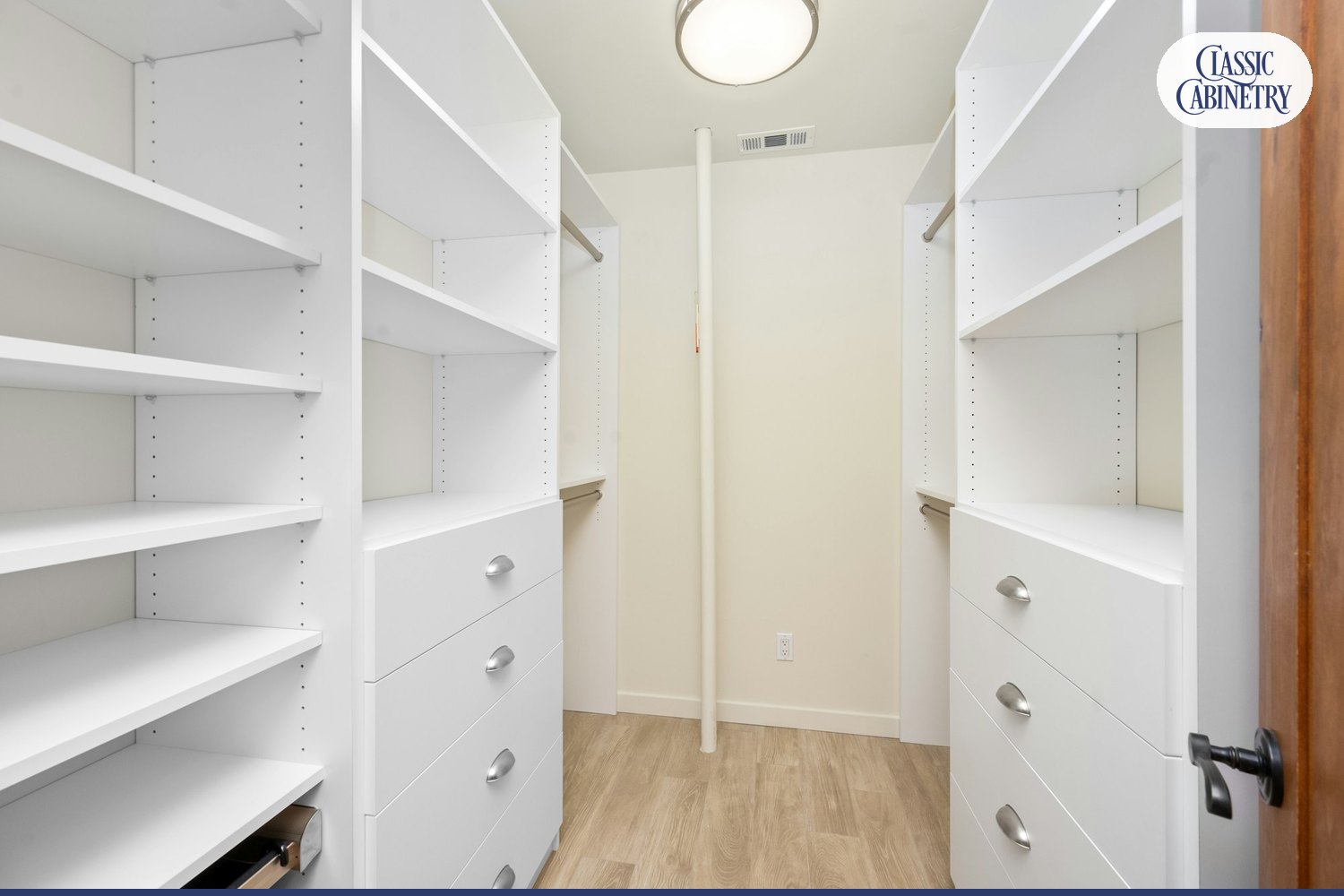


Closet shelves should be 12 to 16 inches deep for folded clothes, shoes, and accessories. Designers quoted by Homes & Gardens put reach-in shelves at 12 to 14 inches and walk-in shelves at 18 to 24 inches. Hanging sections follow a separate 24 inch closet depth. This guide covers shelf depth, shelf width, span limits, and vertical spacing for every closet type.
Key Takeaways
Closet shelves should be 12 to 16 inches deep for folded clothing in a standard closet. Dimensions.com lists 12 inches for shoes and smaller clothing items. Designers quoted by Homes & Gardens set clothes shelving at 14 to 16 inches. That depth keeps items from getting lost in the back. How deep closet shelves run depends on the closet type and the stored item.
Our closet shelving is cut to the depth of each stored item, so no shelf wastes floor space. The next section separates shelf depth from hanging depth.
Hanging clothes need a closet that is 24 inches deep, but the shelf above the rod stays shallower. Bob Vila says the average closet is 24 inches deep, with the rod at least 12 inches from the rear wall. A shelf above that rod runs 12 to 14 inches deep.
A closet design guide explains the number with hanger math. A standard adult hanger is 17 to 19 inches wide. Centered in a 24 inch closet, that hanger leaves about 2.5 inches on each side. Shelf depth and hanging depth therefore answer two different questions.
Bob Vila adds a clearance rule for a shelf over a rod. The shelf bottom sits at least 2 inches above the rod top, so hangers move freely. Single rods sit 66 inches above the floor, per the same source.
Closet shelves are typically 12 to 16 inches deep in a standard bedroom closet. Dimensions.com sets shoes and smaller clothing at 12 inches. A closet design guide sets sweaters and folded clothes at 14 to 16 inches. Walk-in shelves run deeper, as the next section shows.
Designers quoted by Homes & Gardens give 12 to 14 inches for reach-in closets. Walk-in closets get 18 to 24 inches, because the room has aisle space to spare. Standard depth stays near 12 inches wherever the closet is narrow.
Closet shelves in a walk-in need to be 18 to 24 inches deep when the room has room for it. Homes & Gardens quotes a designer who sets walk-in shelves in that range. Deeper shelves hold handbags, bins, and bulky sweaters.
A walk-in aisle still comes first. A closet design guide lists 24 inches of depth per wall of hanging plus a 36 inch walkway. A two-sided walk-in then measures about 7 feet wide. Our walk-in closet layouts show how shelf depth and aisle width trade against each other.
Closet shelves for clothes should be 14 to 16 inches deep for sweaters, jeans, and tees. Designers quoted by Homes & Gardens explain that this depth keeps items from getting lost in the back. A shelf at 12 inches also works for smaller stacks.
The table below compares shelf depth by storage use. The depths come from the sources named in each row.
| Storage use | Shelf depth | Source |
|---|---|---|
| Sweaters and folded clothes | 14 to 16 inches | Homes & Gardens designers |
| Reach-in closet shelves | 12 to 14 inches | Homes & Gardens designers |
| Walk-in closet shelves | 18 to 24 inches | Homes & Gardens designers |
| Shoes and small items | 12 inches | Dimensions.com |
| Traditional shoe shelves | 14 inches | Homes & Gardens designers |
The table shows depth growing with the size of the stored item. The graphic below turns the same numbers into a quick reference.
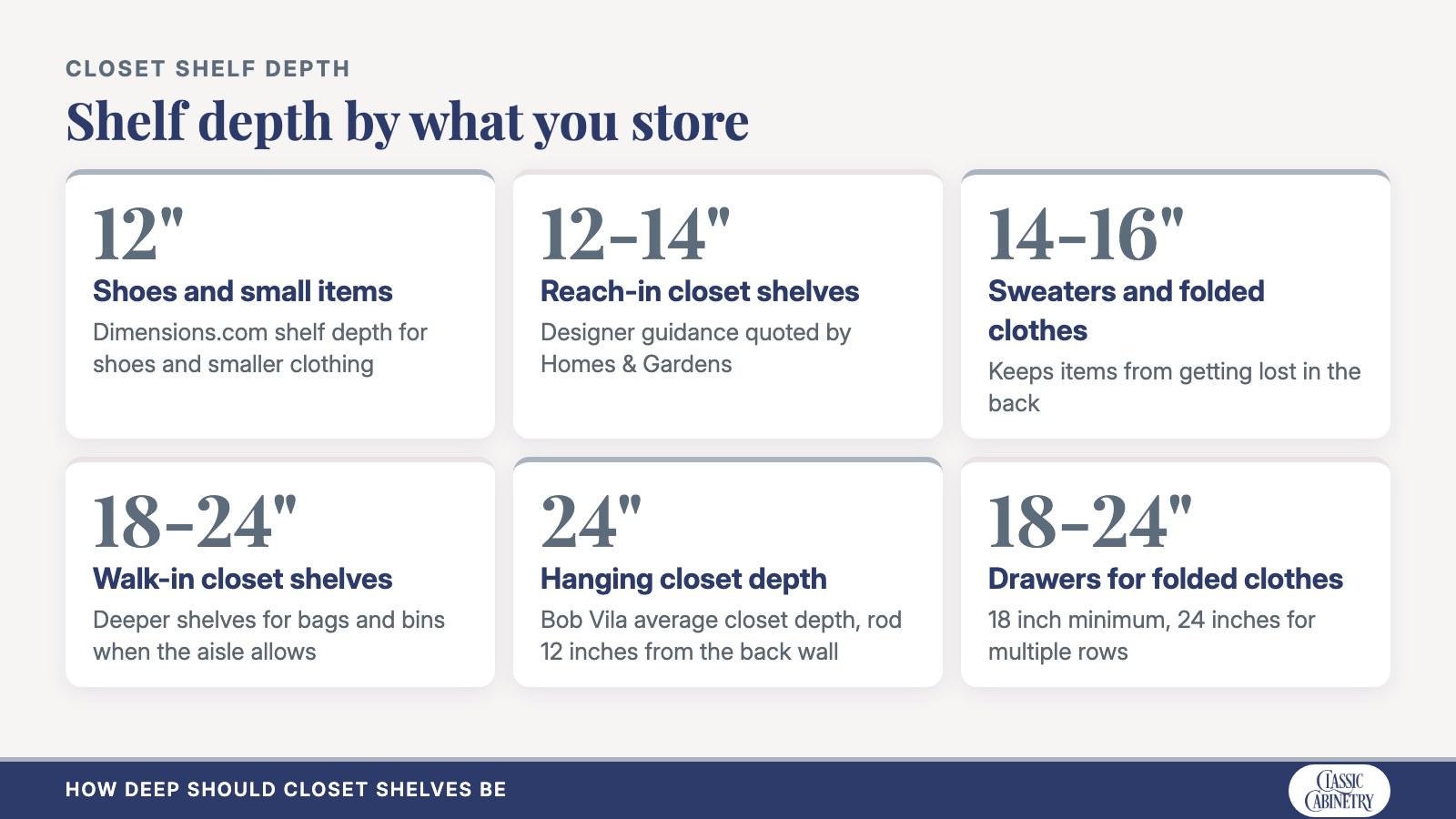
Closet shelves for shoes are 12 inches deep in a standard layout. Dimensions.com recommends 12 inches for shoes and smaller clothing. Designers quoted by Homes & Gardens call 14 inches the traditional shoe shelf depth because it fits most shoe sizes.
Spacing matters as much as depth. Those designers space shoe shelves every 10 to 12 inches. A few shelves at the top or bottom sit 24 inches apart for boots. Taller shoes then fit without a wasted gap.
No, 20 inches is too shallow for standard side-to-side hanging. Dimensions.com notes that a closet can be as narrow as 20 inches. A closet design guide finds that hangers start to angle at that depth. Coats then will not hang straight.
A 22 inch closet works slightly better. Sleeves brush the back wall and catch on sliding doors. Forward-facing rods fix the problem, and shelves then take the leftover depth. A custom plan measures the closet first and picks each section to match.
No, 30 inches is not too deep for a closet. A closet design guide lists 26 to 30 inches as a comfortable reach-in depth. The extra inches give bulky coats room and let doors close without catching sleeves.
The shelves inside should not grow with the closet. A shelf over 16 inches deep pushes items out of reach. Section depth can step up for drawers while shelves stay shallow, as the next section explains.
Yes, one closet should mix shelf depths by section. A closet design manufacturer builds panels in 12, 16, 20, and 24 inch depths so each section matches its job. Shoes sit on 12 inch shelves, and folded clothes sit on 14 to 16 inch shelves.
Mixed depth also controls the front edge. Every shelf face lines up, and the deeper sections step back or use drawers. Our closet drawers carry folded stacks that a shelf would bury. The same logic carries into shelf width.
Closet shelves should be 30 to 36 inches wide between supports. Woodbin, a woodworking reference, calls 30 to 36 inches a practical span for 3/4 inch stock. WoodWeb contributors call 36 inches a common closet dimension for clothing.
Wider shelves sag under folded stacks. Material choice sets the true limit, so the next section lists spans by material.
Standard closet shelves are 24 to 36 inches wide between side panels. Woodbin lists 24 to 36 inches for hanging shelves. The question of how wide are closet shelves has a custom answer too, since each section gets its own shelf run.
A section over 36 inches gets a center divider. That divider adds support and keeps each shelf short. The table below shows what each material can span.
| Shelf build | Maximum span |
|---|---|
| 3/4 inch particleboard | 26 inches |
| 3/4 inch plywood | 32 inches |
| 3/4 inch plywood with one 1-1/2 inch cleat | 42 inches |
| 3/4 inch plywood with two 1-1/2 inch cleats | 48 inches |
The table reflects a 20 pound per square foot load, according to Woodbin. Plywood spans longer than particleboard, and cleats add the most reach. The graphic below shows the same spans side by side.
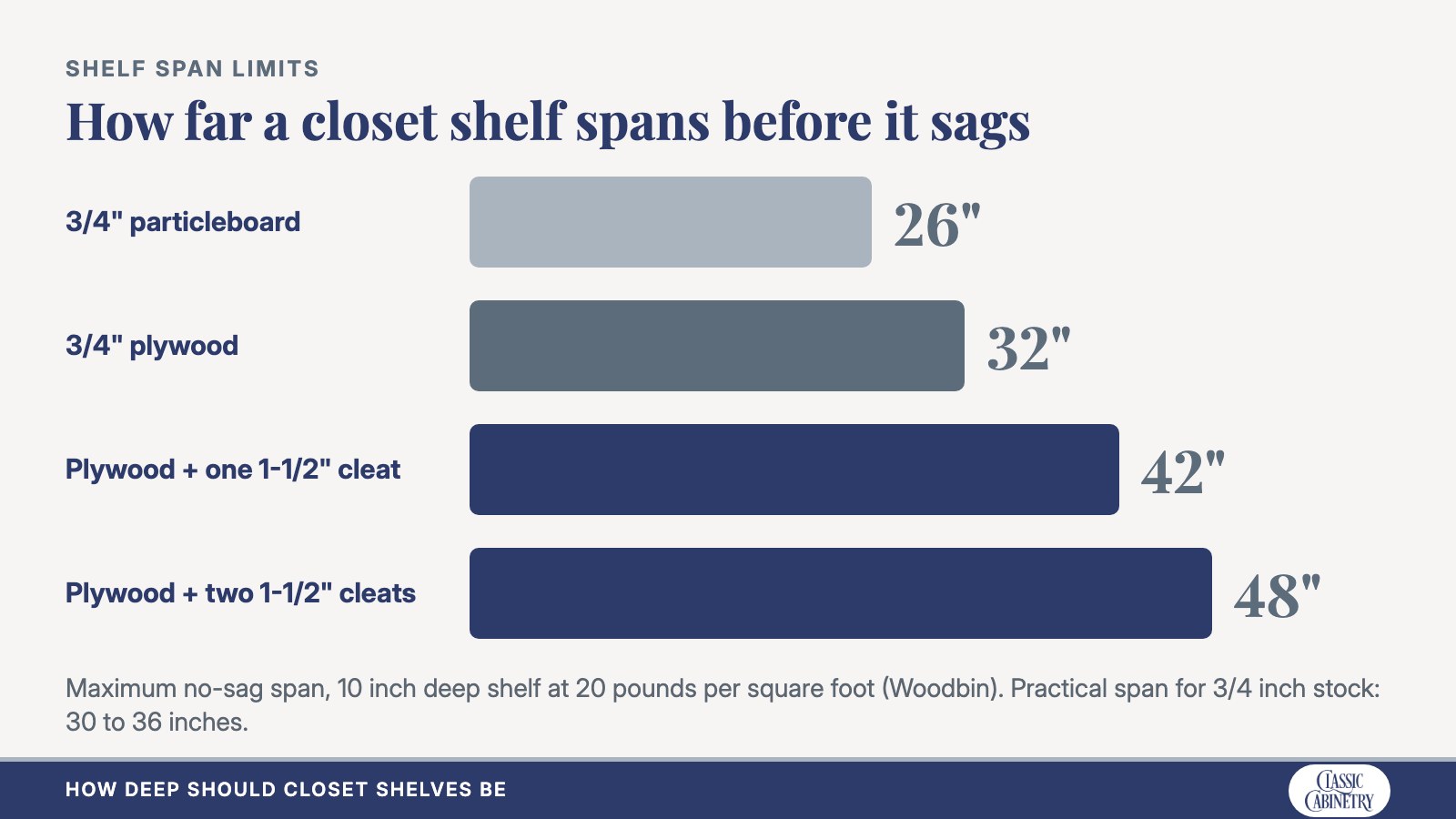
Stop closet shelves from sagging by shortening the span and stiffening the edge. Woodbin ranks solid wood as stiffer than plywood, and plywood as stiffer than particleboard. Particleboard creeps over time, so a long span shows a visible dip.
Use these steps in order:
These steps keep a shelf level under folded stacks. The next question covers vertical spacing between shelves.
Closet shelves should sit 10 to 12 inches apart for shoes and small stacks. Homes & Gardens quotes designers who set shoe shelves at that spacing. Sweater stacks need more room than shoes, so those sections open wider.
Reach sets the top limit. The 2010 ADA Standards use a reach range of 15 to 48 inches above the floor. Shelves for daily items belong inside that band. A companion guide on shelf height and spacing covers the full vertical plan.
Linen closet shelves run 12 to 16 inches deep. A closet design guide lists 16 to 20 inches as the standard linen closet depth. Folded towels rarely need more than 16 inches of shelf. Our pantry shelf depth follows the same logic for jars and boxes.
Closet drawers for folded clothes should be at least 18 inches deep. Dimensions.com sets 24 inches for drawers that hold multiple rows of folded clothing. Deep drawers match a standard 24 inch closet depth.
A coat closet is 24 to 28 inches deep for hanging coats, according to a closet design guide. Shelves above the coat rod follow the 12 to 14 inch rule. The shelf stays shallow so hats and gloves stay visible.
General-purpose bookshelves run 10 to 12 inches deep, according to Woodbin. That depth overlaps with closet shelving. Our bookshelf depth options follow the same sizing logic.
Yes, adjustable shelves let one closet change as storage needs change. Designers quoted by Homes & Gardens prefer adjustable shelving for flexibility. The depth stays fixed while the height moves, and our closet accessories add shoe racks and valet rods to those sections.
Shared closets use the same shelf depths but add sections per person. Hanging depth stays 24 inches per wall. For shared closets, each person gets a section sized to their storage.
Yes, 12 inches is deep enough for shoes, small clothing stacks, and accessories. Dimensions.com recommends 12 inches for shoes and smaller clothing. Sweaters fit better on 14 to 16 inch shelves.
A good closet shelf depth is 12 to 16 inches. Shoes use the low end of that range. Folded sweaters use the high end.
Yes, a walk-in closet shelf can be 24 inches deep. Homes & Gardens quotes designers who use 18 to 24 inches in walk-ins. Reach-in shelves that deep push items out of reach.
The shelf above a closet rod is typically 12 to 14 inches deep. The rod sits 12 inches from the back wall. A 2 inch gap separates the shelf bottom from the rod top.
A closet shelf section should be 30 to 36 inches wide for 3/4 inch stock. Wider sections need a cleat or a center divider. Plywood with two cleats spans 48 inches.
No, shelf depth does not change the hanging space. The rod sits 12 inches from the back wall regardless of the shelf above. A 24 inch closet depth keeps hangers clear.
Classic Cabinetry builds custom closet shelves to the depth, width, and span each closet needs. Our team in Huntsville and North Alabama measures the closet first. Shelf depth, rod position, and section width then follow from the measurements.
The Classic Cabinetry experts pick materials for each span, so shelves stay level under folded stacks. Plywood, cleats, and center dividers match the load on every section.
Photos help a homeowner compare depths before the measuring visit begins. Our gallery shows finished closets with shelf runs of many widths and depths, from shoe sections to deep walk-in banks. Each run shows how depth changes with the stored item and the room.
Call (256) 423-8727 to start a plan for custom closet storage built around the closet you have. The measurements come first, and the shelves follow from them.