.avif)


.avif)


.avif)
How to Design a Home Office and Guest Room Combo With Custom Cabinetry
link desc
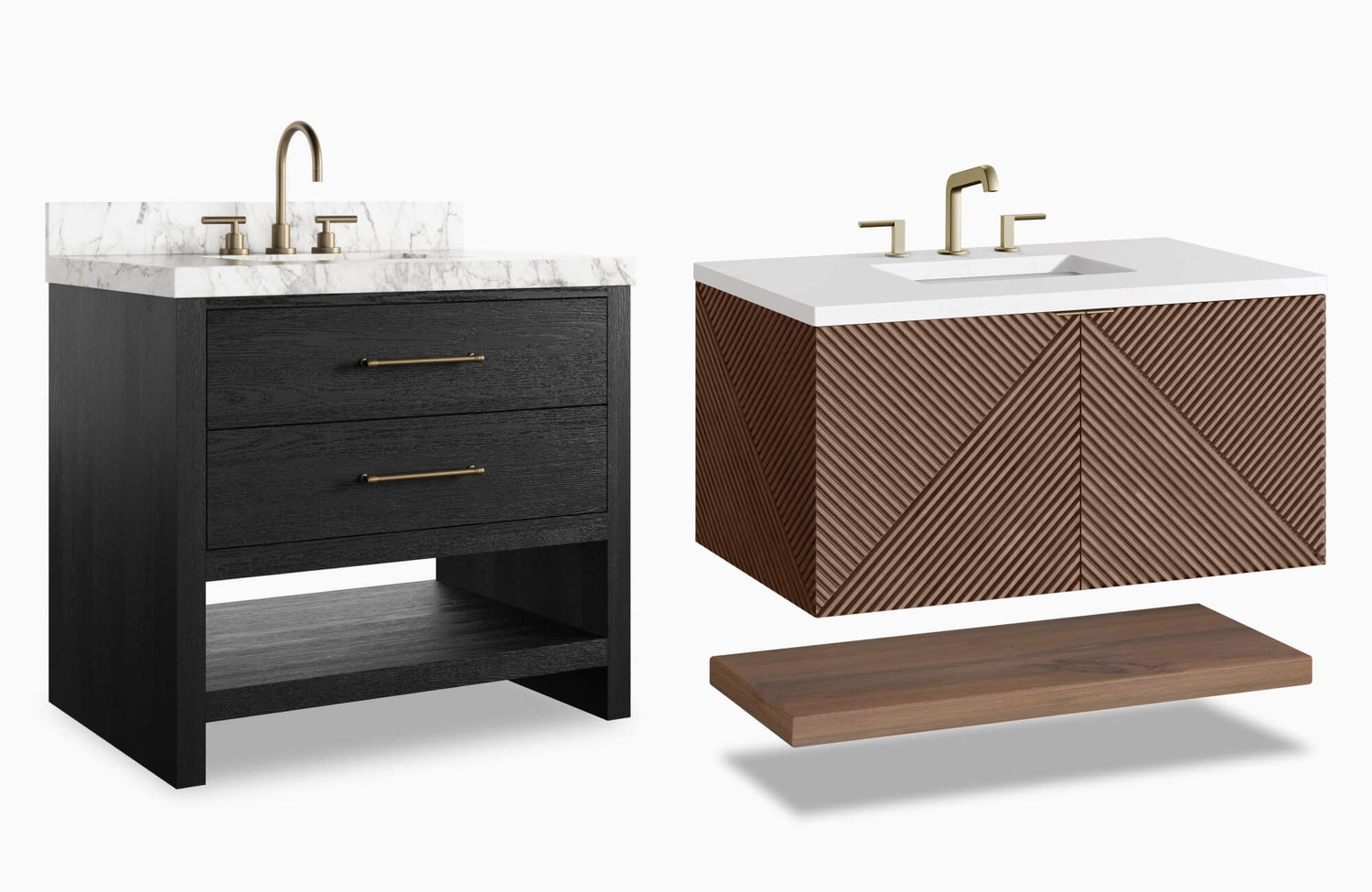


A floating vanity mounts directly to the wall with no contact with the floor, creating an open, airy look. A freestanding vanity sits on the floor with a base or legs and offers more storage in a wider range of styles. According to the 2025 Houzz Bathroom Trends Study, built-in vanities remain the most common type at 58%, freestanding sits at 30%, and floating vanities hold 11% of the market. Floating vanities cost $300 to $800 more to install than freestanding models because of wall reinforcement and plumbing adjustments, according to Water Creation. Both styles serve the same purpose, but they look, install, and perform differently. This article compares floating and freestanding vanities across every factor that matters so you can choose the one that works best for your bathroom.
The difference between a floating vanity and a freestanding vanity is how the unit is supported. A floating vanity, also called a wall-mounted vanity, attaches to the wall with concealed brackets or a reinforced mounting rail. It hangs above the floor, leaving visible open space underneath. A freestanding vanity rests on the floor through a base, legs, or a toe kick. It is self-supporting and does not depend on the wall for structural support.
That difference in mounting affects everything else: how the bathroom feels visually, how much storage you get, how the unit is installed, and how easy it is to clean around. According to Angi, the most apparent difference is positioning and stabilization. Floating vanities are secured to the wall, while freestanding vanities can stand on their own, though anchoring them to the wall is still a good practice for safety.
According to Deslaurier Custom Cabinets, choosing a floating vanity is fundamentally a style decision. It provides a sleek, streamlined look that works well in modern and minimalist bathrooms. Freestanding vanities cover a wider range of design styles, from traditional to farmhouse to contemporary, making them the more versatile option across different home types.
Yes, a floating vanity makes a bathroom look bigger by exposing more floor area. The visible floor underneath the vanity tricks the eye into perceiving more square footage than actually exists. According to Lily Ann Cabinets, one of the main advantages of floating vanities is their ability to create a sense of space, making small bathrooms feel larger and less cluttered.
According to Hastings Bath Collection, light bounces off the floor beneath a floating vanity, which further enhances the sense of openness. This effect is especially noticeable in small bathrooms, powder rooms, and urban apartments where every inch counts. Pairing a floating vanity with large-format floor tiles and continuous flooring from wall to wall amplifies the visual expansion even more.
Freestanding vanities with legs can also create a similar, though less dramatic, effect. According to Angi, choosing a freestanding model with legs allows some light under the vanity to create a sense of space without losing too much storage. But for maximum visual impact in a tight bathroom, a wall-mounted vanity is the stronger choice. We see this benefit play out regularly in smaller bathroom cabinetry projects where making the room feel open is a top priority.
Yes, floating vanities are still in style in 2026 and growing in popularity. According to NextDAY Cabinets, floating vanities are growing 15% to 20% year over year. The NKBA 2026 Bath Trends Report highlights the continued push toward clean lines, minimalist design, and spa-like aesthetics, all of which favor wall-mounted vanities. According to the NKBA, wood-faced vanities (62%) have overtaken painted (53%) in bathroom popularity, and that trend applies to both floating and freestanding styles.
According to WELLFOR, the 2025 Houzz Bathroom Trends Study shows floating vanities at 11% of remodeled bathrooms, with built-in styles at 58% and freestanding at 30%. While floating vanities are the smallest share, they are the fastest-growing segment. The overall design direction in 2026 favors warm materials, matte finishes, and concealed storage, all of which align naturally with the clean aesthetic of a wall-mounted vanity.
According to the NKBA 2026 Bath Trends Report, matte (54%), brushed (51%), and satin (46%) hardware finishes have overtaken polished (39%). These softer finishes pair especially well with the smooth, minimal lines of floating vanity designs. The trend is not away from freestanding, but toward options that feel lighter and more intentional, and floating vanities deliver that in a way freestanding models often cannot.
The disadvantages of a floating vanity are more complex installation, less storage than freestanding models, potential wall damage if improperly mounted, difficulty adjusting after installation, and higher overall cost.
According to Angi, installing a floating vanity requires careful wall anchoring to support the weight of the cabinet, countertop, and sink. If the wall is not load-bearing or properly reinforced, the vanity can pull away over time. According to Water Creation, installation for wall-mounted vanities runs $400 to $1,200 compared to $200 to $500 for freestanding, because the process involves wall reinforcement, precise plumbing alignment, and bracket installation.
Storage is the other major trade-off. According to Deslaurier, freestanding vanities provide more storage space because their cabinets extend all the way to the floor. A floating vanity with the same countertop width will have a shorter cabinet, which means fewer drawers and less interior volume. According to SHKL, repairs involving wall structure or plumbing can be complex and expensive with wall-mounted units, while freestanding vanities are easy to move for plumbing access. If your household needs maximum bathroom storage, we often recommend a freestanding vanity or a floating vanity paired with a separate wall-mounted storage cabinet to make up the difference.
The cons of a freestanding vanity are a heavier visual footprint, harder floor cleaning around the base, fixed height, and a potentially bulkier look in small bathrooms. Freestanding vanities extend to the floor, which blocks the eye from seeing the full floor area. In compact bathrooms, this can make the space feel cramped.
According to Giving Tree Home, the base of a freestanding vanity fully contacts the floor, and those contact points can accumulate dust, moisture, and mildew over time. Cleaning behind and around a floor-mounted vanity is harder than sweeping or mopping the open space beneath a floating unit. According to Angi, freestanding vanities come in standard heights of 32 to 36 inches, and customizing the height requires a custom build at additional cost.
According to Hastings Bath Collection, freestanding vanities are less compatible with wheelchair accessibility because the height is fixed and the base blocks the space underneath. Floating vanities can be mounted at any height and leave clearance below for wheelchair access, making them the better choice for aging-in-place design or ADA compliance. Both options have trade-offs, and the right one depends on the bathroom's size, the household's needs, and the overall design direction.
The table below compares floating and freestanding vanities across the factors that matter most in a real bathroom renovation.
FactorFloating VanityFreestanding VanityInstallation Cost$400 to $1,200$200 to $500Visual Space EffectMakes bathrooms feel largerCan feel bulkier in small roomsStorage CapacityLess (shorter cabinet)More (cabinet extends to floor)Floor CleaningEasy (open space underneath)Harder (base sits on floor)Height CustomizationFully adjustableStandard heights (32 to 36 inches)AccessibilityBetter for wheelchair usersLimited (base blocks clearance)Wall RequirementsMust be load-bearing or reinforcedAny wall (self-supporting)Best Design StylesModern, minimalist, ScandinavianTraditional, farmhouse, transitional2025 Houzz Market Share11% (fastest growing)30%DIY FriendlyNo (professional recommended)Yes (moderate DIY skill)
Sources: Angi, Deslaurier Custom Cabinets, Water Creation, 2025 Houzz Bathroom Trends Study, SHKL, Lily Ann Cabinets, Hastings Bath Collection
Floating vanities win on visual lightness, accessibility, and modern aesthetics. Freestanding vanities win on storage, easier installation, and style versatility. Many of the best bathroom designs use one or the other based on the specific needs of the space rather than following a single trend.
Yes, a floating bathroom vanity is worth it when the bathroom is small and visual space matters, when you want a modern or spa-like aesthetic, or when accessibility is a concern. The extra $300 to $800 in installation cost delivers a cleaner look, easier floor cleaning, and the ability to set the counter at the exact height you want.
According to WELLFOR, 78% of homeowners choose soft-close drawers and 75% choose soft-close doors regardless of vanity type, which shows that quality hardware is a priority no matter what style you pick. The "worth it" question comes down to whether the visual and functional benefits outweigh the higher installation cost and reduced storage for your specific bathroom.
For primary bathrooms where the vanity is a design focal point, a floating unit often delivers the biggest impact. For guest bathrooms or heavily used family bathrooms where storage is king, a freestanding vanity usually makes more practical sense. According to Deslaurier, a standard entry-level double-sink vanity (cabinets, delivery, and installation) starts at approximately $2,000 for freestanding, while a high-end wall-mounted version with premium finishes costs considerably more. The right choice is the one that matches both the room and how you use it every day. Our team designs both styles and helps homeowners balance the visual impact of a floating vanity with the practical storage needs of a custom bathroom cabinet layout.
Floating vanities do not sag over time when they are installed correctly on a properly reinforced wall. The key is using heavy-duty brackets or a concealed mounting rail that distributes weight evenly across the wall studs. According to Giving Tree Home, the vanity relies entirely on the strength of the wall for support, so installation on load-bearing or specially reinforced walls is critical.
Problems occur when a floating vanity is mounted on drywall alone, on a wall with insufficient blocking, or when the countertop is heavier than the mounting system can handle. According to SHKL, natural stone countertops like marble and granite are significantly heavier than engineered options, and freestanding vanities handle that weight better because the load transfers to the floor rather than the wall.
If you are installing a floating vanity during a full renovation where the walls are already open, adding blocking between studs is straightforward and inexpensive. If the walls are already closed, a professional installer needs to locate studs precisely and use the right hardware. According to WELLFOR, adding blocking for a floating vanity during an open-wall renovation is a low-friction upgrade with a high daily-life payoff. The material and countertop choices affect this too, so choosing the right vanity material matters for both looks and long-term performance.
The best height for a floating vanity is 34 to 36 inches from the floor to the top of the countertop, which matches the "comfort height" standard used in most modern kitchen and bathroom designs. According to Deslaurier, floating vanities are typically installed at a 34-inch or 36-inch counter height. The increased height adds to the floating visual more than a lower 30-inch or 32-inch placement.
One of the biggest advantages of a floating vanity is that you can install it at any height you want. This flexibility makes it easy to accommodate taller or shorter household members, wheelchair users, or children's bathrooms where a lower counter is more practical. According to Angi, if the plumbing configuration works with the vanity position, you can mount a floating vanity at almost any height.
Freestanding vanities are restricted to standard cabinet heights, typically 32 to 36 inches. Even custom freestanding units are limited to set increments. That height flexibility alone makes floating vanities the better option for ADA-compliant bathrooms and aging-in-place design, where precise counter height affects daily comfort and independence.
The current trend for bathroom vanities in 2026 is warm natural materials, wood-faced fronts, floating or furniture-style designs, and integrated smart features. According to the NKBA 2026 Bath Trends Report, wood-faced vanities (62%) have overtaken painted vanities (53%) in popularity. Light neutrals dominate the color palette, with off-white at 58%, light brown and tan at 54%, and white trailing at 40%.
According to NextDAY Cabinets, floating vanities with 15% to 20% annual growth are the fastest-growing segment. Furniture-style vanities that look like standalone pieces rather than built-in cabinets are also gaining ground. According to the NKBA, custom storage solutions with built-in compartments for hair tools, makeup, and medications, along with electrical integration and charging stations, are increasingly being designed into vanity cabinetry.
According to the 2024 Houzz Bathroom Trends Study, wood overtook white as the most popular vanity color for the first time, captured by 26% of upgrades versus 22% for white. Nearly three-quarters (74%) of homeowners choosing wood vanities opted for solid wood, according to WELLFOR. These trends apply to both floating and freestanding styles. The finish and material direction matters just as much as the mounting style for creating a bathroom that feels current.
What makes a bathroom look tacky is mismatched hardware, dated tile, overly ornate fixtures in a small space, visible plumbing pipes, and a vanity that does not fit the proportions of the room. A too-small vanity in a large bathroom or a bulky freestanding unit crammed into a tiny powder room both read as poor design choices.
According to the NKBA 2026 Bath Trends Report, homeowners are moving toward concealed storage, clean surfaces, and spa-like simplicity. Open clutter, visible cleaning supplies, and excessive decorative items all work against that direction. According to the NKBA, 96% of designers identified neutrals as the dominant bath palette. Loud wallpaper, overly bright accent colors, or shiny gold fixtures from the 1990s immediately date a space.
The fix is often simpler than people expect. Replacing dated hardware with matte or brushed finishes, swapping an old vanity for one that fits the room properly, and improving lighting can completely change how a bathroom feels. Choosing the right hardware and finish ties the whole room together and makes even a modest bathroom feel intentional.
The colors that make a bathroom look expensive are warm off-whites, light wood tones, soft greens, and deep navy paired with natural stone countertops and brushed metal fixtures. According to the NKBA 2026 Bath Trends Report, off-white (58%) and light brown/tan (54%) are the dominant choices among design professionals. White has slipped to 40%, replaced by warmer, more organic tones.
According to the 2024 Houzz Bathroom Trends Study, wood-toned vanities now lead over white. Pairing a warm wood vanity with a white quartz or marble-look countertop and brushed gold or matte black hardware creates a high-end impression without requiring a luxury budget. According to Modland, neutral palettes paired with quality materials like quartz countertops and backlit LED mirrors are the formula most designers use to make bathrooms feel expensive. We help homeowners across North Alabama pair custom vanities with current finishes to create a cohesive, elevated look.
Deciding between a floating and freestanding vanity comes down to four questions: How big is your bathroom? How much storage do you need? What style fits your home? And what is your installation budget?
Pick floating if your bathroom is small and you want it to feel open, if you prefer a modern or minimalist design, if you need wheelchair accessibility or plan to age in place, or if you are already opening the walls during a renovation and can add blocking easily.
Pick freestanding if you need maximum storage, if your walls cannot be reinforced, if you prefer a traditional or farmhouse look, or if you want a simpler installation that you can DIY or hire done at a lower cost. Freestanding vanities also tolerate imperfect walls and older plumbing better, according to WELLFOR.
Both styles come in a full range of materials, finishes, and configurations. Whether you go floating or freestanding, the most important thing is that the vanity fits the room proportionally and gives you the storage and function you need for your daily routine. Using accessible design principles makes the space work better for everyone in the household. Pairing the right vanity style with quality bathroom lighting and coordinated hardware ties the whole design together.
A realistic budget for a bathroom remodel is $10,000 to $30,000 for most projects. According to the 2025 Houzz and Home Study, the median spend on primary bathrooms was $15,000 in 2025. Guest bathrooms averaged $6,000. According to the 2025 Zonda Cost vs. Value Report, a mid-range bathroom remodel recoups approximately 80% of its cost at resale, making it one of the strongest interior investments.
The most timeless bathroom vanity colors are warm off-white, natural wood tones, and soft warm gray. According to the NKBA 2026 Bath Trends Report, off-white leads at 58% and light brown/tan sits at 54%. These colors pair well with almost any countertop and hardware combination and hold up across changing design trends. Exploring the most popular cabinet colors helps you find a shade that will still look current years from now.
No, floating shelves are not out of style in 2026, but they are being used more selectively. According to the NKBA 2025 Kitchen Trends Report, open shelving is declining in favor of concealed storage. In bathrooms, floating shelves work best as small accent features for displaying a few items rather than as primary storage. The trend is toward clean, clutter-free surfaces, which means less open shelving overall.
The flooring trending for bathrooms in 2026 is large-format porcelain tile, luxury vinyl plank (LVP), and natural stone. According to the NKBA 2026 Bath Trends Report, large-format surfaces with minimal grout lines are in high demand for their clean look and easy maintenance. Floating vanities pair especially well with continuous floor tile because the visible floor beneath the vanity shows off the flooring and makes the room feel larger.
A new bathroom costs $15,000 to $35,000 for a mid-range primary bathroom remodel in 2026. According to Modland, the national average for a mid-range bath remodel is about $26,138, with approximately 80% recoverable at resale. According to the 2025 Houzz and Home Study, the median spend for large primary bathroom remodels held steady at $25,000. High-end projects with custom vanities, premium tile, and luxury fixtures can exceed $50,000.
What adds the most value to a bathroom remodel is a quality vanity with modern finishes, updated fixtures, improved lighting, and a clean, neutral color palette. According to the 2025 Zonda Cost vs. Value Report, mid-range bathroom remodels recoup about 80% of costs. Keeping the existing plumbing layout and focusing on visible upgrades like the vanity, countertop, and hardware delivers the best return without overspending on structural changes.
You should use a floating vanity when the bathroom is small and visual space is a priority, when the design calls for a modern or minimalist aesthetic, when you need wheelchair accessibility or adjustable counter height, or when you are doing a full renovation where the walls are already open for easy blocking installation. According to WELLFOR, use floating when the wall can be reinforced and you are comfortable planning plumbing alignment and installation early in the project.
Floating vanities and freestanding vanities each bring clear strengths to a bathroom renovation. Floating vanities open up the room, simplify floor cleaning, and deliver a sleek modern look. Freestanding vanities provide more storage, install more easily, and work across a wider range of design styles. The best choice is the one that matches your bathroom's size, your household's storage needs, and the look you want to live with every day.
If you are planning a bathroom vanity project and want help deciding which style fits your space, Classic Cabinetry can walk you through both options. Call us at (256) 423-8727 to schedule a free consultation.