.avif)


.avif)


.avif)
How to Design a Home Office and Guest Room Combo With Custom Cabinetry
link desc


Turning a spare bedroom into a home office with built-in cabinets and a desk is one of the smartest home improvements you can make right now. According to Hammer IO, converting a spare bedroom into a home office costs $3,000 to $8,000 for a quality conversion, with built-in shelving or a custom desk adding $1,000 to $4,000 on top. According to HonestCasa, custom built-ins for a home office run $2,000 to $8,000 depending on scope and materials. Real estate agents now list home offices as a top-three buyer feature, right alongside updated kitchens and primary bathrooms. According to Hammer IO, a converted spare room with proper lighting, electrical, and built-in shelving typically recoups 50% to 75% of its costs at resale. This article walks you through every step of the conversion, from planning and layout to built-in design, electrical, costs, and practical tips for making the space work for you every day.
Turning a spare bedroom into a home office starts with evaluating the room, planning the layout, upgrading the electrical, and choosing the right storage and work surfaces. The spare bedroom is the easiest room to convert because it already has insulation, drywall, flooring, at least one outlet, and climate control. According to AskDoss, the spare bedroom wins for most people because it is the least expensive conversion and already has the basics.
Before you start, decide how you will use the space. A full-time work-from-home setup needs a proper desk, dedicated circuits, good lighting, and enough storage for files, supplies, and equipment. A part-time office for occasional use can get by with less. According to Angi, the average home office is about 150 square feet, which is the size of a typical spare bedroom. Even a smaller 100-square-foot room works well with the right layout and custom cabinetry designed to fit the space.
The layout determines how productive and comfortable the office will feel. Start by deciding where the desk goes, then build the rest of the room around it.
Your desk should face the room, not the wall. Positioning the desk so you look toward the door or across the room creates a more open, commanding feel. According to Fixr, feng shui and productivity experts recommend keeping the desk facing outward with natural light coming from the side rather than directly behind you, which causes screen glare.
If the room has a window, the best placement puts the window to one side of the desk. This gives you natural light for reading and tasks without creating glare on your monitor. Avoid placing the desk directly in front of a window, because video calls will backlight your face and make you hard to see.
The most effective layout places a built-in desk along one wall with upper and lower cabinets flanking both sides. This creates a "cockpit" setup where everything is within arm's reach. According to Loon Cabinetry, custom built-ins turn awkward corners into functional hubs and create a flow that matches how you actually work.
A full wall of built-ins with a desk in the center, bookshelves above, and file drawers below gives you maximum storage without using any floor space for freestanding furniture. This keeps the center of the room open and makes the office feel larger than it is. We design home office cabinetry that wraps around the room's dimensions exactly, eliminating the gaps and wasted space that prefab desks always leave behind.
What makes a room a home office is a dedicated work surface, proper lighting, adequate electrical support, organized storage, and a door that closes. A spare bedroom becomes a home office when it has the infrastructure to support focused work rather than just a laptop on a table.
According to AskDoss, built-ins are the difference between a room with a desk and an actual office. They also add real value to your home at resale. A room with a built-in desk, bookshelves, and proper lighting reads as a finished, intentional space to both you and future buyers. A room with a folding table and a floor lamp reads as a temporary setup that never got finished.
According to HonestCasa, the key is keeping the room flexible. A built-in desk with shelving works as an office, a study, a craft room, or a library. Avoid converting the bedroom so completely that it can never serve as a bedroom again. Losing a bedroom on the listing hurts resale more than the office helps. That balance, a professional office that can still function as a guest room if needed, is the sweet spot.
Converting a spare bedroom into a home office costs $3,000 to $16,000 for a quality conversion. According to AskDoss, a cosmetic refresh with paint, lighting, and a new desk runs $5,000 to $8,000. A mid-range conversion with built-in shelving, upgraded electrical, and flooring lands between $10,000 and $16,000. Full build-outs with soundproofing, HVAC modifications, and custom cabinetry can push past $20,000.
Project ComponentCost RangePaint$200 to $500Flooring$1,500 to $4,400Electrical (outlets, circuits, Ethernet)$500 to $2,500Lighting (fixtures, under-cabinet LEDs)$200 to $800Built-In Desk$1,200 to $3,900Built-In Bookshelves and Cabinets$2,000 to $8,000Soundproofing (door, walls, panels)$1,000 to $5,000Furniture (chair, accessories)$500 to $3,000
Sources: AskDoss, Hammer IO, Angi, HomeAdvisor, HonestCasa, Fixr
The built-in desk and cabinetry are typically the largest single line item. According to HomeAdvisor, built-in furniture for a home office costs $1,200 to $3,900. According to Angi, built-in cabinets average $4,500 with most projects falling between $2,000 and $7,500. The range depends on whether you use stock cabinetry with crown molding to fill ceiling gaps or go fully custom with premium materials and integrated features.
Built-in cabinets and a desk cost more than freestanding furniture, but they deliver better function, better appearance, and better resale value. A $200 desk from a big-box store wobbles, collects cables, and looks generic. A built-in desk with flanking cabinets fits the wall perfectly, hides every cord, and makes the room feel like it was designed by a professional.
According to AskDoss, custom millwork costs more than IKEA systems but fits the space exactly, hides cables, and includes features like file drawers and printer cubbies that freestanding furniture cannot match. Stock cabinetry systems like BILLY and KALLAX are popular budget options, but they leave gaps, they are not as sturdy, and they cannot be customized to include features like built-in power outlets or integrated lighting.
According to HonestCasa, a dedicated home office adds $10,000 to $30,000 in perceived home value, though actual appraisal impact depends on your market. A well-done conversion typically recoups 50% to 75% of costs at resale. For homeowners across North Alabama, we see home offices with custom bookshelves and built-in desks consistently help listings stand out in a competitive market.
Creating an office space in a small bedroom requires using every vertical inch, choosing built-ins over freestanding furniture, and keeping the floor plan open. Even a 10-by-10-foot room (100 square feet) works as a fully functional home office with the right design.
Run built-in cabinets and shelves from floor to ceiling on one wall. This captures all the storage you need without taking up any floor space beyond the depth of the cabinets (typically 12 to 24 inches). Use a floating or wall-mounted desk to keep the floor underneath clear, which makes the room feel more open.
According to Loon Cabinetry, underutilized closets can be converted into a dedicated work zone. Remove the closet doors, install a custom-depth desktop with overhead shelving, and you have a built-in office nook that does not bleed into the living space. Adding a bold accent color or wallpaper to the back of the closet creates a "room within a room" effect. For even more storage in the rest of the room, a custom closet system with drawers and adjustable shelves handles office supplies, files, and equipment that do not need to be on the desk.
Electrical is the most overlooked part of a home office conversion and the one that makes the biggest difference in daily function. A spare bedroom typically has one or two outlets on a shared circuit. Running a computer, monitors, a printer, and a desk lamp on that circuit is a recipe for tripped breakers.
According to Hammer IO, adding 2 to 4 dedicated electrical outlets costs $150 to $300 each, a dedicated 20-amp circuit for equipment costs $200 to $400, and hardwired Ethernet costs $100 to $300 per drop. According to AskDoss, one tripped breaker during a video call teaches the lesson fast. Do not skip the dedicated circuit.
For lighting, combine overhead recessed lights with under-cabinet task lighting above the desk. According to the NKBA 2026 Kitchen Trends Report, 82% of designers listed under-cabinet lighting as a top feature, and that same principle applies to office built-ins. Good task lighting reduces eye strain and makes the desk area bright enough for reading documents and writing. According to Angi, installing lighting fixtures costs $150 to $800. Planning electrical and lighting before the built-ins go in is critical because running wires behind finished cabinets is far harder and more expensive than routing them during construction. Choosing the right task lighting setup makes any home office more productive and comfortable.
Making a spare room multi-functional means designing it so it works as a home office during the day and can serve as a guest room, study, or craft space when needed. The key is flexibility in the built-in design.
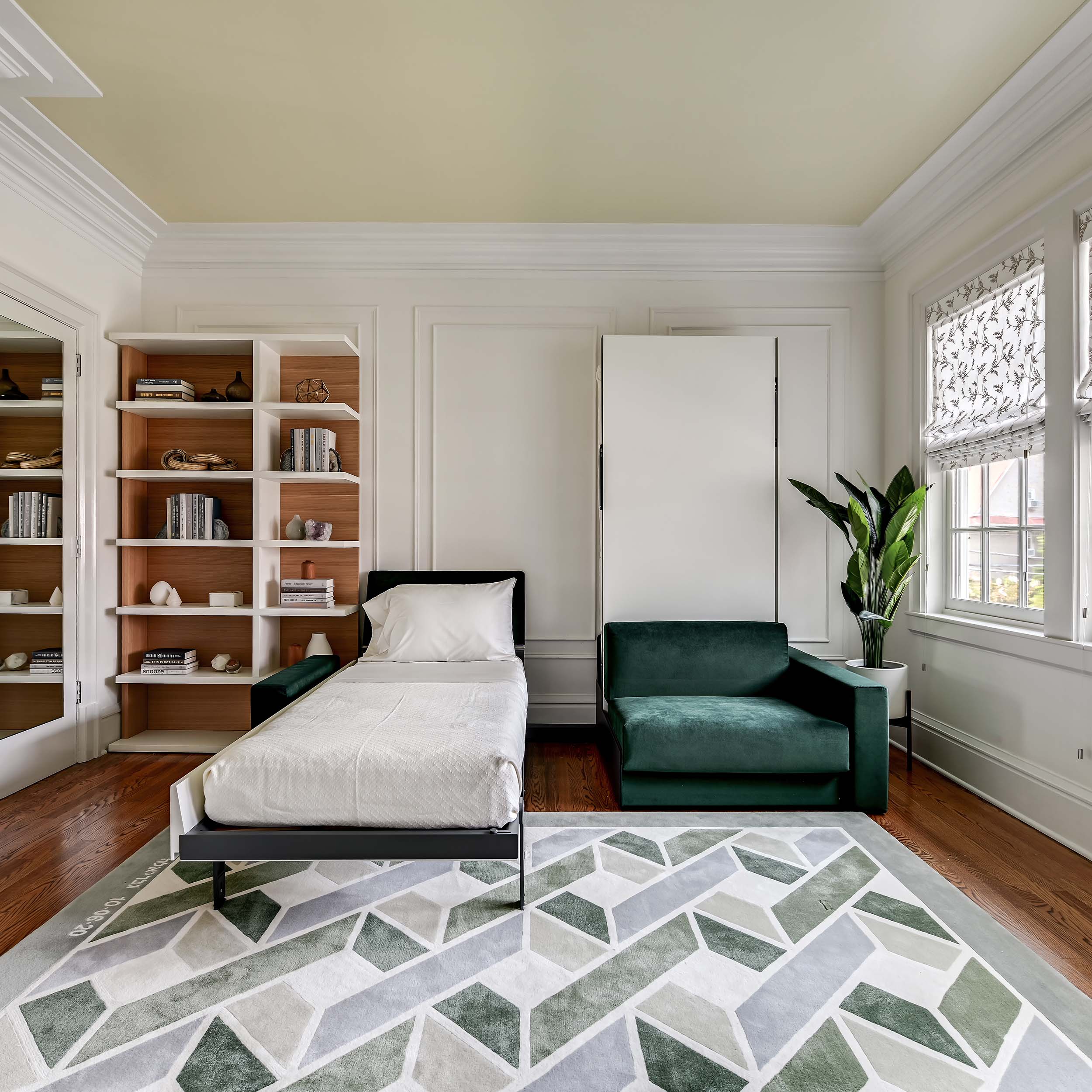
A Murphy bed with flanking bookshelves and a fold-down desk is one of the most popular dual-purpose solutions. The bed folds up against the wall during work hours, and the built-in shelves and desk stay functional at all times. According to HonestCasa, offices that can convert back to bedrooms maintain broader buyer appeal, which protects your resale value.
If a Murphy bed is too much, a daybed or a sleeper sofa along one wall can handle occasional overnight guests without compromising the office layout. Design the built-ins around the work function first, then layer in the secondary use. The office is the daily driver; the guest room is the occasional backup. Build for what you use 95% of the time, and accommodate the other 5% without sacrificing it.
Saving money on a home office conversion starts with keeping the scope realistic and spending on the upgrades that affect daily productivity.
Use semi-custom or stock cabinetry with crown molding. According to AskDoss, semi-custom or stock units cost 40% to 60% less than full custom and look nearly as good with crown molding to fill ceiling gaps. For many home offices, this approach delivers a clean, professional result at a much lower price point.
Combine with other projects. If you are already having electrical work done elsewhere in the house, adding office circuits costs less per circuit. Bundling the home office with a closet upgrade or bookshelf project in another room reduces design and installation overhead.
Shop floor models. According to AskDoss, desk and chair floor models from office furniture stores go for 30% to 50% off. Paint the room yourself. A gallon of quality paint costs $15 to $40, and painting a single room is one of the easiest DIY tasks. Put the savings toward the built-ins and electrical, which are harder to do yourself and make the biggest long-term difference. Proper office design focused on productivity pays for itself every workday.
Yes, you can use your bedroom as a home office, but a dedicated spare room is better for both productivity and sleep quality. Working where you sleep blurs the mental boundary between work and rest, which can hurt both. If the spare bedroom is the only option, position the desk so it faces away from the bed, and use a room divider, curtain, or built-in bookshelf as a visual barrier between the work zone and the sleeping zone.
The 60 30 10 rule for bedrooms is a color distribution guideline. It says 60% of the room should be a dominant color (walls, large furniture), 30% should be a secondary color (curtains, rugs, accent furniture), and 10% should be an accent color (pillows, artwork, hardware). This same rule works perfectly for home offices, where a calm dominant color, a warm secondary tone, and a small accent create a focused, visually balanced workspace.
The 3-5-7 rule in decorating says that objects arranged in odd-numbered groupings (3, 5, or 7) look more visually appealing than even-numbered groups. For home office built-in bookshelves, this means styling shelves with groupings of 3 or 5 items (books, frames, plants) creates a balanced, intentional look that works well both in person and on video calls.
The 2/3 rule for a living room says that furniture should fill approximately two-thirds of the room, leaving one-third open for circulation. In a home office conversion, this translates to filling about two-thirds of the wall space with built-ins and desk, and leaving the remaining third open for a bookshelf, a reading chair, or clear floor space that keeps the room from feeling cramped.
Building a 10x10 home office from a spare bedroom costs $3,000 to $10,000 depending on scope. A basic conversion with paint, upgraded lighting, and a desk runs $3,000 to $5,000. Adding built-in cabinets, a custom desk, dedicated electrical circuits, and new flooring pushes the total to $8,000 to $10,000. According to Angi, building a home office into an existing room costs $50 to $200 per square foot, so a 100-square-foot room falls between $5,000 and $20,000 for a full remodel.
To divide a room to make an office, use a floor-to-ceiling bookshelf as a partition, install a sliding barn door, hang a ceiling-mounted curtain, or build a half-wall with a countertop that doubles as a standing desk. Built-in bookshelves are the most effective divider because they add storage on both sides while creating a clear visual and functional boundary. This approach works especially well in large bedrooms or open living areas where you want to carve out a dedicated office zone without building a permanent wall.
The best use for a spare room depends on your household's needs, but a home office with built-ins is consistently one of the highest-value conversions in today's market. According to HonestCasa, buyers now list home offices as a top-three feature. Other popular options include a guest bedroom, a craft room, a reading library, or a fitness room. A built-in desk and custom shelving give the room daily purpose while keeping it flexible enough to serve other roles when needed.
A spare bedroom sitting empty is wasted space. Turning it into a home office with built-in cabinets, a custom desk, proper lighting, and dedicated electrical gives you a productive workspace that pays for itself in daily comfort and long-term home value. The conversion does not have to cost a fortune. Even a mid-range project with semi-custom built-ins and smart electrical upgrades delivers a room that feels purposeful, organized, and ready for real work.
If you are ready to turn your spare room into a workspace that actually works, Classic Cabinetry can design custom built-ins that fit the room and the way you work. Call us at (256) 423-8727 to schedule a free consultation.