.avif)


.avif)


.avif)
How to Design a Home Office and Guest Room Combo With Custom Cabinetry
link desc
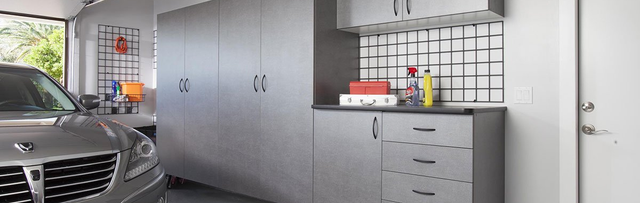


Custom garage cabinets cost $1,000 to $5,000 for most homeowners, depending on materials, size, and the level of customization. According to Croc Coatings, garage cabinets range from $511 to $2,175, with an average of $1,335 per unit. Custom units run $200 to $600 per cabinet and offer high durability and flexibility with features like drawers, workbenches, and specialty finishes. According to Investment Properties Info, the cost is a practical investment that pays off in both daily convenience and buyer appeal. According to the NAHB, 85% of homebuyers value garage storage, making organized cabinetry one of the smartest upgrades you can make to a space most homeowners ignore. This article breaks down every cost factor, compares DIY, prefab, and custom options, and explains how to get the most value from your garage cabinet investment.
The cost to build garage cabinets depends on whether you choose DIY, prefab, or fully custom construction. Each option sits at a different price point and delivers a different level of fit, finish, and durability.
Building your own garage cabinets saves on labor but requires tools, time, and woodworking skills. According to Croc Coatings, material costs for DIY garage cabinets range from $15 to $2,400 per linear foot depending on the material you choose (laminate, MDF, plywood, or solid wood). A basic plywood cabinet system for one wall can cost $200 to $800 in materials alone. The trade-off is fit and finish. Without professional tools and experience, gaps, uneven shelves, and weak joints are common problems that affect both function and appearance.
Prefabricated garage cabinets come in standard sizes and ship ready to assemble or fully assembled. They cost $300 to $1,500 for a basic system and $1,500 to $3,000 for a more complete wall setup. According to Croc Coatings, professional installation adds $100 to $300 per cabinet. Prefab systems are faster to install and more affordable than custom, but they come in fixed sizes that may not fit your garage perfectly. Gaps between cabinets, walls, and ceilings are common.
Custom garage cabinets are built to your exact garage dimensions and storage needs. According to Croc Coatings, custom units cost $200 to $600 per cabinet and offer the highest durability and flexibility. For a full garage wall with upper cabinets, lower cabinets, a workbench surface, and specialty storage, total costs run $3,000 to $7,000 or more depending on materials and features. According to HomeAdvisor, fully custom cabinets of any type cost $500 to $1,200 per linear foot, though garage cabinetry typically falls at the lower end of that range because garage finishes are simpler than kitchen-grade work.
Cabinet TypeCost RangeInstallationCustomizationDurabilityDIY$200 to $800 (materials)Self-installedFull (your design)Varies with skillPrefab$300 to $3,000$100 to $300/cabinetLimited (standard sizes)ModerateSemi-Custom$1,500 to $4,000Included or $200+/cabinetModerateGoodFull Custom$3,000 to $7,000+IncludedFullHighest
Sources: Croc Coatings, HomeAdvisor, Casta Cabinetry, Investment Properties Info, Solutions Garage Cabinets
Several factors affect the final cost of custom garage cabinets. The biggest drivers are materials, size, features, and whether you hire a professional or do the work yourself.
Material choice has the biggest impact on price and longevity. Laminate and melamine are the most affordable and resist moisture well. MDF is smooth and paintable but can swell in humid or unheated garages. Plywood is the strongest engineered option and holds screws reliably over time. Solid wood is the most expensive but delivers the longest lifespan. According to a 2025 Home Improvement Trends report by Statista, 74% of U.S. homeowners prioritize durable and eco-friendly materials in home upgrades, and that preference extends to garage projects. For garages that experience temperature swings and humidity, choosing moisture-resistant materials is especially important.
A single-car garage with one wall of cabinets costs far less than a two- or three-car garage with cabinets on multiple walls. According to Investment Properties Info, the average garage cabinet project runs $1,000 to $5,000 depending on size and customization. A full two-car garage build-out with cabinets, a workbench, overhead storage, and a tool organization system can reach $7,000 to $10,000 for premium custom work.
Drawers, pull-out bins, locking doors, pegboard panels, integrated lighting, and stainless-steel countertops all add cost. According to Croc Coatings, custom cabinets offer the most flexibility for features like workbenches, eco-friendly finishes, and specialty storage. Soft-close hinges, heavy-duty drawer slides rated for tools, and adjustable shelf pins are standard in quality custom builds but may be missing from budget prefab options.
Professional installation adds $100 to $300 per cabinet for prefab units. For custom builds, labor is typically included in the project quote. According to Casta Cabinetry, labor and installation can add 30% to 50% to the total material cost. A carpenter charges $40 to $100 per hour, while a general contractor charges $50 to $150 per hour. For a clean, level, properly anchored installation, professional help is worth the extra cost, especially when mounting heavy cabinets to garage walls that may not be as straight or reinforced as interior walls.
Yes, it is cheaper to buy prefab cabinets than to have custom ones built. Prefab garage cabinet systems start at $300 to $1,500 and can be self-installed, while custom builds start at $3,000 and go up from there. The price gap is significant, but so is the difference in fit, function, and lifespan.
Prefab cabinets come in standard widths (typically 24, 30, or 36 inches) and standard heights. If your garage walls are not perfectly flat or your ceiling height does not match the prefab dimensions, you end up with gaps. Custom cabinets fill every inch from wall to wall and floor to ceiling, which maximizes storage and creates a clean, built-in look that prefab cannot match.
According to AS Estimation, prefab cabinets typically use MDF or particle board with laminate wraps, while custom cabinets use higher-grade plywood or solid wood with professional finishes. In a garage where temperature swings, humidity, and accidental bumps are constant, the durability difference matters. We build custom garage cabinets that handle the demands of a working garage because off-the-shelf units often cannot.
Yes, garage cabinets increase home value by improving the functionality and perceived condition of the home. According to the NAHB, 85% of homebuyers value garage storage. According to Investment Properties Info, most real estate experts agree that organized garage spaces are a strong selling point, and in many cases buyers are willing to pay more for homes with functional garage storage.
According to Solutions Garage Cabinets in Phoenix, homeowners who invest in custom garage cabinets see an average 20% improvement in organization and storage efficiency. According to South Bay Custom Closets, a well-organized garage signals that the homeowner takes care of the entire property, which influences how buyers perceive the home overall. Clean lines, custom finishes, and heavy-duty cabinetry add polish that buyers pay more for.
From a broader perspective, garage-related upgrades deliver some of the strongest returns in home improvement. According to the 2025 Zonda Cost vs. Value Report, garage door replacement returns 268% ROI, the highest of any remodeling project nationally. While interior garage cabinets do not generate that same level of measurable ROI, they add perceived value, speed up sales, and prevent price reductions. For homeowners across North Alabama, we see organized garages consistently improve how listings photograph and how quickly homes move.
Garage cabinets seem expensive because most homeowners compare them to basic shelving or freestanding racks. The cost difference reflects the materials, construction, and installation quality that separates real cabinetry from simple storage.
According to Improve My Garage, high-quality garage cabinets can be expensive because of the materials and professional installation involved. However, enclosed cabinets protect tools and supplies from dust, pests, and moisture, which open shelving cannot do. Cabinets also present a cleaner, more streamlined appearance that makes the garage feel like a finished space rather than a dumping ground.
The garage environment is harsher than a kitchen or bathroom. Temperature swings, concrete dust, road salt, lawn chemicals, and heavy equipment all take a toll. Cabinets built for the garage need to handle those conditions without warping, sagging, or rusting. That means thicker panels, heavier hardware, and finishes that resist impact and chemicals. These materials and construction methods cost more than standard interior cabinetry, which is why garage cabinets often feel expensive relative to indoor options. Understanding the difference between cabinet grades helps explain the pricing spread.
The best material for garage cabinets is plywood with a melamine or laminate finish for the cabinet boxes, and either solid wood or moisture-resistant MDF for the doors. Plywood resists moisture better than particle board, holds screws securely for heavy-duty hardware, and lasts 25 to 40 years in normal conditions. According to Croc Coatings, many garage cabinets are made from materials designed to withstand fluctuating temperatures, but climate control or proper ventilation can extend their lifespan further.
Metal garage cabinets (steel or aluminum) are another strong option for high-use shops and workspaces. They resist moisture, dents, and chemicals better than any wood product. Steel cabinets run heavier and more expensive but are virtually indestructible. Powder-coated steel finishes resist rust and hold up to solvents and cleaners.
Particle board and basic MDF should be avoided in unheated garages. Both materials swell and break down when exposed to the humidity and temperature cycles that garages experience throughout the year. If budget requires a wood-based material, plywood with a sealed edge and a melamine face is the minimum standard for long-term performance. Choosing the right cabinet material is just as important in the garage as it is in the kitchen.
Saving money on garage cabinets starts with prioritizing what you actually need and skipping what looks good in a showroom but will not get used in your daily routine.
Start with one wall. A single wall of well-designed cabinets with a workbench can handle 80% of a typical homeowner's garage storage needs. You can always add more later if your needs grow. Starting small keeps the initial investment manageable.
Use open shelving for low-value items and closed cabinets for tools, chemicals, and equipment you want protected. Mixing open shelving with closed cabinets cuts the total cost while still delivering an organized look. According to Improve My Garage, enclosed cabinets keep dust and pests away from belongings, which is especially important for tools and equipment.
Choose plywood over solid wood for the cabinet boxes. The visual difference in a garage is minimal, but the cost difference is significant. Save solid wood or premium finishes for the doors and the workbench surface where you will see and touch them daily.
Bundle garage work with other cabinet projects. If you are already doing kitchen cabinets, a laundry room, or a mudroom build, adding garage cabinets to the same project reduces design and installation costs because the team is already on site.
Yes, garage cabinets are worth it for homeowners who want a clean, organized, and functional garage space. According to Improve My Garage, even if resale is not your goal, garage cabinets improve daily convenience, reduce clutter, and protect tools and equipment. The long-term benefits in functionality and appearance make them a valuable upgrade.
According to South Bay Custom Closets, custom garage cabinets transform a dumping ground into a space you actually want to use. Tools have a home. Seasonal gear is out of the way. The floor stays clear. That daily quality-of-life improvement is worth the investment for most homeowners, regardless of resale plans.
From a financial perspective, garage cabinets cost $1,000 to $5,000 for most projects. In a competitive housing market, that investment can be the difference between a buyer seeing a neglected space and seeing a well-maintained home. According to the NAHB, 85% of buyers value garage storage. That buyer perception translates into faster sales and stronger offers. Proper cabinet maintenance keeps the investment looking its best for years.
Installing cabinets in a garage costs $100 to $300 per cabinet for prefab units, according to Croc Coatings. For custom builds, labor is typically included in the total project cost of $3,000 to $7,000 or more. The final number depends on how many cabinets you are installing, whether the walls need reinforcement, and whether electrical work is required for integrated lighting or outlets.
The average cost of a 24x24 detached garage (576 square feet) is $17,280 to $28,800 at $30 to $50 per square foot, according to Angi. A two-car attached garage costs 10% to 15% less due to shared walls with the house. Adding custom cabinets, a workbench, and storage systems inside can add $3,000 to $10,000 to the total. The cabinet portion is a fraction of the overall garage construction cost but delivers some of the biggest daily-use benefits.
Most quality garage cabinets use 3/4-inch plywood for the sides, bottom, and shelves, and 1/2-inch plywood for the back panel. Three-quarter-inch plywood provides the strength needed to support heavy tools, supplies, and equipment without sagging. Thinner plywood can be used for lighter-duty shelving, but for a working garage where cabinets hold real weight, 3/4-inch is the standard for custom builds.
The trend in cabinet pulls in 2026 is matte black, brushed gold, and brushed nickel in clean, simple bar or tab profiles. According to the NKBA 2026 Kitchen Trends Report, matte and brushed finishes have overtaken polished hardware across both kitchens and utility spaces. For garage cabinets, matte black and brushed stainless steel are the most popular because they hide fingerprints and resist wear from oily or dirty hands.
Common custom cabinet problems are doors that do not close flush, drawers that stick, uneven gaps between cabinets and walls, and finish damage during installation. Most of these problems come from poor measurement, rushing the install, or using a contractor who does not specialize in cabinetry. Choosing an experienced cabinet maker and doing a thorough site measurement before production prevents the majority of these issues. Reading about common installation mistakes before starting helps you avoid costly problems.
Twenty linear feet of custom cabinets costs $10,000 to $24,000 for kitchen-grade work at $500 to $1,200 per linear foot, according to HomeAdvisor. For garage-grade custom cabinets, which use simpler finishes and fewer premium features, 20 linear feet runs $4,000 to $10,000 depending on materials and features. Prefab garage cabinets for 20 linear feet cost $2,000 to $5,000.
What devalues a house the most is deferred maintenance, overly personalized renovations, and improvements that exceed the neighborhood's price range. According to the 2025 Zonda Cost vs. Value Report, major upscale kitchen remodels return only about 36% of their cost at resale. In the garage, a cluttered, disorganized space signals neglect to buyers. Spending a modest amount on cabinets and organization delivers a better return than over-investing in the kitchen or bath beyond what the neighborhood supports.
Custom garage cabinets turn the most underused room in your home into one of the most functional. Whether you spend $1,000 on a single organized wall or $7,000 on a full custom build-out with a workbench and overhead storage, the investment pays off in daily convenience, cleaner living, and stronger buyer appeal. The right materials, a smart layout, and professional installation make the difference between cabinets that hold up for decades and ones that sag within a few years.
If you are ready to upgrade your garage with cabinets built to handle the job, Classic Cabinetry can design a system that fits your space and your workflow. Call us at (256) 423-8727 to schedule a free consultation.