.avif)


.avif)


.avif)
How to Design a Home Office and Guest Room Combo With Custom Cabinetry
link desc
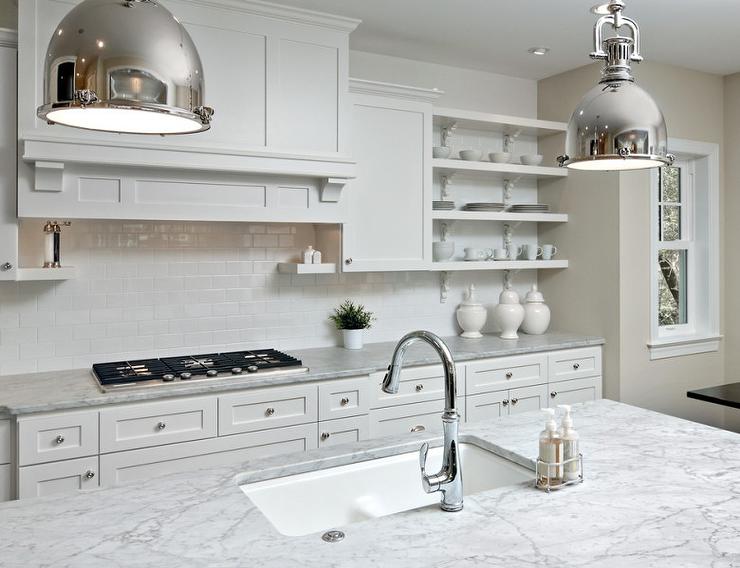


Open shelving makes a kitchen feel lighter and more personal by replacing closed cabinets with visible display space. Upper cabinets protect everything inside from dust, grease, and cooking splatter while holding significantly more than open shelves. According to the NKBA 2025 Kitchen Trends Report, 87% of designers said homeowners want concealed, seamless kitchen design, which favors closed cabinetry. At the same time, open shelving remains popular for creating visual breaks and adding personality. According to The Spruce (citing multiple designers), expansive open shelving is a thing of the past in 2026, replaced by "less, but better" shelving that feels architectural and purposeful. The best kitchens today use both. This article compares open shelving and upper cabinets across every factor that matters, from storage and maintenance to cost and resale value, so you can decide the right mix for your kitchen.
The difference between open shelves and kitchen cabinets is that open shelves have no doors, no sides, and no backing in most cases. They are flat platforms mounted to the wall. Upper cabinets are fully enclosed boxes with doors, internal shelves, and sometimes drawers, mounted above the countertop. That basic structural difference affects everything: how much you can store, how clean items stay, how the kitchen looks, and how much the installation costs.
According to OPPEIN, open shelves provide an airy look by taking less material and are usually crafted as supporting panels. Upper cabinets are heavier, take longer to install, and cost more, but they keep items hidden and protected. According to Artezia, without upper cabinet doors the kitchen feels less heavy and more breathable, which can make a smaller kitchen feel larger and bring a more relaxed rhythm to the room.
Open shelves display everything you own, which is both the biggest benefit and the biggest drawback. A curated shelf with matching ceramics and cookbooks looks beautiful. A shelf crammed with mismatched cups, vitamin bottles, and cereal boxes does not. Upper cabinets hide that reality behind a closed door. The choice between the two depends on how you actually live in your kitchen, not just how you want it to look on camera.
Open shelving in the kitchen is a good idea when it is used sparingly and intentionally. It is not a good idea as a full replacement for all upper cabinets in a kitchen that gets daily, heavy use. According to Natalia Lerman of Lerman Designs (quoted by The Spruce), the trend is shifting toward curated, built-in moments that feel architectural and purposeful rather than long runs of open shelves that dominate the kitchen.
Open shelving works well next to a window where cabinets would block light, beside a range hood as a styling accent, in coffee stations or beverage bars, and in kitchens where the homeowner enjoys keeping items curated and visible. It does not work well as the primary storage system for a busy family kitchen where items go in and out constantly and keeping shelves styled is not realistic.
According to Artezia, open shelving works best when it is curated, limited, and intentional. The most successful kitchens today use display with intention, storage with discipline, and cabinetry that creates calm instead of clutter. We recommend open shelving as a design accent in most kitchens, not as a replacement for the storage that custom upper cabinets provide.
The disadvantages of open shelving are dust and grease accumulation, less storage capacity, constant need for organization, exposure to cooking splatter, and reduced resale appeal compared to closed cabinets.
According to Grace In My Space, open shelves attract dust and grease from cooking. Items stored on open shelves need regular wiping, especially near the stove. According to Suzie Mc Adam (quoted by Homes and Gardens), open shelving can look wonderful, but it requires real discipline. Glass-fronted cabinets offer the same visual softness and decorative quality but with more forgiveness because they protect objects from everyday kitchen grease.
Storage capacity is the other major disadvantage. Upper cabinets hold significantly more than open shelves because they use the full depth and height of the cabinet box, plus items can be stacked behind doors without looking messy. According to OPPEIN, upper cabinets offer extensive hidden storage that open shelves simply cannot match. In a kitchen where you need to store dishes, glasses, spices, canned goods, and small appliances, losing upper cabinets means those items have to go somewhere else, often to the countertop, which defeats the purpose of a clean kitchen. Proper cabinet storage solutions inside closed uppers hold far more than open shelves of the same width.
FactorOpen ShelvingUpper CabinetsStorage CapacityLower (single layer, visible)Higher (stacked, hidden, full depth)Dust and Grease ProtectionNone (items exposed)Full (items enclosed)Visual WeightLight and airyHeavier (can feel bulky in small kitchens)Cost$15 to $50 per linear foot (materials)$100 to $1,200 per linear foot (installed)MaintenanceHigh (frequent cleaning, constant styling)Low (wipe doors occasionally)PersonalizationHigh (display curated items)Lower (hidden behind doors)Resale AppealMixed (some buyers love it, many do not)Broad (most buyers prefer closed storage)Best ForAccents, display, near windowsPrimary storage, busy kitchens2026 Trend DirectionDeclining as primary storageGaining (concealed storage is dominant trend)
Sources: NKBA 2025/2026 Kitchen Trends Reports, OPPEIN, Artezia, Grace In My Space, Homes and Gardens, The Spruce, KS Renovation Group
Open shelving is not completely out of style, but it is being used far more selectively in 2026 than it was a few years ago. According to The Spruce, expansive open shelving is a thing of the past in 2026. In its place, designers are using glass-front cabinets, intentional open breaks in cabinetry runs, and minimal shelving that feels like part of the millwork rather than a replacement for it.
According to the NKBA 2025 Kitchen Trends Report, 87% of designers said homeowners want seamless designs with concealed elements. According to the NKBA 2026 report, 94% of updated cabinets include specialty storage like pull-out bins, tray drawers, and spice organizers, all of which require closed cabinetry. The direction is clearly toward more storage, not less, and that means upper cabinets are gaining ground while open shelving plays a supporting role.
According to Artezia, in 2026 designers are not rejecting open shelving. They are becoming more selective with it. The approach is "less, but better": a single shelf flanking a window, a small display near the coffee station, or a break in a long run of cabinets to add visual relief. That selective approach keeps the personality of open shelving without sacrificing the storage that a working kitchen needs. Pairing a few open shelves with custom upper cabinets gives you both the display and the function.
Yes, open shelves make a kitchen look bigger by reducing the visual weight on the upper walls. Without the bulk of cabinet boxes and doors, the wall above the countertop feels more open and the ceiling feels higher. According to KS Renovation Group, open shelving works exceptionally well in compact kitchens where upper cabinets might feel overwhelming. By removing bulky cabinet doors, the kitchen instantly feels more spacious and airy.
The effect is strongest in small kitchens, galley kitchens, and kitchens with limited natural light. According to Artezia, open shelving can make a smaller kitchen feel larger, soften a long wall of cabinetry, and bring a more relaxed rhythm to the room. The trade-off is that you lose hidden storage, which means the countertops or lower cabinets need to pick up the slack.
A compromise that delivers the visual benefit without the storage sacrifice is to use open shelving on one wall or section while keeping closed upper cabinets on the rest. This creates the airy, spacious feel around the open shelves while maintaining full storage capacity everywhere else. According to the NKBA, glass-front cabinets are another way to achieve visual lightness without fully exposing the contents. Mixing open shelves, glass-front uppers, and closed cabinets across the kitchen creates layers that feel intentional and designed. Learning how to use vertical space effectively helps both open and closed storage work harder.
No, upper cabinets are not out of style. They are more popular than ever in 2026 as the design direction shifts back toward concealed, organized storage. According to the NKBA 2025 Kitchen Trends Report, 87% of designers said homeowners want seamless kitchen designs with concealed elements, hidden doors, and panel-ready appliance fronts. Upper cabinets deliver exactly that.
According to the 2026 Houzz Kitchen Trends Study, 94% of updated cabinets now include specialty storage features that only work inside closed cabinets. Pull-out spice racks, tray dividers, and interior lighting all require an enclosed cabinet box. According to MasterBrand, the shift toward warm wood tones and the slim shaker door profile is driving a renewed appreciation for well-made upper cabinetry with visible grain and quality finishes.
The version of upper cabinets that looks dated is the heavy, dark, soffited upper cabinet from the 1990s with ornate raised panel doors. The version that looks current in 2026 is a clean shaker or flat panel door in a warm wood tone or soft neutral, mounted flush to the ceiling with no soffit, and featuring modern finishes and brushed hardware. The form is the same. The execution is what has changed.
The best mix of open shelving and upper cabinets depends on the size of your kitchen, how much storage you need, and where natural light enters the room. The most successful approach uses closed cabinets for 70% to 80% of the upper wall area and open shelving for the remaining 20% to 30% as a design accent.
Place open shelves where they add the most visual value: flanking a window to keep light flowing, beside the range hood to create a focal point, or at the end of a cabinet run to soften the transition to an open wall. Keep the sections of wall that face the most cooking activity (near the stove, above the dishwasher) in closed cabinets to protect contents from grease and steam.
According to Natalia Lerman of Lerman Designs, the 2026 approach is about creating intentional breaks in cabinetry to add openness and pairing minimal shelving with glass-front cabinets for a curated yet restrained look. That balance gives you the personality of open display, the function of closed storage, and the visual lightness that makes a kitchen feel welcoming. We design this balance into every custom kitchen project based on the room's specific layout and the homeowner's storage needs.
The new look for kitchens in 2026 is warm, natural, and intentionally organized. According to MasterBrand, light wood stains have overtaken white as the number one preferred cabinet finish for the first time in nine years. According to the 2026 Houzz Kitchen Trends Study, wood tones (29%) edged past white (28%). According to the NKBA 2026 report, 96% of designers identified neutrals as the dominant palette, with greens at 86% and blues at 78%.
The emphasis is on concealed storage, multi-functional spaces, and personalized details. Open shelving is being replaced by glass-front cabinets, concealed pantry storage behind panel doors, and specialty interior organizers. According to the NKBA, 82% of designers listed under-cabinet lighting as a top feature, and 72% pointed to interior cabinet lights. These functional details only work inside closed cabinetry, which reinforces the shift back toward upper cabinets as the foundation of a well-designed kitchen.
Deciding between open shelving and upper cabinets comes down to three practical questions: How much storage does your household need? How much time are you willing to spend on maintenance? And how close is your kitchen to a resale timeline?
If you have a large pantry or abundant lower cabinet storage and do not need much upper storage, you have more freedom to use open shelves. If your kitchen is the only storage for dishes, glasses, spices, and small appliances, upper cabinets are essential.
If you enjoy styling and maintaining visible displays and do not mind wiping shelves regularly, open shelving adds personality. If you want a "close the door and forget about it" kitchen, upper cabinets are the clear winner.
If you plan to sell within a few years, upper cabinets appeal to the broadest range of buyers. According to the NKBA, the dominant buyer preference is for concealed, organized storage. Open shelving can be a selling point for the right buyer, but it can also be a turnoff for buyers who see it as lost storage. For homeowners across North Alabama, we find the smartest approach is a predominantly closed layout with one or two accent sections of open shelving where they create the most visual impact. Choosing the right hardware finish on the closed cabinets keeps the overall design feeling warm and current.
The most popular cabinet styles in 2026 are shaker (58% of the market according to the 2026 Houzz Kitchen Trends Study), flat panel or slab (22%), and the emerging slim shaker or micro-shaker profile. Raised panel has declined to about 12%. Shaker remains the top choice because it bridges traditional and modern styles. All three are closed-door styles, reinforcing the 2026 preference for concealed storage over open display. Understanding modern door styles helps you choose the right look for your upper cabinets.
The rule of three for shelves is a styling guideline that says objects arranged in groups of three look more visually appealing than even-numbered groupings. On open kitchen shelves, this means placing three stacked bowls, three jars in a row, or a grouping of three different items (a plant, a cookbook, and a ceramic piece) to create a balanced, intentional display.
Another name for upper cabinets is wall cabinets. In the kitchen industry, they are also called overhead cabinets or simply "uppers." Wall cabinets are typically mounted 18 inches above the countertop and range from 12 to 42 inches in height. Running uppers all the way to the ceiling (42-inch cabinets or stacked cabinets with a smaller unit on top) is the current trend for maximizing storage and creating a clean, built-in look.
The best type of kitchen cabinet depends on your budget and your goals. Custom cabinets are the best for fit, function, and long-term value. Semi-custom cabinets offer a good balance of customization and affordability. Stock cabinets are the most budget-friendly but come in limited sizes. For most homeowners renovating a kitchen they plan to enjoy for years, semi-custom or custom cabinets deliver the best results.
What makes cabinets look expensive is consistent finish quality, soft-close hardware, concealed hinges, clean lines, floor-to-ceiling height, and quality materials like solid wood or veneered plywood. According to the NKBA 2026 Kitchen Trends Report, 87% of designers say statement lighting, floor-to-ceiling cabinetry, and hidden storage create the strongest luxury impression. A professional finish with no visible brush marks or uneven coverage is the single biggest factor.
The 60 30 10 rule for kitchens is a color distribution guideline. It says 60% of the kitchen should be a dominant color (usually cabinets and walls), 30% should be a secondary color (countertops, backsplash, or flooring), and 10% should be an accent (hardware, light fixtures, or decorative items). This ratio applies whether you use upper cabinets, open shelving, or a mix of both.
The cabinet color in for 2026 is natural wood tone, followed by warm off-white, sage green, and navy blue. According to the 2026 Houzz Kitchen Trends Study, wood tones (29%) have overtaken white (28%) for the first time. According to MasterBrand, light wood stains are the number one preferred finish. Both open shelves and closed cabinets look current in warm wood tones, and the most popular colors work well across both formats.
Open shelving and upper cabinets are not an either-or choice. The strongest kitchens in 2026 use both strategically: closed upper cabinets where you need storage, protection, and organization, and a few intentional open shelves where you want personality, visual lightness, and display. That combination gives you a kitchen that works as hard as you need it to while still feeling warm, personal, and designed with intention.
If you are planning a kitchen and want to find the right balance between open and closed storage, Classic Cabinetry can design a layout that fits your space and your lifestyle. Call us at (256) 423-8727 to schedule a free consultation.