.avif)


.avif)


.avif)
How to Design a Home Office and Guest Room Combo With Custom Cabinetry
link desc
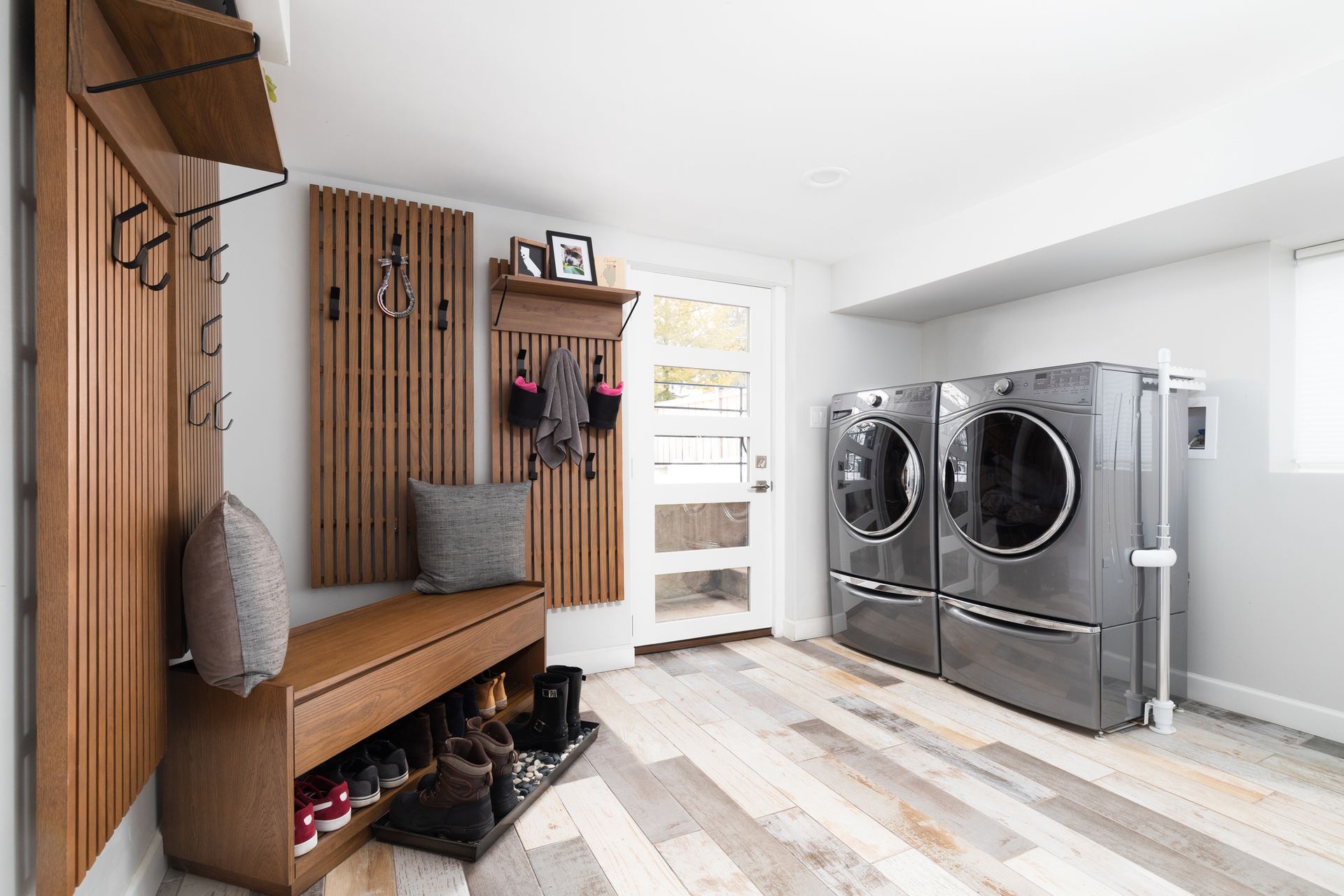


A laundry room and mudroom combo puts two of your home's hardest-working functions into a single space. Coat and shoe storage sit next to the washer and dryer, so dirty clothes go straight from the hook to the machine without crossing the house. According to the NKBA 2026 Kitchen Trends Report, 94% of industry professionals agree that homeowners are adding functional spaces like mudrooms, closets, and flex areas to their homes. According to Angi, converting an existing space into a mudroom costs $3,000 to $10,000, and combining it with laundry keeps the plumbing costs contained since the washer already needs water and drainage in the same room. According to KraftMaid, whether they are separately located or centralized into one combined space, mudrooms and laundry rooms play an important role in keeping the rest of the home clean and tidy. This article covers the best layouts, essential features, storage ideas, and design tips for creating a laundry-mudroom combo that handles daily chaos while looking like it was professionally designed.
The best layout for a laundry room and mudroom combo depends on the shape of the room, where the entry door is, and where the plumbing connections sit. Three layouts work for most homes.
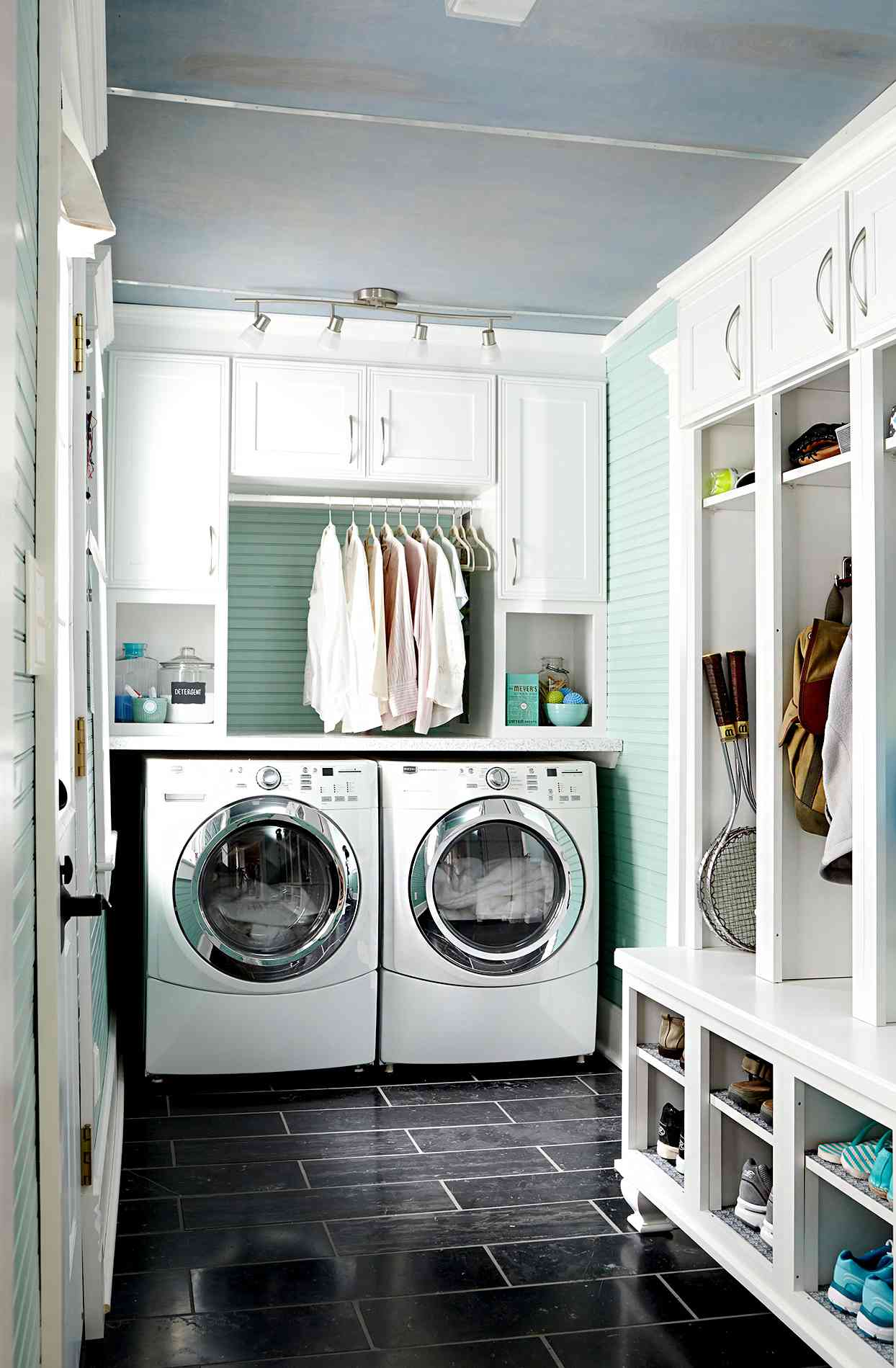
This layout places laundry appliances, a folding counter, and supply cabinets along one wall, with a mudroom bench, hooks, and entry storage along the opposite wall. A walkway of 42 to 48 inches runs between them. According to Homestyler, placing laundry appliances against one wall and utilizing the other side for storage benches and hooks establishes an effective workflow. This is the most common layout because it keeps the two functions visually and physically separated while sharing the same room.
An L-shaped layout puts laundry along one wall and mudroom storage along the adjacent wall, meeting at a corner. According to Bloomsteads, L-shaped configurations utilize two perpendicular walls to separate functions naturally through spatial orientation, with mudroom entry functions along one wall and laundry equipment along the adjacent wall. This layout works well in rooms with a door on one wall and plumbing on the perpendicular wall.
In tight spaces, everything goes on one wall: stacked washer and dryer on one end, cabinets and a folding surface in the middle, and a bench with hooks on the other end. According to Bloomsteads, this integrated approach suits narrower rooms where zone separation would create corridors too tight for comfortable use. The key is running custom laundry cabinetry from floor to ceiling to capture every available inch of vertical storage.
LayoutMinimum SizeBest ForZone SeparationTwo-Wall (Galley)6 x 10 ft (60 sq ft)Clear laundry/entry divisionStrong (opposite walls)L-Shaped7 x 8 ft (56 sq ft)Corner rooms, side-entry homesGood (perpendicular walls)Single-Wall4 x 10 ft (40 sq ft)Narrow hallways, tight spacesMinimal (one continuous run)Open with Island10 x 12 ft (120 sq ft)Large rooms, multi-functionIsland defines zones
Sources: Homestyler, Bloomsteads, KraftMaid, Angi, Freedom Kitchens
A laundry-mudroom combo needs to handle two sets of demands: the entry zone (coats, shoes, bags, keys) and the laundry zone (washing, drying, folding, sorting). Both zones share the same room, so the cabinetry and layout need to serve both without creating conflict.
A bench is the anchor of the mudroom side. According to KraftMaid, including accessible storage close to the floor so little ones will not need as much help finding and putting away shoes, backpacks, and sports equipment is one of the most important design decisions. According to The DIY Playbook, deep drawers under the bench keep shoes out of sight but easy to access. A bench height of 18 to 20 inches is comfortable for sitting, and the drawers below should be deep enough for boots and athletic shoes.
Wall hooks at 48 to 60 inches handle coats, bags, and leashes for daily grab-and-go access. According to Bloomsteads, custom floor-to-ceiling locker units provide the most complete individual storage solution for family mudroom applications, assigning dedicated zones to each family member. Personalized lockers with hooks at the top, a bench section in the middle, and closed storage above and below keep each person's belongings separate and organized. Pairing lockers with the right hardware pulls the whole design together. Matching the locker cabinetry to the mudroom cabinet style creates a cohesive, finished look.
A countertop over the washer and dryer gives you a dedicated folding surface that doubles as a landing zone for groceries or packages coming in from the car. According to Jane at Home, adding a countertop over the washer and dryer provides additional workspace and storage in even the smallest laundry rooms. A depth of 27 to 28 inches accommodates standard front-load machines with room to fold on top.
Closed upper cabinets above the washer and dryer hide detergent, fabric softener, stain removers, and cleaning supplies. According to KraftMaid, an ideal mudroom or laundry room design features both open storage and closed cabinetry. Floating shelves and wall hooks keep daily items visible, while cabinets with doors hide the miscellaneous clutter that builds up near laundry appliances. Choosing moisture-resistant cabinet materials is critical in a room with constant humidity from the dryer.
A deep utility sink handles hand-washing, soaking stained clothes, rinsing muddy boots, and filling mop buckets. According to KraftMaid, a utility sink provides a spot for quick clean-ups that beautifully merges utility with style. A drop-in or undermount stainless-steel or fireclay sink at 22 to 25 inches wide fits most laundry-mudroom combos without taking up too much counter space.
The floor in a laundry-mudroom combo takes more abuse than almost any other floor in the house. It deals with water from the washer, mud from shoes, and constant foot traffic. According to Angi, ceramic tile and luxury vinyl plank are the best flooring options for this type of space. Porcelain tile is the most durable choice and handles moisture without staining or warping. LVP is softer underfoot and easier to install but needs a waterproof core to handle laundry room conditions.
Zoning is what separates a well-designed combo from a room that feels chaotic. The goal is to give each function its own clear territory so the two zones work together without stepping on each other.
The simplest zoning approach is physical separation. Put laundry on one side and entry storage on the other. A continuous cabinet run in the same finish bridges the two zones visually while the different features (washer on one end, bench on the other) define each zone functionally. According to KraftMaid, if your mudroom or laundry room is located close to primary spaces like the kitchen, consider a matching style and coordinating colors to visually connect the spaces. Carrying the same cabinet finish from the kitchen into the laundry-mudroom combo creates a seamless flow between rooms.
Floor treatment can also define zones. A different tile pattern or a rug runner in the entry zone signals the transition from mudroom to laundry without building a wall. According to Bloomsteads, built-in mudroom storage and laundry room cabinets sharing the same continuous cabinet run and design language creates the visual cohesion that makes combined spaces feel deliberately designed rather than compromised. We design combo spaces with this principle in mind, using a single cabinet style across both zones while varying the internal features to match each function.
The best cabinetry for a laundry-mudroom combo is moisture-resistant, durable, and built to the exact dimensions of the room. Plywood cabinet boxes outperform MDF and particle board in high-humidity laundry environments because they resist swelling and hold screws securely over time. According to Jane at Home, even a simple shelf styled with a plant or framed art can soften the space, but the cabinets themselves need to be built for the conditions.
According to KraftMaid, a tall utility cabinet lets you tuck vacuums, mops, and brooms out of sight while keeping them right where they will be used. A combination of tall locker-style cabinets, a bench with drawers, upper cabinets over the washer, and open shelves for baskets covers every storage need in a single continuous design. According to KraftMaid, scuff protection on cabinet surfaces helps mudroom cabinets stand up to the daily beating of shoes, bags, and dirty hands.
For the door style, shaker remains the most versatile and popular choice. According to the 2026 Houzz Kitchen Trends Study, shaker holds 58% of the market for cabinet doors. In a laundry-mudroom combo, shaker doors with a warm neutral or soft color create a timeless backdrop. According to Jane at Home, in 2026 laundry rooms, warm white and warm wood cabinetry, natural stone flooring, and mixed metal finishes for hardware are the dominant trends. We build custom laundry room cabinetry that matches the rest of the home's style so the combo space feels like a finished room rather than an afterthought.
A laundry-mudroom combo costs $3,000 to $15,000 for a mid-range conversion of an existing space. According to Angi, converting an existing space into a mudroom costs $3,000 to $10,000. Adding or upgrading laundry connections, cabinets, a utility sink, and flooring pushes the total toward $10,000 to $15,000 for a complete, well-finished combo. A full addition (building new walls, plumbing, and electrical from scratch) costs $18,000 to $36,000 according to Angi.
The biggest cost variables are cabinetry ($1,500 to $5,000 for custom built-ins), flooring ($300 to $2,400 for tile or LVP), plumbing ($500 to $2,000 for a utility sink and washer connections), and electrical ($200 to $500 for outlets and lighting). Keeping the washer and dryer in their existing location and building the mudroom around them is the most cost-effective approach because it eliminates plumbing relocation, which can add $1,000 to $3,000 by itself.
A few practical design decisions make the difference between a combo room that feels cramped and one that feels organized and intentional.
Stack the washer and dryer if floor space is tight. Stacking frees up 30 inches of floor width that can be used for a tall cabinet, open shelving, or a deeper folding surface. According to The Coolist, stacked washers and dryers built into dark cabinetry with a pull-out folding shelf are sleek, efficient, and space-saving without compromising style.
Add a closet rod above the washer and dryer or along a nearby wall for hang-drying clothes. According to Jane at Home, a simple closet rod hung above the washer and dryer is one of the easiest ways to bring functionality and beauty to a laundry room. A retractable rod keeps the line hidden when not in use.
Use labeled baskets and bins on open shelves to keep the room organized without relying entirely on closed cabinets. According to Jane at Home, labeled baskets add warmth and texture while keeping things organized. Woven baskets in natural tones complement the warm wood and warm neutral palettes that are trending in 2026. According to KraftMaid, rolling laundry hampers are a great way to keep laundry sorted and off the floor. A pull-out hamper built into the cabinet run is even better because it hides the dirty laundry behind a door.
Install under-cabinet LED lighting over both the folding area and the bench zone. According to the NKBA 2026 Kitchen Trends Report, 82% of designers listed under-cabinet lighting as a top feature, and that applies to task lighting in laundry rooms and mudrooms just as much as kitchens. Good lighting makes folding easier, helps you spot stains before they set, and keeps the entry zone bright and welcoming even in the evening.
A laundry-mudroom combo is the ideal location for pet-friendly features because it already handles dirt, water, and mess. According to KraftMaid, a mudroom or laundry room can be a perfect spot for food and water bowls, a litter box, or even a dog washing station. According to Jane at Home, dog washing stations with dedicated baths or showers are a popular laundry room feature for 2026.
A built-in dog wash station with a raised basin (18 to 24 inches off the floor) saves your back and keeps the mess contained. A handheld sprayer attachment makes rinsing fast and easy. Built-in hooks for leashes and a pet-friendly cabinet section for food and treats keep everything organized without cluttering the people side of the room.
Yes, a laundry-mudroom combo adds home value by improving daily function and buyer appeal in one of the most practical rooms in the house. According to the NAHB, 85% of homebuyers consider organized entry storage a must-have or highly desirable feature. According to the 2025 Houzz Bathroom Trends Study, bathrooms matched kitchens in renovation popularity for the first time, and laundry rooms are following the same trajectory as homeowners invest more in utility spaces.
According to the 2025 Zonda Cost vs. Value Report, minor interior remodeling projects that improve function and layout yield 50% to 80% ROI. A well-designed laundry-mudroom combo with built-in cabinetry, a bench, proper flooring, and good lighting reads as a finished, intentional space that buyers value. For families across North Alabama, we see combo rooms consistently improve how homes show and how quickly they sell, especially in family-oriented neighborhoods where daily function matters most.
A laundry-mudroom combo needs a minimum of 40 to 60 square feet to function well. A 5-by-8-foot room (40 square feet) handles a single-wall layout with a stacked washer and dryer, a short bench, and hooks. A 6-by-10-foot room (60 square feet) supports a two-wall layout with side-by-side machines, a full bench, and floor-to-ceiling cabinetry. Larger rooms of 80 to 120 square feet allow for an island, a utility sink, and dedicated locker storage for each family member.
Yes, you can put a washer and dryer in a mudroom as long as the room has plumbing supply lines, a drain connection, proper ventilation for the dryer, and a dedicated electrical circuit (240V for electric dryers). Many mudrooms are located near the garage entry or back door where plumbing can be routed from the kitchen or bathroom on the other side of the wall. A licensed plumber can assess whether your mudroom can support a washer hookup.
The best flooring for a laundry-mudroom combo is porcelain tile or waterproof luxury vinyl plank (LVP). Porcelain tile is the most durable and moisture-resistant option, and it handles muddy boots, water from the washer, and heavy foot traffic without staining or warping. Waterproof LVP is softer underfoot and easier to install, making it a strong budget-friendly alternative. Avoid hardwood and carpet, both of which absorb moisture and deteriorate quickly in this environment.
You can hide a washer and dryer in a mudroom by enclosing them behind custom cabinet doors or a sliding barn door. Full-height cabinet panels on each side of the machines with doors that close across the front create a clean, built-in look that conceals the appliances completely. A bifold door or pocket door also works when wall space is limited. According to KraftMaid, cabinets with doors help hide the miscellaneous clutter that accumulates near laundry appliances.
The best cabinet colors for a laundry room in 2026 are warm white, soft sage green, warm gray, and natural wood tones. According to Jane at Home, warm white and warm wood cabinetry are the dominant laundry room trends for 2026. Light colors keep the room bright and make it feel larger. A bold color on the cabinets (navy, sage, or charcoal) works well in larger laundry-mudroom combos where the room has enough natural light to prevent the color from feeling heavy. Exploring the most popular cabinet colors helps you pick a shade that flows from the kitchen into the laundry room seamlessly.
Yes, matching or coordinating the laundry-mudroom cabinets with the kitchen cabinets creates a seamless, intentional look throughout the home. According to KraftMaid, if your mudroom or laundry room is located close to primary spaces like the kitchen, consider a matching style and coordinating colors to visually connect the spaces. According to Jane at Home, carrying the kitchen cabinet style into the laundry room creates continuity. Matching does not have to mean identical. Using the same door style with a complementary hardware finish ties the spaces together even if the cabinet color differs slightly.
The latest laundry room trends for 2026 include warm wood and warm white cabinetry, natural stone or stone-look tile floors, mixed metal hardware finishes, concealed appliances behind cabinet doors, built-in dog wash stations, and countertop folding surfaces over the washer and dryer. According to the NKBA 2026 Kitchen Trends Report, 94% of professionals agree that homeowners are adding functional spaces with concealed storage and personalized features. The laundry-mudroom combo is one of the fastest-growing design categories as homeowners realize a single well-designed room can handle both functions without compromise.
A laundry room and mudroom combo is one of the smartest ways to use space in any home. It puts two of your busiest daily functions in one room, eliminates the need for separate spaces, and creates a single organized zone that keeps the rest of the house clean. The right layout, durable materials, smart zoning, and quality cabinetry turn a utilitarian room into a space that works as hard as your family does while looking like it belongs in the home rather than being hidden from it.
If you are ready to design a laundry-mudroom combo that fits your space and your daily routine, Classic Cabinetry can build custom cabinetry for every inch of the room. Call us at (256) 423-8727 to schedule a free consultation.