.avif)


.avif)


.avif)
Soft-Close Hinges vs. Standard Hinges, Is the Upgrade Worth It?
link desc
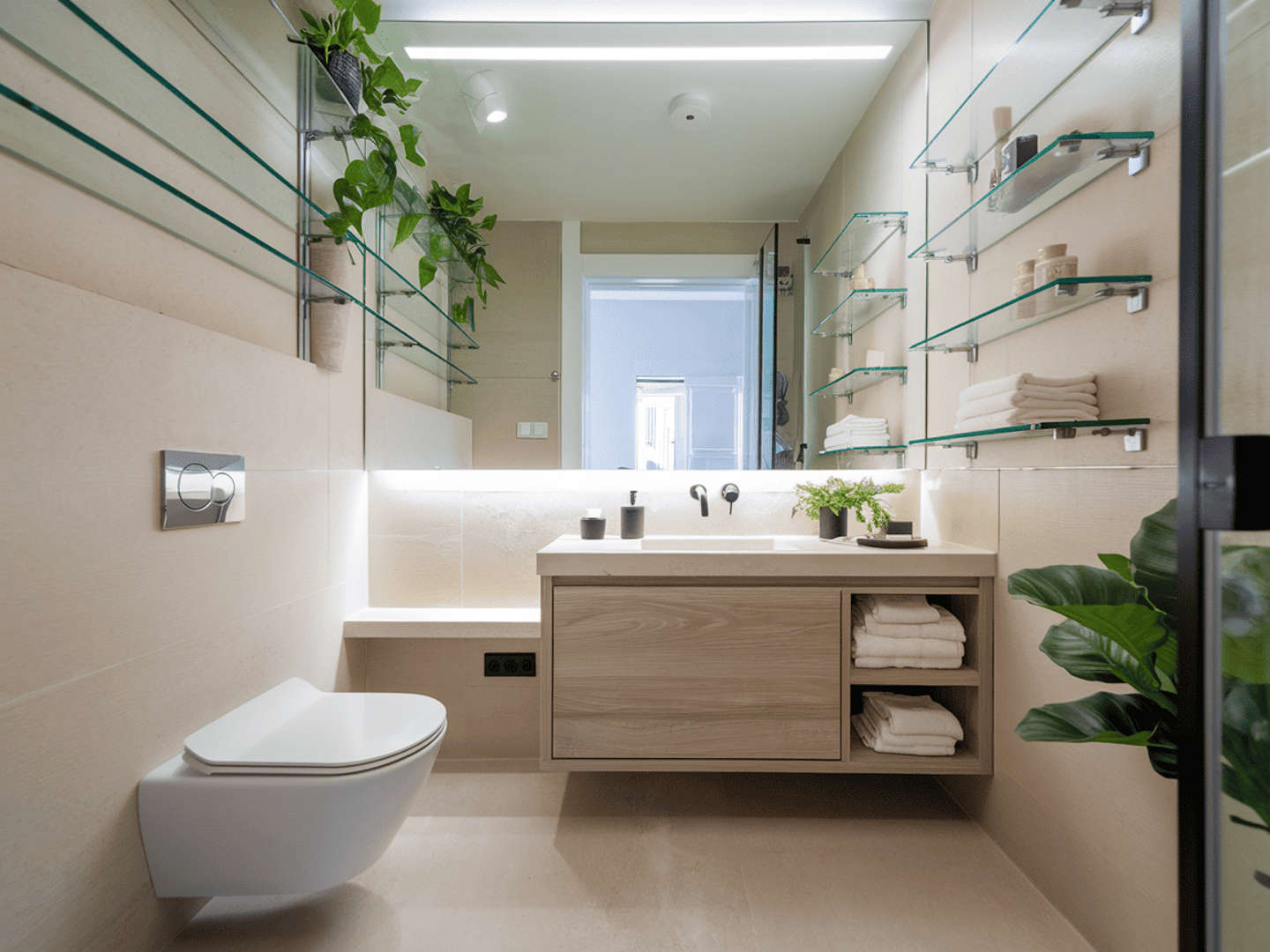


Bathroom cabinet colors that make a small bathroom feel bigger are soft whites, pale cool tones, light wood washes, and muted pastels that reflect light and avoid heavy contrast with the walls. Choosing a cabinet color that blends the vanity into the surrounding surfaces rather than cutting the room in half visually is the single most effective way to expand the feel of a tight bathroom without moving a single wall. This guide covers the specific colors that work best, explains why light reflectance matters more than the color itself, and walks through the finishes, vanity styles, and design choices that make a small bathroom look and feel larger than its actual square footage.
Cabinet colors that make a small bathroom look bigger are soft white, creamy off-white, warm greige, dove gray, muted sage green, powder blue, and light-washed natural oak. Each of these colors reflects light, reduces visual contrast between the vanity and the walls, and keeps the eye moving across the room without hitting a hard stop at a dark or heavy cabinet. The goal is to make the vanity blend into the bathroom rather than dominate it.
The reason light-toned cabinets expand the feel of a small bathroom comes down to how the brain processes visual boundaries. A dark vanity against a light wall creates a strong contrast line that visually breaks the room into sections. That segmentation makes the room feel smaller because the eye stops at the boundary instead of traveling smoothly across the space. A vanity painted in a color close to the wall color eliminates that contrast line and lets the room read as one continuous surface. Custom custom bathroom cabinets color-matched to the wall paint produce the strongest version of this effect because the vanity and wall become a single visual plane.
The 2025 Cost vs. Value Report found that midrange bathroom remodels return approximately 80% of their cost at resale, the highest ROI since 2007. Cabinet color is one of the lowest-cost changes within a bathroom remodel, yet it has one of the highest visual impacts. A fresh coat of paint on an existing vanity can shift the entire mood of the room without replacing a single fixture.
The best bathroom cabinet colors for small bathrooms are colors with a high Light Reflectance Value (LRV) that bounce natural and artificial light around the room. LRV measures how much light a color reflects on a scale from 0 (pure black, absorbs all light) to 100 (pure white, reflects all light). Cabinet colors with an LRV above 60 work best in small bathrooms because they amplify whatever light enters the room.
Cabinet ColorToneLRV RangeBest Paired WithEffect in a Small BathroomCrisp WhiteCool neutral85-92Chrome or polished nickel hardwareMaximum brightness, clean clinical lookCreamy Off-WhiteWarm neutral78-85Brushed brass or champagne bronze hardwareBright and warm without feeling sterileSoft Dove GrayCool neutral55-65Polished nickel or matte black hardwareRecedes visually, adds depth without heavinessWarm GreigeWarm neutral55-65Brushed gold or oil-rubbed bronze hardwareMonochromatic warmth, blends with beige wallsMuted Sage GreenCool pastel45-55Brass or matte gold hardwareSpa-like calm, organic softnessSoft Powder BlueCool pastel55-65Chrome or brushed nickel hardwareMimics open sky and water, feels expansiveLight-Washed OakNatural wood45-60Brushed brass or matte black hardwareWarmth and texture without paint heaviness
Creamy off-white is the most versatile option for small bathrooms because it reflects nearly as much light as pure white but adds warmth that prevents the room from feeling cold or clinical. Pure cool white can look harsh under fluorescent bathroom lighting, which is why designers often recommend warm whites that glow rather than glare. Choosing the right vanity materials matters alongside the color, because a smooth, well-sealed surface holds paint more evenly and reflects light more consistently than a rough or porous one.
Colors that make a small bathroom look larger are any colors with a high LRV that match or closely complement the wall color. The color itself matters less than two factors: how much light the color reflects and how closely it matches the surrounding surfaces. A bathroom where the cabinets, walls, and trim are all painted in the same warm white reads as one continuous room. A bathroom where the cabinets are dark gray against white walls reads as a room interrupted by a dark block in the middle.
Designers call this the monochromatic principle. When every major surface shares a similar tone, the eye has no reason to stop and register boundaries. The walls flow into the vanity, the vanity flows into the countertop, and the room feels larger because nothing segments the visual field. This principle explains why matching kitchen cabinets and walls in the same color family has become a leading trend in residential design: the continuity makes rooms feel more open.
Natural light amplifies the effect. A small bathroom with a window reflects far more light off high-LRV surfaces than a windowless bathroom. In rooms without natural light, choosing cabinet colors at the higher end of the LRV scale (75+) compensates for the absence of sunlight. Adding a satin or semi-gloss finish to the cabinets reflects artificial light from vanity fixtures and recessed cans, further brightening the space.
Bathroom cabinets in a small bathroom should be the same color as or slightly lighter than the walls. Matching the cabinet color to the wall color creates the seamless, monochromatic effect that makes the room feel larger. A vanity that is noticeably darker than the walls introduces a visual anchor at the base of the room, which draws the eye downward and makes the ceiling feel lower.
The exception is a powder room or half bath where the homeowner wants to make a design statement. In a small room used briefly by guests, a dark vanity against light walls can create a dramatic focal point that feels intentional rather than cramped. But in a full bathroom used daily, the monochromatic approach consistently produces the most spacious result. The safest strategy is to choose a cabinet color within two shades of the wall color on the same paint swatch card.
Yes, a floating vanity makes a small bathroom look bigger because it exposes the floor underneath the cabinet, creating an unbroken sight line from wall to wall at floor level. The visible floor tricks the brain into reading the room as wider than it actually is. Industry data shows that floating vanity sales have grown 15 to 20% year over year, driven largely by demand from homeowners with small bathrooms looking to maximize the perception of space.
A wall-mounted floating vanity also creates a natural shadow gap between the bottom of the cabinet and the floor, which adds depth and visual lightness. LED strip lights mounted under the vanity illuminate the floor below and make the cabinet appear to hover, which further reduces the vanity's visual weight. Custom bathroom cabinetry built as a floating unit with concealed wall-mount brackets provides a cleaner look than a freestanding vanity modified to appear wall-mounted.
Open-leg vanities offer a similar effect. A vanity with exposed legs or an open shelf base reveals floor space on three sides, which makes the cabinet feel like a piece of furniture rather than a built-in block. Open-leg designs work well with light-washed oak or driftwood finishes that add warmth while keeping the visual weight low.
The best finish for bathroom cabinets is semi-gloss or satin because both reflect light, resist moisture, and wipe clean easily. In a small bathroom, a semi-gloss finish bounces light from vanity fixtures and overhead lighting back into the room, which amplifies the brightness of the cabinet color. A matte finish absorbs more light and can make even a white cabinet look flatter and less reflective.
Semi-gloss paint also holds up better against the humidity, steam, and water splashes that bathrooms generate daily. The sealed, slightly glossy surface prevents moisture from penetrating the paint film and causing peeling or bubbling over time. Satin finishes offer a middle ground between the high sheen of semi-gloss and the low sheen of eggshell, providing moderate light reflection with a softer visual texture. Understanding the differences between cabinet finishes helps narrow down which sheen level matches the desired look and maintenance level.
Colors that make a bathroom look expensive are warm white, deep navy, charcoal, warm greige, and muted sage green, each paired with coordinated metal hardware in brushed brass, champagne bronze, or polished nickel. The "expensive" look comes not from the color alone but from the combination of a well-chosen color, consistent hardware finish, and matching accessories that create a curated, intentional design.
Warm white cabinets with brushed brass hardware and a marble or quartz countertop produce a classic, high-end aesthetic at any price point. Navy cabinets with gold hardware create a rich, jewel-toned look that photographs well and reads as luxurious. The same cabinet color choices that work in luxury kitchens translate directly to bathrooms: the principle of pairing a refined color with consistent metallic accents applies in every room.
Consistency is the mechanism behind the expensive look. When the cabinet hardware, faucet, towel bar, shower trim, and light fixtures all share the same metal finish, the room reads as deliberately designed. Mixed metals can work when done intentionally, but matching everything in one finish is the easier path to a polished result.
The most flattering color in a bathroom is a warm, slightly pink or golden-toned neutral that reflects soft, even light onto the face. Colors like creamy white, soft blush, warm beige, and light peach cast a warm glow that smooths shadows and makes skin tones appear healthier and more even in the mirror.
Cool-toned colors like stark white, bright blue, and icy gray can cast a bluish light on the skin, which exaggerates undereye circles and makes complexions look washed out. The choice matters most in the area immediately surrounding the vanity mirror, where the reflected light hits the face directly. Even if the rest of the bathroom uses a cooler palette, painting the vanity wall in a warmer neutral creates a more flattering zone for daily grooming. Homeowners across the Huntsville and Ardmore area who work with us on vanity design often discover that switching from a cool white to a warm white changes how the entire bathroom feels.
Yes, dark cabinets can work in a small bathroom when used strategically and balanced with light-colored walls, floors, and countertops. A dark vanity against an otherwise light room creates a grounding focal point that anchors the space without making it feel smaller, as long as the dark color is limited to the vanity and not spread across multiple surfaces.
The key is containment. A small bathroom with dark cabinets, dark floors, and dark walls will feel like a cave. A small bathroom with a single charcoal or navy vanity, white walls, a light countertop, and a large mirror above the sink uses the dark vanity as a design accent rather than a visual weight. The mirror reflects the light walls and expands the room visually, while the dark vanity provides contrast that gives the room character. This approach works especially well in powder rooms and half baths where bold design choices impress guests without the long-term fatigue that comes from living with a dark color in a frequently used full bath.
Colors you should not paint a bathroom include dark brown, mustard yellow, bright orange, and any high-saturation neon shade. These colors absorb light rather than reflecting it, cast unflattering tones on the skin, and make a small room feel closed in. Dark brown cabinets photograph poorly and read as dated in most lighting conditions. Mustard yellow and bright orange reflect warm tones so intensely that they distort how colors appear in the mirror, making it difficult to apply makeup or judge skin tone accurately.
Certain trendy colors also age quickly. A very specific shade that feels current this year can look dated within two to three years as trends shift. Sticking with classic neutrals, soft pastels, and natural wood tones protects against color fatigue and maintains resale appeal. The safest approach is choosing a color that you would still like five years from now, not one that matches the current season's trending palette.
The most popular bathroom cabinet colors in 2026 are warm white, warm greige, muted sage green, deep navy, light-washed natural oak, and soft charcoal. Cool grays are declining in popularity, replaced by warmer neutrals that feel more inviting. Several paint companies chose earth tones for their 2026 color of the year, including sage greens, natural blues, and creamy beige-yellows.
The shift from cool gray to warm greige reflects a broader industry trend toward comfort and warmth in residential design. Bathroom cabinets in warm tones photograph better for real estate listings and feel more inviting under bathroom lighting, which tends to be warmer than kitchen or living room lighting. The mudroom-laundry room combination trend has also influenced bathroom color choices, with homeowners coordinating cabinet colors across multiple utility rooms for a cohesive whole-home palette.
You make a small bathroom seem larger by combining light cabinet colors with several design strategies that work together to expand the visual space. Here are the most effective steps in order of impact:
A large mirror is the second most effective space-expanding tool after cabinet color. A mirror that spans the full width of the vanity and reaches close to the ceiling doubles the visual depth of the room by reflecting the opposite wall. Frameless mirrors eliminate the border that creates a visual stopping point. Glass shower panels allow the eye to travel through the shower area without interruption, making the entire room feel open rather than segmented by an opaque curtain or tiled enclosure. For homeowners who need more storage without adding bulk, custom closets and recessed medicine cabinets set into the wall between studs provide storage depth without extending into the room.
Vertical tile installed in the shower draws the eye upward and makes ceilings appear taller. This trick works best when the tile runs from floor to ceiling without a horizontal break. Painting the ceiling the same color as the walls, or even a shade darker, eliminates the hard edge between wall and ceiling and further elongates the perceived height. Under-cabinet LED lighting, vanity sconces, and recessed ceiling fixtures work together to fill the room with even, shadow-free light that opens up every corner.
White and light neutral bathroom colors have the highest resale value because they appeal to the broadest range of buyers. A white or off-white vanity with neutral countertops and classic chrome or brushed nickel hardware photographs cleanly, looks move-in-ready, and does not impose a personal style that might conflict with a buyer's taste. According to Zillow housing market research, homes with updated bathrooms sell approximately 23% faster than homes with outdated baths. Minor cosmetic updates like cabinet repainting and new hardware recoup 70 to 85% of their cost at resale, making cabinet color one of the highest-ROI bathroom improvements available.
The 2025 Cost vs. Value Report confirmed that midrange bathroom remodels return roughly 80% ROI nationally, the strongest return since 2007. Within that midrange category, updated vanities with quality cabinetry, solid-surface or quartz countertops, and modern hardware drive the largest share of the perceived improvement. Investing in home value through cabinet upgrades in bathrooms and kitchens consistently ranks among the most effective remodeling strategies for homeowners planning to sell within the next five years.
The best colors for a small bathroom in 2026 are warm white, warm greige, muted sage green, and soft powder blue. Cool grays are declining in favor of warmer neutrals that feel more inviting under bathroom lighting. Sherwin-Williams named Universal Khaki as their 2026 Color of the Year, and multiple paint companies selected earth tones and natural blues that complement small bathroom spaces.
Bathroom trends for 2026 include warm-toned cabinetry replacing cool gray, floating vanities for small spaces, natural wood finishes like white oak and walnut, brushed brass and champagne bronze hardware replacing matte black, and combined mudroom-bathroom layouts in homes where space is limited. Sustainability-focused fixtures like water-saving faucets and LED vanity lighting continue to grow in popularity.
The most popular bathroom color right now is warm white, followed closely by warm greige and muted sage green. Cool gray held the top spot for nearly a decade but has given way to warmer, more organic tones that feel softer under bathroom lighting and flatter skin tones more effectively in the mirror.
Any color with a high Light Reflectance Value (LRV) makes a bathroom look bigger. White has the highest LRV and reflects the most light. Soft pastels and light neutrals fall in the 55 to 85 LRV range and also expand the visual space. The critical factor is matching the cabinet color closely to the wall color so the room reads as one continuous surface rather than separate zones.
You can make a small bathroom seem larger without renovating by repainting the vanity in a light, warm neutral, swapping dark hardware for polished nickel or brushed brass, replacing a framed mirror with a larger frameless mirror, adding under-cabinet LED strip lighting, and removing countertop clutter to expose more visible surface area. These changes cost a fraction of a full remodel but shift the visual weight of the room dramatically.
Yes, bathroom cabinet colors affect home value because updated, neutral-toned cabinetry makes the room look move-in-ready and appeals to a wider pool of buyers. Homes with recently updated bathrooms sell faster and receive stronger offers than homes with dated or heavily personalized finishes. A vanity repainted in a classic white or warm neutral paired with new hardware is one of the lowest-cost, highest-impact improvements for resale preparation.
The right cabinet color turns a small bathroom from cramped and cluttered into bright, open, and welcoming. Soft whites, warm greige, dove gray, muted sage green, powder blue, and light-washed oak all reflect light and blend the vanity into the room rather than breaking it apart. A semi-gloss or satin finish amplifies the brightness. A floating vanity exposes the floor and makes the room feel wider. Matching the cabinet color to the wall color within two shades creates the seamless, monochromatic look that designers rely on to stretch tight spaces visually.
At Classic Cabinetry, we build custom bathroom vanities in any color, finish, and configuration to fit the exact dimensions of your space. Whether you want a wall-mounted floating vanity in warm white or a freestanding open-leg design in natural oak, we can match the cabinet to your walls, countertop, and hardware for a result that feels custom from every angle. Call us at (256) 423-8727 to start planning your bathroom cabinet upgrade.