.avif)


.avif)


.avif)
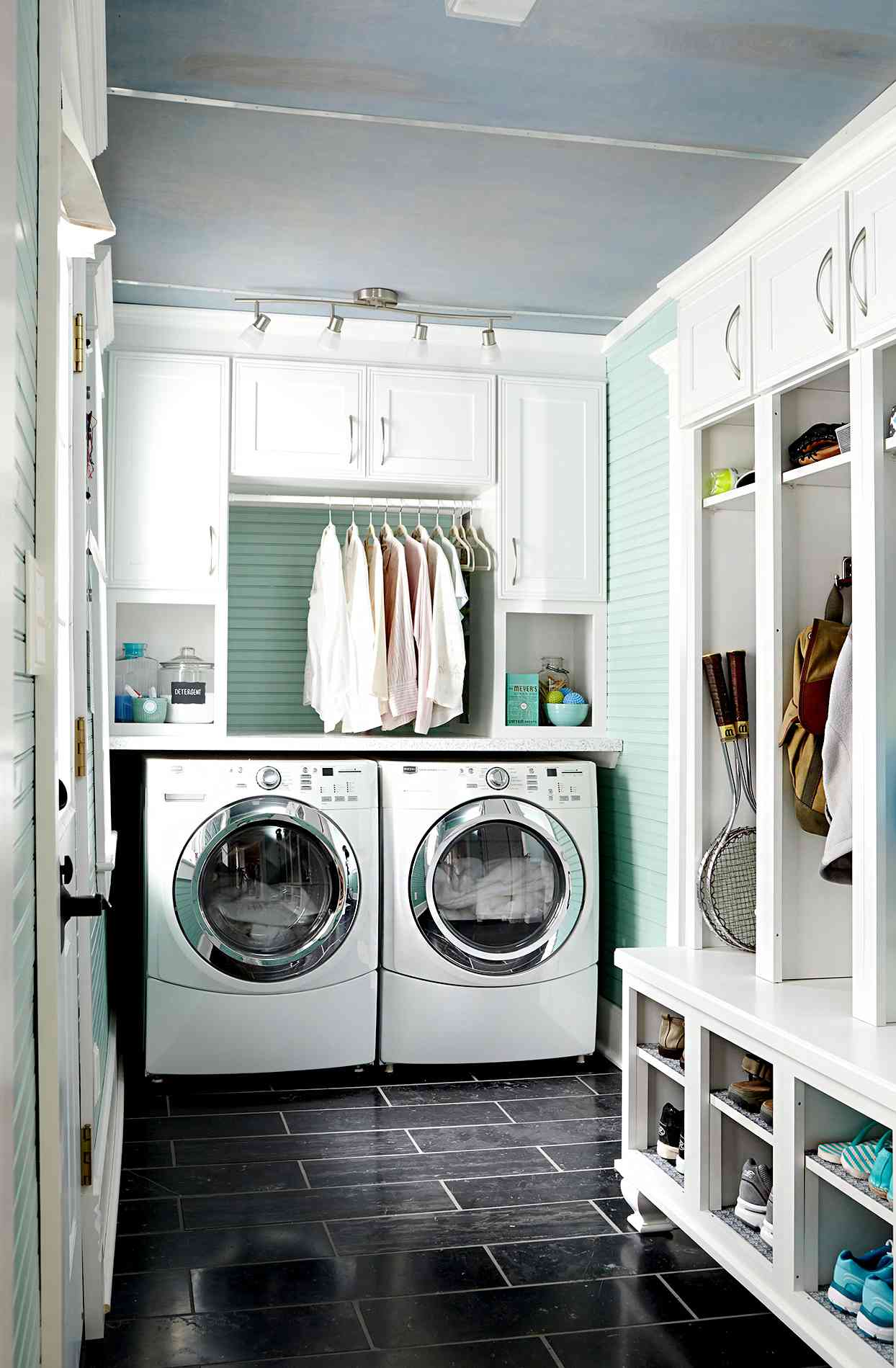
Floor-to-Ceiling Laundry Room Cabinets for Maximum Storage
link desc
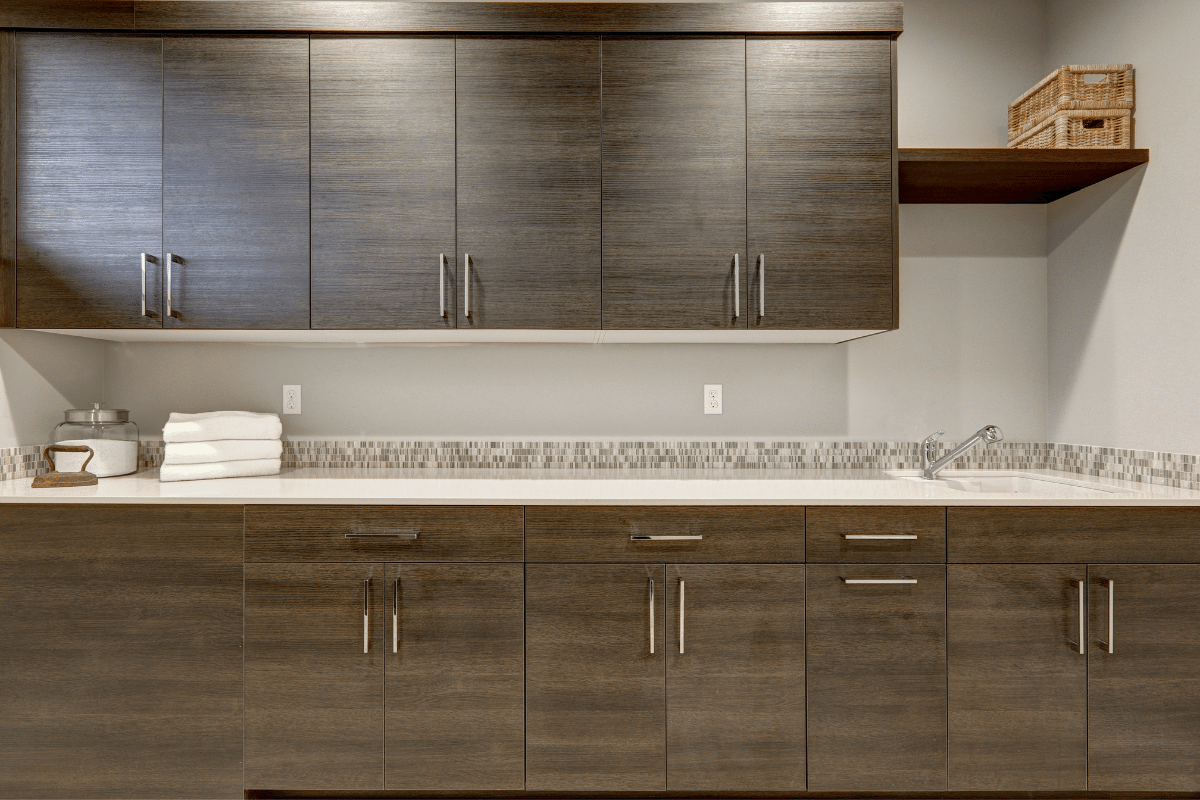


Solid wood cabinets are built entirely from planks of real hardwood like oak, maple, or cherry. Veneer cabinets use a thin slice of natural wood, usually 0.5 to 2 millimeters thick, bonded to a core of plywood or MDF. Both options give you the look of real wood, but they differ in durability, cost, repairability, and long-term value. According to Mordor Intelligence, the global kitchen cabinets market was valued at $91.07 billion in 2025, and wood captured 60.15% of that revenue, making it the most popular material by a wide margin. This article covers what sets these two materials apart, how long each one lasts, and which one makes the most sense depending on your kitchen, your budget, and your goals.
Solid wood is better for long-term durability, repairability, and resale value, while veneer is better for dimensional stability, cost savings, and modern flat-panel designs. Neither material is universally better because each one excels in a different area.
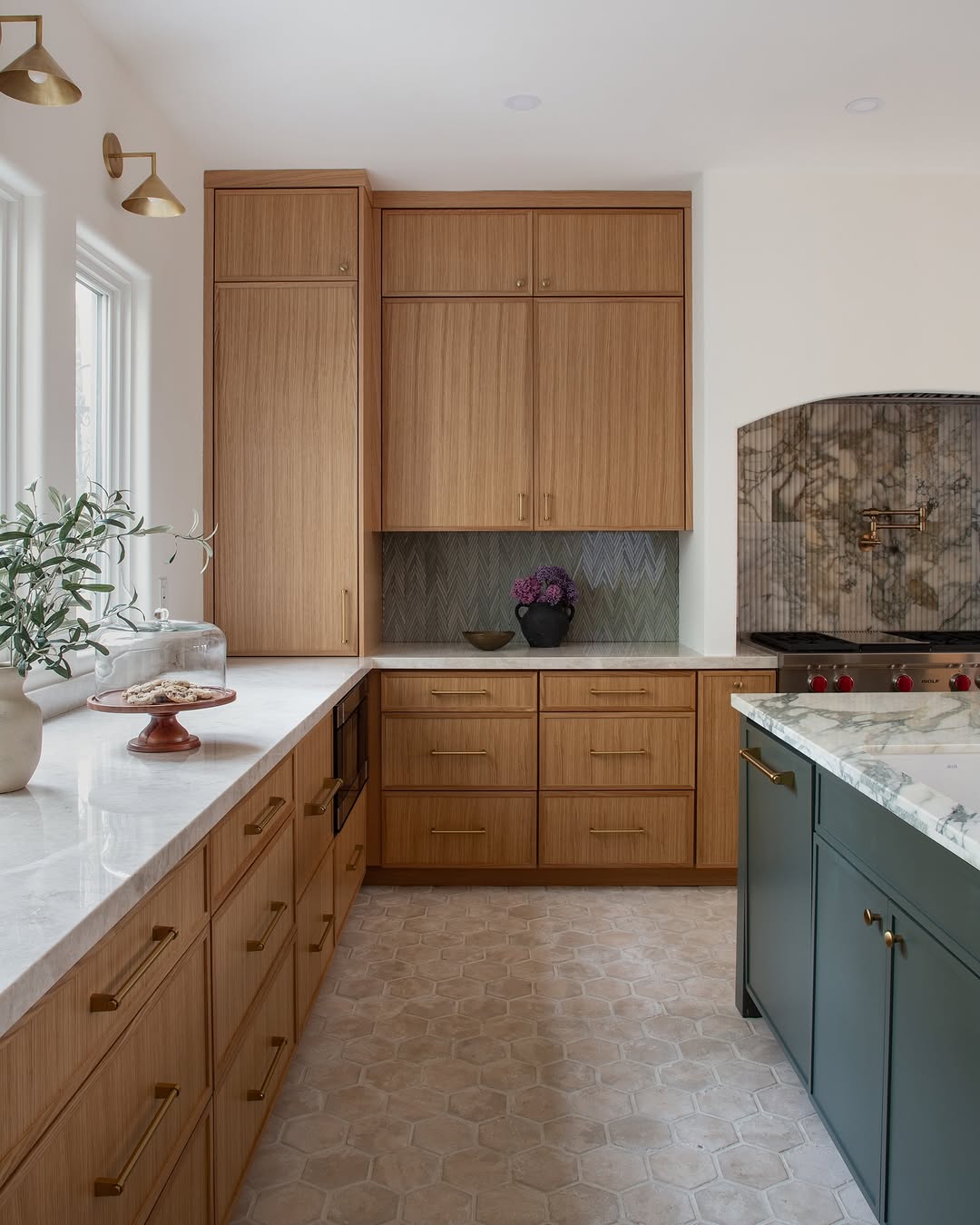
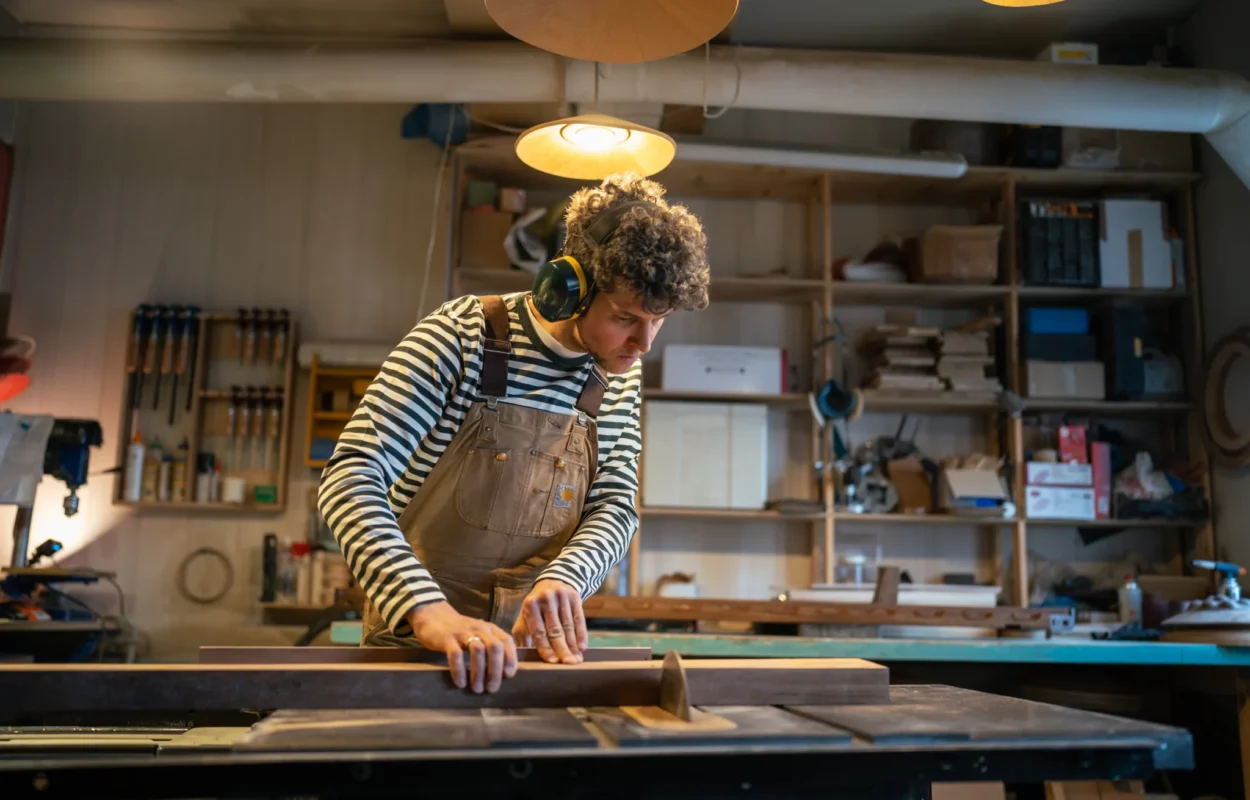
Solid wood gives you natural grain character that is completely one of a kind. No two doors look the same because the wood grows differently from board to board. You can sand, stain, paint, and refinish solid wood multiple times over its lifetime, which makes it the top choice for homeowners who want cabinets that adapt to changing styles over the decades. We work with premium hardwoods every day, and the depth and warmth they bring to a kitchen is hard to replicate.
Veneer gives you a real wood surface with the structural stability of an engineered core. Veneer panels resist warping and shrinking better than solid planks, especially in kitchens with high humidity or temperature swings. If you want sleek, wide, flat-panel cabinet doors with a consistent grain, veneer handles that well because the engineered core stays flat even at larger sizes. The right choice depends on which strengths matter most to your kitchen and lifestyle.
The best material to use for kitchen cabinets is solid hardwood if your priority is longevity, character, and the ability to refinish over time. Plywood with a hardwood veneer is the best choice if you want a balance of stability and natural beauty at a lower price point.
Popular hardwood species for kitchen cabinets include oak, maple, cherry, hickory, and walnut. Each species has a different grain pattern, hardness level, and color tone. Oak is one of the most widely used species in North America because of its strength and visible grain. Maple is harder and smoother, which makes it a great choice for painted finishes. Cherry darkens naturally with age and develops a rich patina that many homeowners love.
According to the 2026 NKBA Kitchen Trends Report, which surveyed 634 industry professionals, 59% identified wood grain as a growing trend, and white oak emerged as the preferred species at 51% of professional specifications. That shift signals a strong market move toward natural wood finishes and away from the all-white painted kitchens that dominated the last decade.
The cabinet core material affects quality because it determines how well the cabinet holds up under daily stress, moisture, and weight. A solid wood core is the strongest and most durable option. Plywood cores offer excellent stability and moisture resistance at a lower weight. MDF cores are smooth and affordable but swell and break down when exposed to water.
Veneer cabinets with a plywood core perform much better than veneer over particleboard or MDF. If you are considering veneer cabinets, always check what the core is made of. A plywood core with a hardwood veneer face gives you a strong cabinet that resists warping and handles moisture well. Homeowners who want to learn more about cabinet materials find that core quality is just as important as the surface material.
Veneer cabinets last 20 to 30 years on average, depending on the core material, the thickness of the veneer, and how well you care for them. According to Southwest Kitchen and Bath, wood veneer cabinets fall in the 20 to 30 year range, while solid wood cabinets can reach 50 years or more with proper maintenance.
The biggest threat to veneer cabinets is moisture. If water gets past the thin wood layer and reaches the core, the board can swell and the veneer can bubble or peel. Corners and lower edges are especially vulnerable to chipping. Once the veneer chips, the underlying core is exposed, and damage spreads faster. Solid wood cabinets, by contrast, can be sanded down to fresh wood and refinished whenever they show wear, which is a major reason they last so much longer.
A well-made veneer cabinet on a plywood core will outperform a cheap solid wood cabinet on every level. Quality matters more than the material label alone. That is why the construction method and the builder's skill level make such a big difference in how long your cabinets actually hold up.
The disadvantages of using wood veneer are limited repairability, vulnerability to moisture damage, susceptibility to chipping and peeling, and a shorter overall lifespan compared to solid wood.
Veneer is thin, typically less than 2 millimeters. If you scratch or dent the surface deeply enough to reach the core, the damage is hard to fix. You cannot sand veneer multiple times the way you can with solid wood. Once the veneer layer is gone, the only option is replacing the door or panel entirely.
Water is veneer's worst enemy. Steam from cooking, splashes near the sink, and humidity from dishwashers can all weaken the bond between the veneer and the core over time. In kitchens with poor ventilation, this becomes a bigger concern. Homeowners who also deal with moisture in their bathroom cabinets or laundry areas face the same challenge with veneer surfaces in those rooms.
Veneer can also look less authentic than solid wood in certain lighting. Because the grain comes from a single thin sheet, it sometimes appears flat or repetitive, especially on larger surfaces. Solid wood has a depth and texture that you can see and feel, which adds character that veneer cannot fully match.
Veneer cabinets are not necessarily cheap. They cost less than solid wood cabinets, but they are not the bottom of the price range. Low-end cabinets made from thermofoil or laminate over particleboard are the cheapest option. Veneer with a plywood core sits in the mid-range and offers solid value for the money.
The cost difference between solid wood and veneer can be significant. Industry sources estimate that swapping solid wood center panels for veneer panels on otherwise identical cabinet doors can save thousands of dollars across a full kitchen. That savings adds up fast, especially in larger kitchens with many doors and drawer fronts.
According to the broader cabinet market data from Mordor Intelligence, kitchen cabinets accounted for 69.39% of all cabinet demand in 2025, and semi-custom cabinets led the market at 46.39% share. Many of those semi-custom options use veneer construction to deliver a natural wood look at a more approachable price than fully custom solid wood cabinetry.
FeatureSolid Wood CabinetsVeneer CabinetsMaterialWhole planks of hardwood (oak, maple, cherry, walnut)Thin wood layer (0.5 to 2 mm) bonded to plywood, MDF, or particleboard coreAverage Lifespan30 to 50+ years20 to 30 yearsRefinishingCan be sanded and refinished multiple timesLimited; thin surface cannot be sanded repeatedlyMoisture ResistanceNaturally absorbs and releases moisture; may warp in extreme conditionsCore dependent; plywood cores resist moisture well, MDF cores do notDimensional StabilityExpands and contracts with humidity and temperature changesEngineered core resists warping and shrinkingRepair EaseScratches, dents, and stains can be sanded outDeep scratches expose the core and are difficult to repairAppearanceDeep, natural grain with one-of-a-kind characterConsistent grain; can appear flat on large surfacesDesign FlexibilityBest for raised-panel, inset, and traditional stylesBest for flat-panel, slab, and modern stylesResale AppealHigh; seen as a premium, long-term upgradeModerate; valued when quality is evident
Lifespan data referenced from Southwest Kitchen and Bath, Pelican Cabinets, and KitchenSearch. Market data from Mordor Intelligence 2025 Kitchen Cabinets Market Report.
Yes, you can refinish veneer cabinets, but with important limits. You can lightly sand the surface and apply a new stain or paint, but you cannot sand aggressively or repeatedly because the veneer layer is so thin. One or two light refinishings are usually possible before you risk sanding through to the core.
Solid wood cabinets, on the other hand, can be fully sanded down to bare wood and completely restained or repainted as many times as you want. This is one of the biggest practical advantages of solid wood. It means your cabinets can change with your taste over 30, 40, or even 50 years without ever needing full replacement. Knowing more about cabinet finishes helps homeowners choose a surface treatment that protects the wood and holds up over time.
Yes, solid wood cabinets can warp if they are exposed to large or repeated swings in humidity and temperature. Wood is a natural material that absorbs moisture from the air and releases it as conditions change. This cycle causes the wood to expand and contract, and over time that movement can lead to slight warping, especially in wider doors or panels.
Professional cabinet builders manage this issue in several ways. Proper wood drying and seasoning before construction is the first step. Applying a high-quality finish on all surfaces, including the back of doors, seals the wood and slows moisture absorption. Using frame-and-panel door construction allows the center panel to float and move naturally without causing the door to warp. A detailed cabinet maintenance routine also helps prevent moisture problems before they start.
In kitchens with good ventilation and a stable indoor climate, solid wood cabinets perform beautifully for decades. Warping is far more common in poorly built or improperly finished cabinets than in professionally crafted ones.
The kitchen cabinet style that is most commonly considered outdated is the heavy, ornate raised-panel door with dark cherry or espresso staining and decorative molding. Cathedral arch doors, overly glossy finishes, and honey-toned oak from the 1990s are also seen as dated by today's standards.
The 2026 Houzz Kitchen Trends Study, which surveyed 1,780 homeowners, found that wood finishes rose to 29% while white dropped to 28%, marking the first time in nearly a decade that wood overtook white as the top cabinet color. But the wood finishes trending now are lighter and more natural, think white oak, rift-cut walnut, and soft warm tones, not the dark, heavy looks of earlier decades.
The good news is that solid wood cabinets can be refinished to match any trend. If you have well-built solid wood cabinets in a dated stain color, a professional refinishing job can bring them into the current style without replacing a single door. This is a key advantage over veneer, which offers very limited refinishing options.
What makes a kitchen look cheap is a combination of thin cabinet materials, visible particleboard edges, flimsy hardware, and poor construction details like uneven gaps, sagging shelves, and peeling surfaces. Cheap cabinetry is the single biggest factor because cabinets take up the most visual space in any kitchen.
Thin laminate or thermofoil over particleboard often bubbles, peels, or chips within a few years, especially near heat sources like ovens and dishwashers. Low-quality veneer on a particleboard core can have the same problem. Wire shelving, hollow-core doors, and visible staple marks are other telltale signs of budget construction.
Investing in custom cabinets with solid wood or quality veneer on a plywood core eliminates these issues. Well-built cabinets have flush joints, consistent reveals, heavy-duty hardware, and finishes that hold up to daily use. The kitchen cabinet market data from Mordor Intelligence shows that the National Association of Home Builders anticipates a 5% lift in overall remodeling activity, driven partly by homes aged 20 to 39 years reaching a peak of 24.2 million by 2027. Many of those older kitchens have the exact budget-grade cabinets that homeowners are now replacing.
Solid wood cabinets affect home value positively because buyers see them as a premium, long-lasting feature. Kitchens are one of the most scrutinized rooms during a home sale, and the quality of the cabinets influences how buyers feel about the entire house.
The 2025 Zonda Cost vs. Value Report found that a minor midrange kitchen remodel returns 112.9% of its cost at resale nationally. Cabinet upgrades, including refacing and replacement, are a core part of what drives that return. According to NARI's 2025 Remodeling Impact Report, homeowners can expect to recover roughly 60% of their kitchen renovation costs when they sell, and kitchens earned a perfect 10 out of 10 satisfaction score from homeowners who completed the project.
For homeowners in Ardmore and across North Alabama, choosing solid wood cabinets is an investment that pays dividends in both daily enjoyment and eventual sale price.
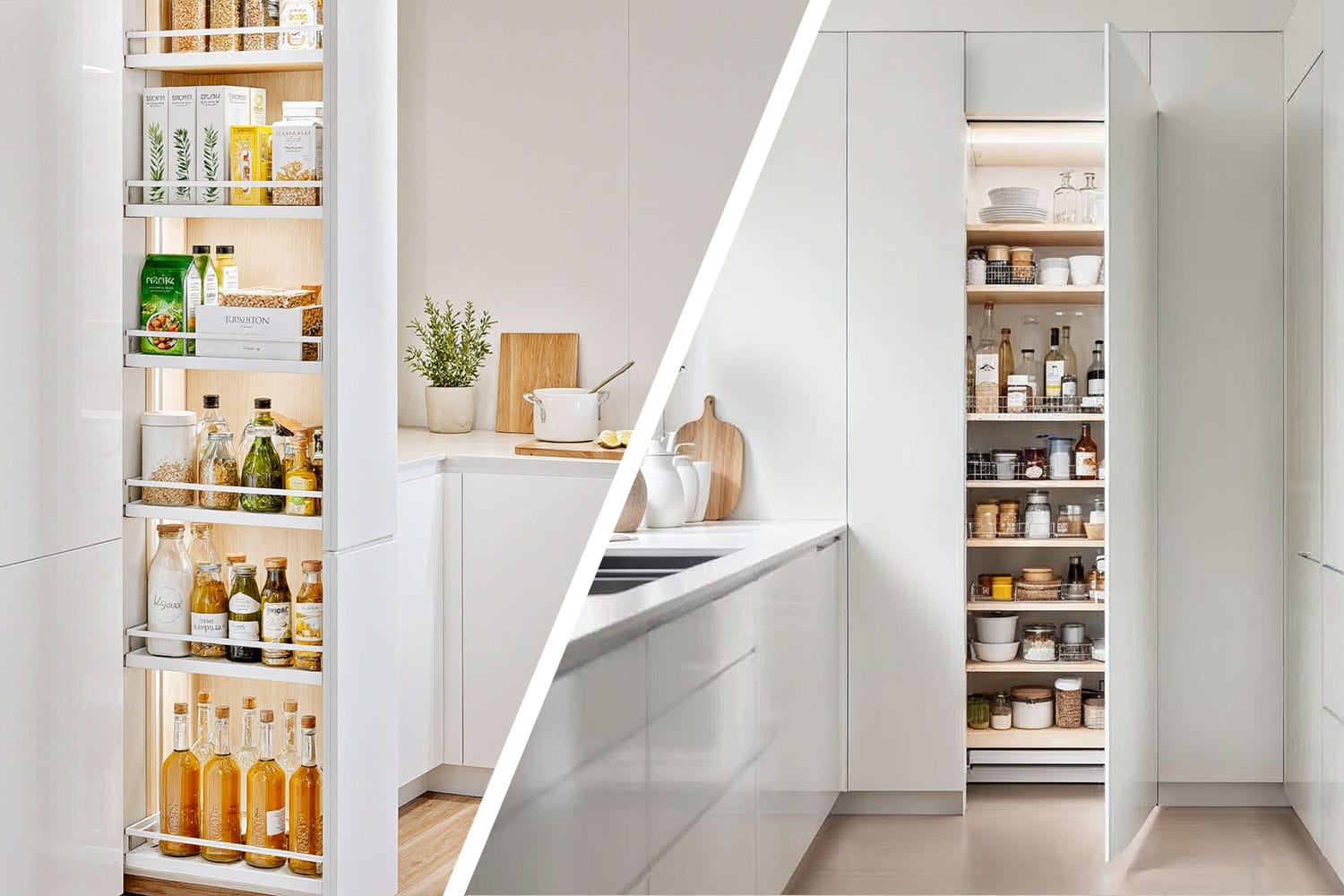
The same principle applies to other high-use rooms. Choosing quality materials for your pantry cabinets or laundry room storage adds value in the same way.
Choosing between solid wood and veneer comes down to three things: how long you plan to stay in your home, how important refinishing flexibility is to you, and how much you want to invest upfront.
If you are building your forever home or plan to stay for 15 years or more, solid wood is the stronger long-term play. It lasts longer, handles repairs better, and gives you the freedom to change the finish as your taste evolves. If you are renovating a starter home, a rental property, or a space where budget is the main driver, high-quality veneer on a plywood core gives you a beautiful natural wood look at a fraction of the cost. Homeowners who compare custom cabinet types often find that the material choice matters just as much as the cabinet type.
We always recommend talking to a professional before making this decision. A trained cabinet designer can look at your kitchen layout, measure moisture levels, assess your daily use patterns, and help you pick the material that gives you the best combination of beauty, durability, and value for your specific situation. Investing in quality cabinetry from the start saves you from costly replacements down the road.
Keeping your cabinets looking new starts with a consistent cleaning routine and smart moisture management. Wipe down surfaces regularly with a soft cloth and a mild, non-abrasive cleaner. Avoid soaking any cabinet surface with water, especially near the sink, dishwasher, and stove.
For solid wood cabinets, apply a fresh coat of finish or wax every few years to maintain the protective seal. Keep your kitchen well ventilated to reduce humidity swings that cause wood movement. Use range hoods and exhaust fans during cooking to pull steam away from cabinet surfaces.
For veneer cabinets, the same moisture rules apply, but extra care is needed around edges and corners where chipping is most likely. Felt pads on cabinet doors help reduce impact, and soft-close hinges prevent slamming that can loosen veneer over time. Good humidity-resistant materials in areas like bathrooms and laundry rooms protect against moisture damage in those spaces. Homeowners who invest in solid built-in shelving throughout the house benefit from the same maintenance approach.
Yes, you can paint veneer cabinets with proper preparation. The surface needs light sanding, a bonding primer, and a high-quality paint for a smooth, lasting result. Skipping the primer step often leads to peeling because paint does not adhere well to a slick veneer surface without it.
Yes, solid wood cabinets are worth the investment for homeowners who want a product that lasts 30 to 50 years, can be refinished multiple times, and adds measurable resale value. The 2025 Zonda Cost vs. Value Report shows that minor kitchen remodels return over 112% of their cost nationally, and high-quality cabinets are a core part of that return.
The best wood species for kitchen cabinets are oak, maple, cherry, hickory, and walnut. Oak is the most popular for its strength and visible grain. Maple is the hardest common species and works well for painted finishes. Cherry develops a rich color over time, and walnut offers a dark, luxurious tone.
Yes, veneer cabinets can peel over time, especially if exposed to moisture, heat, or physical impact at the edges. Peeling is more common in kitchens with poor ventilation or near heat-producing appliances. High-quality veneer bonded to a plywood core resists peeling better than veneer over MDF or particleboard.
You can tell if cabinets are solid wood or veneer by looking at the edges and the end grain. Solid wood shows natural grain running continuously through the edge of the door. Veneer shows a thin surface layer with a visible seam where the wood meets the core material. Feeling the surface can also help because solid wood has more depth and texture than a veneer sheet.
Kitchen cabinet colors that will not go out of style include natural wood tones, classic white, warm greige, and soft navy. The NKBA 2026 Kitchen Trends Report found that white oak is now the most specified wood species at 51% of professional projects, confirming that warm, natural wood tones are the safest long-term choice.
Solid wood cabinets and veneer cabinets both use real wood, but they deliver different levels of durability, repairability, and long-term value. Solid wood lasts longer, can be refinished repeatedly, and adds premium resale appeal. Veneer offers better dimensional stability, a lower upfront cost, and works well for modern flat-panel designs. The right choice depends on your budget, your timeline, and how you use your kitchen every day.
If you want help picking the right material for your kitchen, Classic Cabinetry offers free in-home consultations with 3D design renderings so you can see your new cabinets before any work begins. Call us at (256) 423-8727 to schedule yours.