Open Shelving vs. Built-In Bookshelves, Which Adds More Value?
link desc
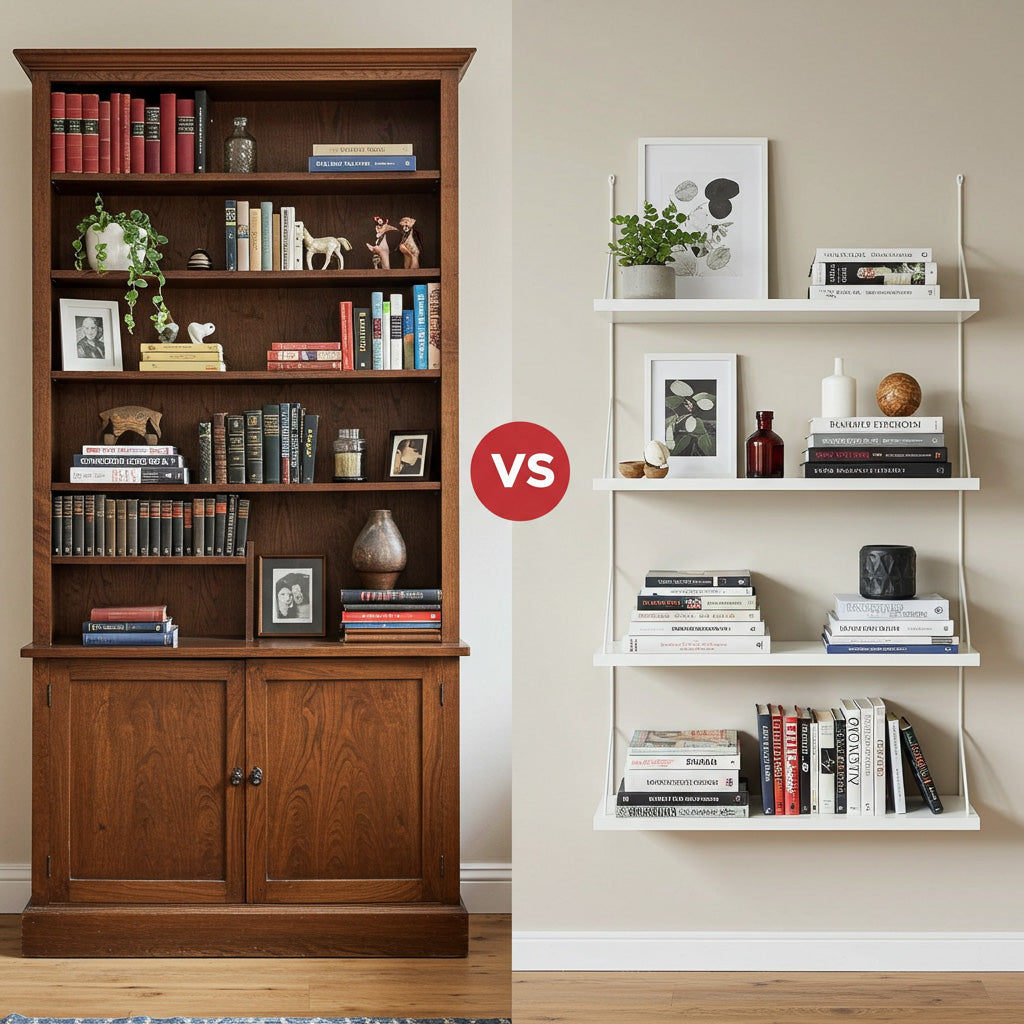


Built-in bookshelves add more overall value than open shelving. Built-ins act as permanent architectural features that boost perceived craftsmanship, room cohesion, and buyer appeal, while open shelving is cheaper and flexible but works more as a temporary decor choice than a major equity booster. Below, we compare the two side by side, explain what separates them, show why built-ins hold their value and their shape, cover where open shelving still fits, and walk through the rooms and planning steps that make built-in bookshelves pay off.
Homeowners already lean toward permanent, made-to-fit storage. According to the 2024 U.S. Houzz Kitchen Trends Study, 45% of renovating homeowners chose fully custom cabinets and 35% chose semi-custom cabinets.
Built-in bookshelves add more value than open shelving, because buyers and appraisers treat built-ins as a permanent part of the house while open shelving reads as decor that can come down in an afternoon. Open shelving still earns its place on cost and flexibility, but it rarely moves a home's perceived value.
The table below compares the two across the factors that decide value.
The value gap comes from permanence. Custom built-in bookshelves become part of the room the way a fireplace surround or window casing does, and that permanence is what buyers notice and appraisers credit.
The difference between open shelving and built-in bookshelves is that open shelving mounts individual shelves directly to a wall, while built-in bookshelves are full cabinetry units built to fit a specific wall and fixed permanently into the room. Both belong to the same family of wall storage, but they are built and used in very different ways.
Open shelving comes in two common forms. Floating shelves hide their mounting hardware inside the shelf, and bracket shelves rest on visible supports screwed into the wall. Open shelving works as display space for a few books, plants, dishes, or framed photos.
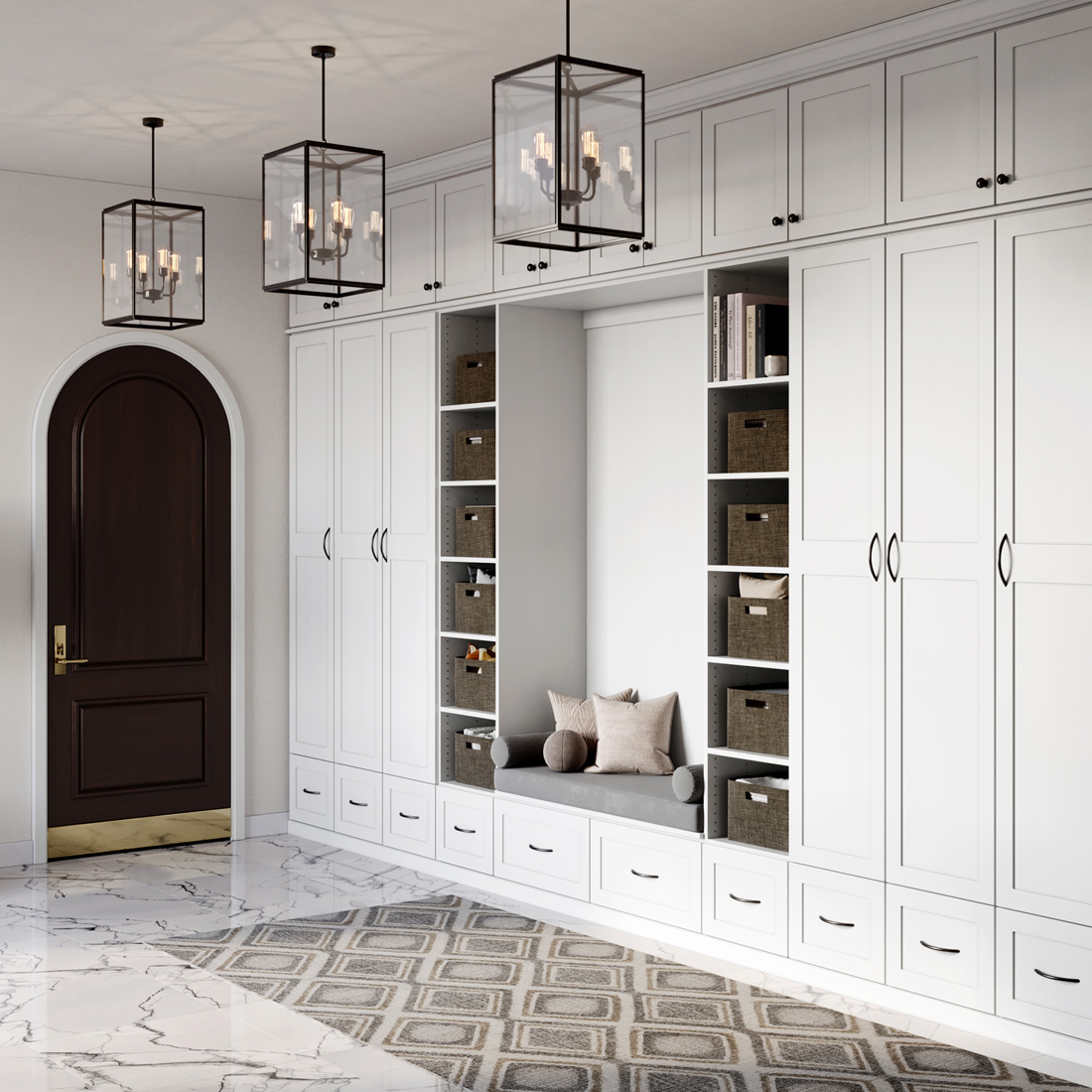
Built-in bookshelves are complete units with sides, backs, fixed and adjustable shelves, and often base cabinets with doors or drawers. Built-ins are measured to the wall, scribed to uneven surfaces, and finished with trim that blends into the room. A wall of floor-to-ceiling bookshelves uses every inch from baseboard to crown molding.
Freestanding bookcases sit between the two. A freestanding bookcase is furniture, not architecture, so it leaves with the owner and adds no permanent value to the house. Freestanding units also leave gaps. Dream Spaces, a custom storage maker, points out that two store-bought bookcases cover about 72 by 72 inches of a 116-by-96-inch wall, roughly half the wall, while a built-in uses all of it.
Yes, built-in bookshelves increase home value when they are well designed and well built, because buyers and appraisers view them as a permanent improvement rather than furniture that leaves with the seller. A finished bookshelf wall in a living room, office, or library reads as usable, finished space that the next owner gets on day one.
Quality decides whether built-ins add value or subtract it. Poorly built shelving with crooked lines, sagging shelves, or cheap finishes cheapens a room and can become something a buyer plans to tear out. Well-built shelving with clean joinery, solid materials, and trim that matches the rest of the house strengthens the room's character.
Custom storage carries weight with homeowners, too. Houzz's 2021 Kitchen Trends Study found that 76% of renovating homeowners chose custom or semi-custom cabinetry. The same reasoning explains how custom cabinets increase a home's appeal, since made-to-fit storage signals quality throughout a house.
Built-in bookshelves are more durable because they are secured directly to wall studs, built from thick, high-grade wood or plywood, and designed with supports placed close enough to prevent sagging and tipping. Books are among the heaviest items per foot that most people ever put on a shelf, and that weight exposes weak shelving fast.
Shelf span and thickness control sag. A loaded shelf behaves like a beam, so the farther it spans between supports and the thinner it is, the more it bows. Dream Spaces notes that 3/4-inch board is far stiffer than the 5/8-inch board common in budget shelving. Built-ins place vertical dividers where the heaviest books will sit, which stops sag before it starts.
Stability matters as much as strength. Freestanding bookcases can tip forward when they are not anchored, and the U.S. Consumer Product Safety Commission (CPSC) reports an average of 17,800 emergency-room-treated tip-over injuries per year from 2020 to 2022, with children making up 44% of them. Built-ins are fixed to the wall structure, so tipping is not a concern.
Finish quality protects the wood over decades. Humid North Alabama summers make wood swell and shrink with the seasons, and a sealed, durable finish keeps shelves straight and joints tight. The range of cabinet finishes runs from clear stains that show the grain to painted finishes that match the room's trim.
The disadvantages of open shelving are constant dust buildup, the need for regular curation, limited weight capacity, and little to no direct return on home resale value. Every item on an open shelf stays exposed, so the shelves only look good when they are kept tidy and styled.
Weight is the second limit. Floating shelves depend on hidden hardware and wall anchors, and a long row of hardcover books can pull a shelf out of level over time. Open shelving also adds no hidden storage, so everyday clutter has nowhere to go.
Resale is the third limit. Open shelves come down easily, which is why buyers see them as decor rather than an upgrade. That flexibility helps owners who change their minds often, but it does little for the home's long-term value.
Open shelving makes more sense when you rent, plan to move within a few years, need storage on a small budget, or want a light, airy look in a tight room. Open shelving installs quickly, costs less, and comes down without a trace when tastes change.
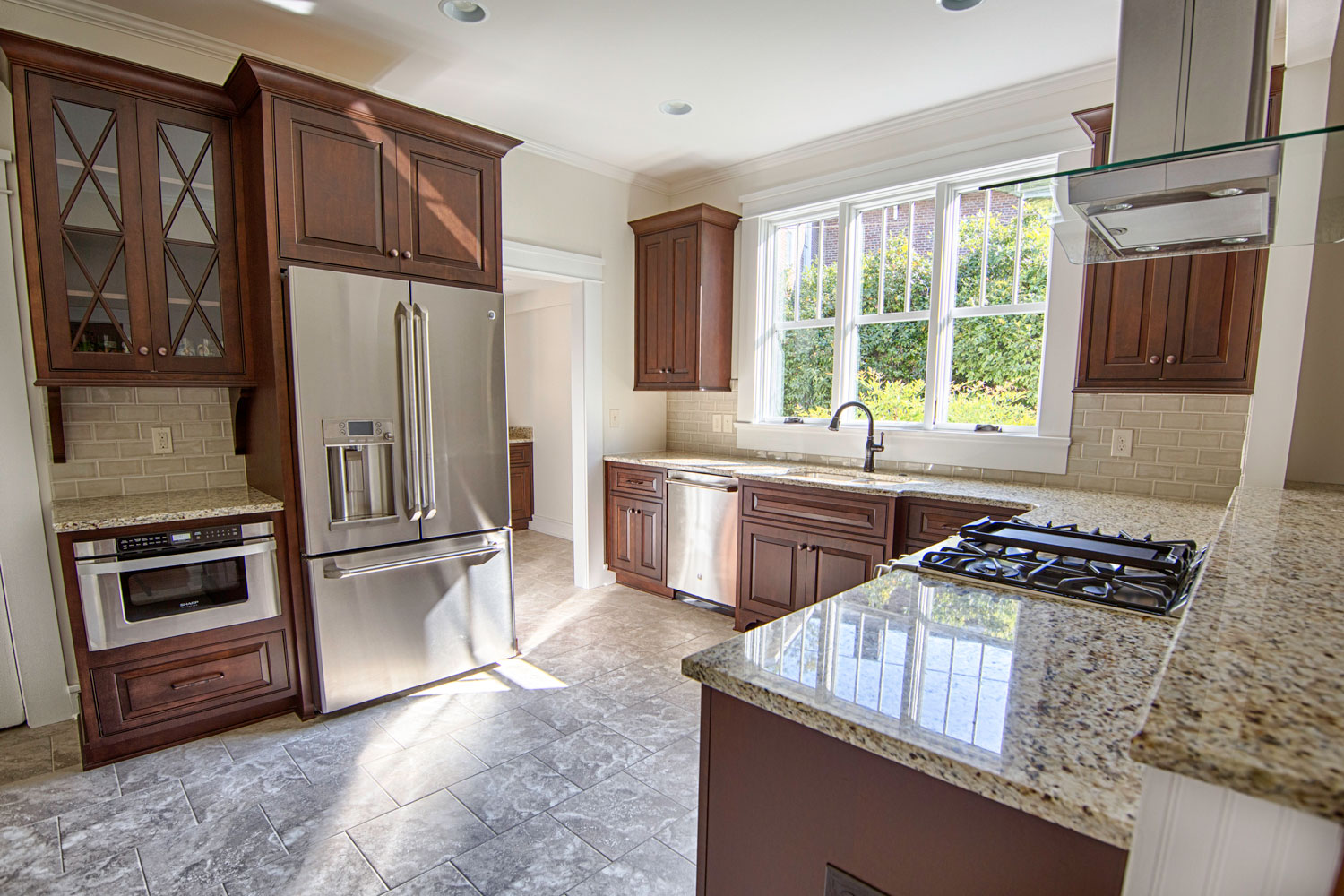
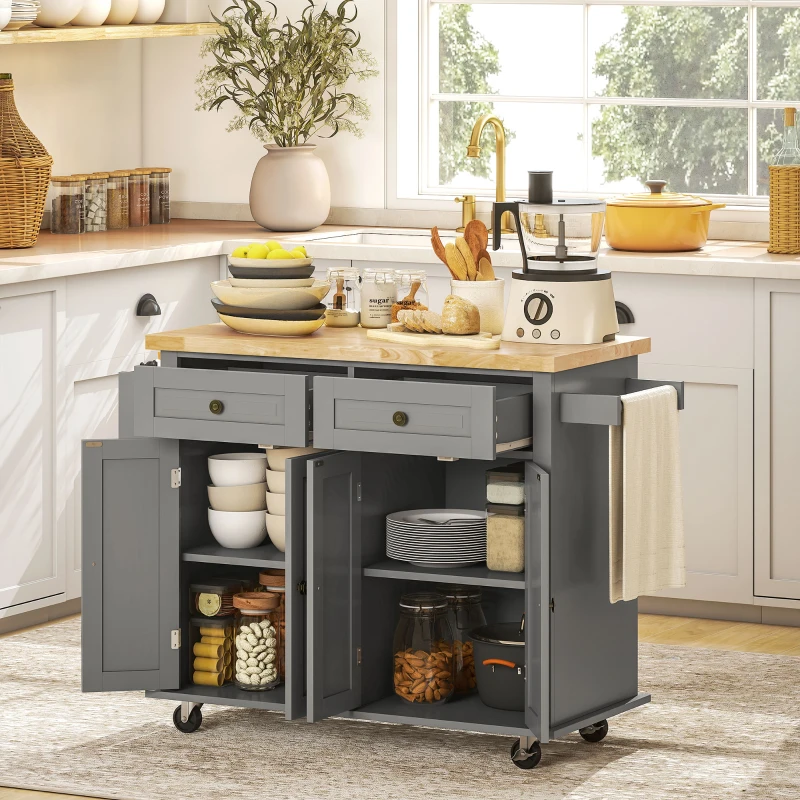
Kitchens are where open shelving appears most often. A few open shelves in place of upper kitchen cabinets make a small kitchen feel larger and keep everyday dishes within reach. Even there, homeowners lean on closed storage for most items. Houzz found that homeowners prefer drawers and doored cabinets over open shelving on kitchen islands.
Budget is the other common reason. Open shelving and freestanding units cost less upfront, and the trade-offs between stock or semi-custom and custom work explain why permanent built-ins cost more and last longer.
Yes, built-in bookshelves can include open shelving, and the most popular design pairs closed base cabinets below with open shelves above. This hybrid layout delivers the airy display of open shelving with the permanence and hidden storage of a built-in.
The closed base hides what nobody wants to see, such as cords, games, paperwork, and media equipment. The open upper shelves hold books, art, and collected pieces. The break between the two creates a counter-height surface for lamps, a printer, or a charging station.
Lighting finishes the display. LED strips tucked under the front edge of each shelf wash light over books and decor, and wiring is easiest to plan before the shelves are built. Good task lighting principles apply directly to display shelving.
Hybrid units are where built-ins shine most. Well-planned built-in bookcases mix fixed shelves at structural points with adjustable shelves where storage needs will change over time.
No, built-in bookshelves are not outdated, because they function as permanent architecture rather than a trend-driven furniture piece. Built-in shelving has remained a desirable home feature for generations, and its style can be refreshed with new paint, hardware, or lighting without replacing the structure.
Style choices keep built-ins current. Painted built-ins in deeper colors, wood-toned units, glass-front upper cabinets, and integrated lighting all update the look of the same basic structure. The built-in form itself holds its appeal.
Yes, open shelves are still in style in 2026, mostly as accent display shelving in kitchens, coffee bars, and living spaces rather than as a home's main storage. Open shelves work best in small doses, holding a few curated items between runs of closed cabinetry.
Closed storage handles the daily load. The pattern in renovated kitchens favors drawers and doors for everyday items, with open shelves reserved for display. That balance mirrors the hybrid built-in, where a closed base carries the clutter and open shelves carry the style.
Built-in bookshelves add the most value in living rooms around a fireplace, home offices, hallways, window seats, and awkward corners that freestanding furniture cannot use. These spaces turn otherwise empty walls into storage and architecture at the same time.
The office deserves special attention. Built-in shelving combined with home office cabinetry creates a workspace that stays organized and adds visible value to a room buyers increasingly expect.
You plan built-in bookshelves that add value by choosing the right wall, measuring precisely, deciding what will sit on the shelves, balancing open and closed storage, and selecting materials and finishes that match the room. Following that order builds value into the design before any construction begins.
Careful planning avoids costly rework. The most common installation mistakes, such as skipped measurements and forgotten outlets, are far easier to prevent on paper than to fix after the shelves are built.
Our process follows the same order. Every project starts with a one-on-one consultation and precise measurements, followed by a free 3D design consultation so you see the finished wall before construction begins. Our Ardmore shop then builds each unit from strong hardwoods with durable finishes, and most built-in bookshelf projects are finished within 4 to 6 weeks.
Installation day completes the picture. Every set of handcrafted built-ins we build is installed by our own team and backed by a lifetime craftsmanship warranty.
Built-in bookshelves are worth it for owners who plan to stay several years and want the room to feel finished, while owners who expect to move soon often get better short-term value from open shelving or freestanding bookcases. Built-ins still add appeal for buyers when the home sells, since the shelving stays with the house.
No, you cannot take built-in bookshelves with you when you move, because built-ins are attached to the wall structure and become part of the house. That permanence is exactly why buyers and appraisers count them as an upgrade.
Built-in bookshelves should be about 10 to 12 inches deep for most hardcover books, while paperbacks need only 7 to 8 inches. Base cabinets under the shelves run deeper to hold bulky items and create a usable countertop.
No, built-in bookshelves do not need to go to the ceiling, but floor-to-ceiling units add the most storage and make a room look more finished. Shorter units leave space above for art or keep sightlines open in smaller rooms.
Yes, you can make store-bought bookcases look built in by adding trim, crown molding, and side panels around them. The result looks closer to a built-in, but it will not fully fix gaps from uneven walls or fill odd spaces the way a custom unit does. Whether to buy or build depends on how long you plan to stay and how much the fit matters.
Floating shelves are strong enough for a small number of books when they are anchored into wall studs, but long rows of heavy hardcovers can make them sag or pull away over time. Built-in shelving with vertical dividers handles full book collections far better.
Built-in bookshelves add more value than open shelving because they become a permanent part of the home, built to the wall, anchored to the structure, and finished to match the room. Open shelving costs less and changes easily, which makes it a good fit for renters, short stays, and light display. For owners who want storage that lasts and a room that looks complete, built-ins, often with open shelves above closed cabinets, deliver both.
At Classic Cabinetry, we design and build bookshelves that fit your walls, your collection, and your home's style.
Reach out for a free estimate, and we will help you turn an empty wall into a lasting feature.