.avif)


.avif)


.avif)
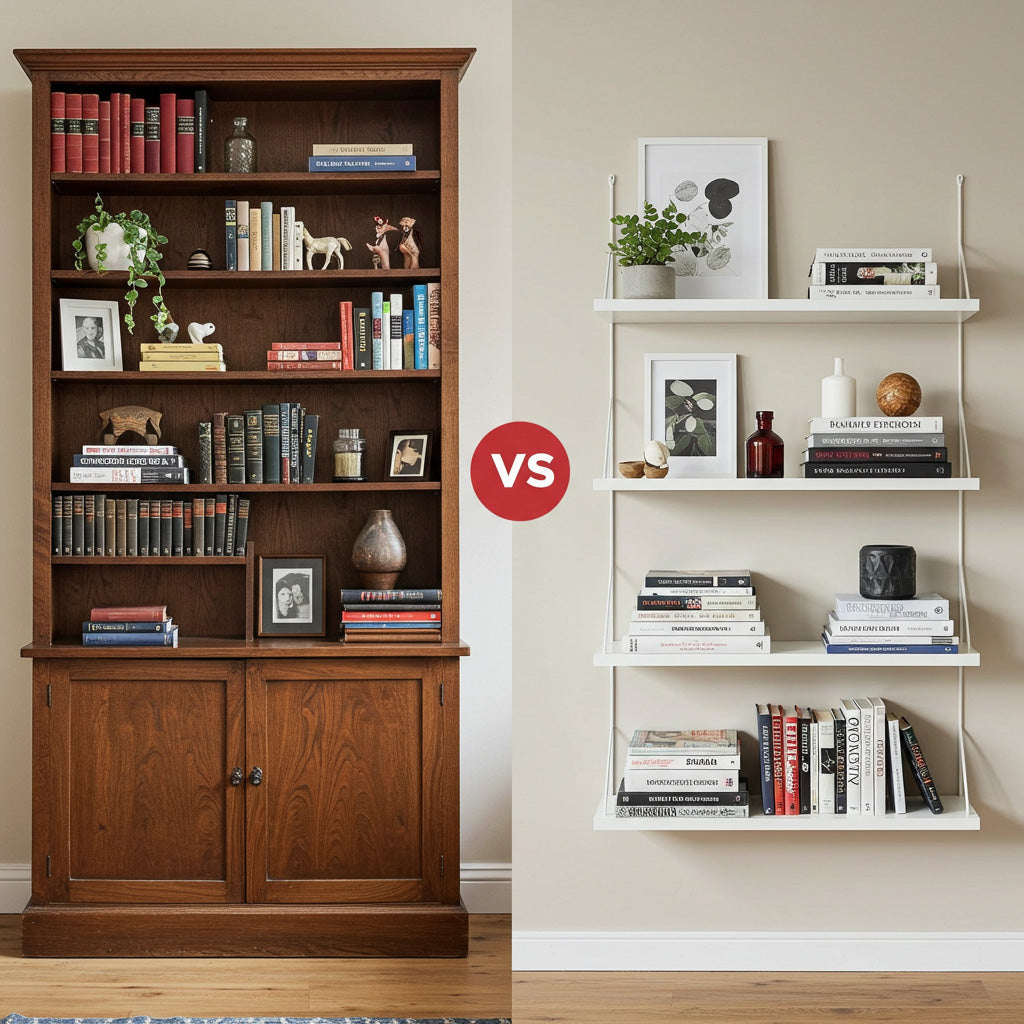
Open Shelving vs. Built-In Bookshelves, Which Adds More Value?
link desc
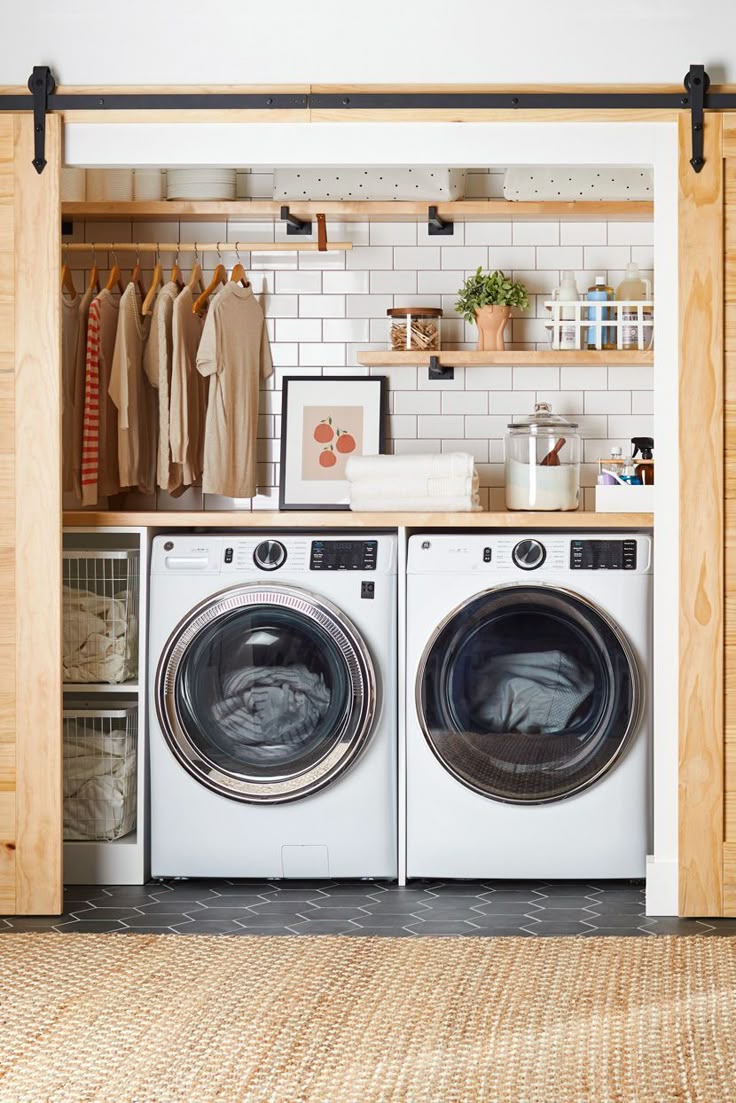


The best laundry room cabinet ideas for stacked washer and dryer setups use the vertical space around and above the stack to add storage, folding surfaces, and hidden organization that make laundry day faster and easier. A stacked unit saves floor space, but it also creates a tall, narrow footprint that needs smart cabinetry to work at its best. According to the National Association of Home Builders (NAHB), 87% of homebuyers said a laundry room is an essential feature, and 47% would pass on a home that does not have a separate one. This guide covers the best cabinet layouts, storage ideas, and design tips to get the most out of your stacked setup.
A stacked washer and dryer takes up only about 27 inches of width and 77 to 80 inches of height for a full-size pair, according to Maytag. That leaves a lot of usable wall space on either side, above, and even behind the door. The right cabinetry fills those gaps with storage that keeps supplies organized and off the floor.
Here are the most effective cabinet setups for stacked laundry rooms.
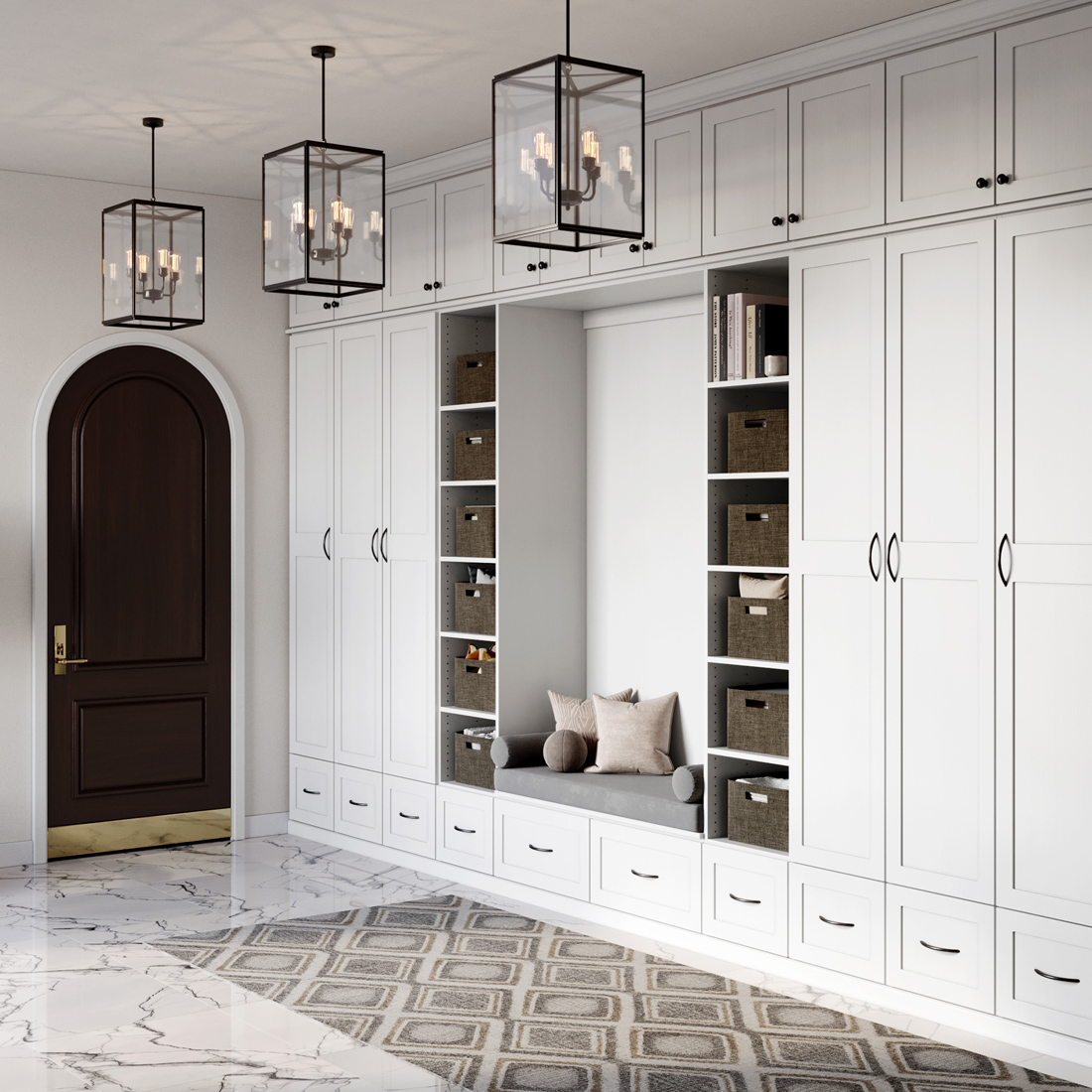
A floor-to-ceiling cabinet next to the stacked unit is one of the most useful additions you can make. A 12- to 18-inch-wide tower holds detergent, fabric softener, stain removers, dryer sheets, and cleaning supplies without taking up much floor space. Pull-out shelves or adjustable shelving inside this cabinet let you see everything at a glance.
If you have room on both sides of the stack, one cabinet can hold laundry supplies while the other holds a pull-out hamper or a slim drying rack that folds flat when not in use. We build laundry room cabinetry to fit these exact layouts, making every inch count.
The space above a stacked washer and dryer is often wasted. Most stacked units top out around 78 to 80 inches tall, and standard ceilings are 96 inches. That gives you about 16 to 18 inches of space overhead for a shallow cabinet or open shelf.
An overhead cabinet 12 to 14 inches deep works well here. It holds items you do not use every day, like extra cleaning supplies, light bulbs, or seasonal items. Keep the most frequently used items at eye level or below, and store lighter, less-used items up top. If you prefer the open look, a single floating shelf in this spot can hold baskets or decorative storage bins.
Every laundry room needs a flat surface for folding, sorting, and stacking clean clothes. In a stacked setup, there is no top-of-the-dryer surface to use. A wall-mounted folding counter or a countertop built over lower cabinets solves this problem.
A counter at 34 to 36 inches high is the most comfortable height for folding clothes while standing. Below the counter, add two or three lower cabinets for hampers, ironing supplies, or extra towels. Choosing the right cabinet hardware for these lower cabinets makes them easier to open and close, especially when your hands are full of laundry. This layout turns a basic laundry closet into a complete workstation.
A pull-out hamper built into a cabinet keeps dirty laundry hidden and organized. A single hamper works for small households, while a double-hamper system lets you sort lights and darks right at the point of entry. The hamper slides out on drawer rails and lifts out easily on laundry day.
This is one of those small upgrades that makes a big difference in daily life. According to a Fixr homeowner survey, 81% of homeowners ranked extra storage as important to very important. Pull-out hampers deliver that storage in the room where it matters most.
To build a cabinet around a stacked washer and dryer, measure the unit carefully, plan for clearance on all sides, and frame the cabinetry around the stack while leaving easy access to water lines, the dryer vent, and electrical connections.
Start with the dimensions. A full-size stacked pair is typically 27 inches wide, 32 to 34 inches deep, and 77 to 80 inches tall, according to Whirlpool. Compact models measure 24 inches wide and 66 to 72 inches tall. You need at least 1 inch of clearance on each side for airflow and 4 to 6 inches behind the unit for hoses, venting, and hookups.
The cabinet surround should be built as a three-sided frame with an open back so the washer and dryer can be pulled forward for maintenance. Avoid sealing the appliances into a completely closed box. The dryer needs airflow to prevent overheating, and you need access to water shut-off valves in case of a leak. Use moisture-resistant materials for any cabinetry that sits close to water lines or in high-humidity areas.
Once the frame is in place, add side panels, a top shelf or cabinet above, and doors or a curtain across the front if you want to hide the appliances when they are not in use.
To hide a stacked washer and dryer, enclose the unit behind cabinet doors, a pocket door, bi-fold doors, or a floor-to-ceiling curtain. The goal is to create a clean, seamless wall when the laundry is not in use, which is especially important in open-plan homes, hallways, or multi-use rooms.
Bi-fold doors are the most common solution because they fold flat against the sides and do not need the swing clearance that standard cabinet doors require. A pocket door is even sleeker because it slides completely into the wall, but it costs more and requires wall framing work.
For a simpler and more affordable approach, a curtain on a ceiling-mounted rod hides the stack without any construction. This works well in rental properties or temporary setups. For a permanent solution that adds real value, custom cabinet doors that match the rest of the room's cabinetry create a polished, built-in look. We see homeowners in the Huntsville, Alabama area choose this option often because it makes the laundry space feel like a natural part of the home rather than an afterthought.
The best layout for laundry cabinets depends on the shape and size of your room, but for stacked setups, a straight-wall layout with the stack on one end and cabinets running along the same wall is the most efficient. This keeps everything within arm's reach and leaves the opposite wall free for a folding area, utility sink, or additional storage.
In a wider room, an L-shaped layout works well. Place the stacked unit in one corner, run lower cabinets and a countertop along the adjacent wall, and add upper cabinets above the counter for detergent, cleaning supplies, and overflow storage. The NKBA 2026 Kitchen Trends Report found that 94% of designers say homeowners are adding functional spaces like laundry rooms and flex areas, and the layout is what makes those spaces actually work.
For laundry closets with limited depth, a galley layout puts the stacked unit on one side and shallow shelving or cabinet hinges that allow full-overlay doors on the other, maximizing storage without crowding the walkway.
Yes, there is a downside to stacking a washer and dryer. The main trade-offs are reduced load capacity in some models, the need to bend low to load the bottom washer, and the height of the top dryer controls, which can be hard to reach for shorter adults. Stacked units also vibrate more than side-by-side pairs because the weight is distributed vertically instead of spread across the floor.
From a cabinetry standpoint, the biggest challenge is building around the height. A stacked pair that stands nearly 80 inches tall leaves limited space for overhead storage, especially in rooms with 8-foot ceilings. And because the unit is tall and narrow, it can look unfinished if the surrounding walls are bare. That is exactly where smart cabinet design fills the gap, framing the stack with useful storage that makes the room feel complete.
Despite these trade-offs, stacking remains one of the best options for small spaces. The North America household washer and dryer market was valued at $16.75 billion in 2024, according to Grand View Research, and stackable units continue to grow in demand as homeowners look for ways to fit laundry into smaller footprints. The right cabinetry around the stack solves most of the practical downsides.
You need at least 1 inch of clearance on each side, 4 to 6 inches behind the unit for hoses and venting, and 24 inches of open space in front for loading and unloading. For the ceiling, leave at least 1 to 2 inches above the top of the dryer for airflow and safe operation.
These clearances are not optional. The dryer generates heat and moisture during every cycle, and without proper airflow, the risk of overheating goes up. Whirlpool recommends at least 6 inches behind the unit for ventilation. Maytag specifies 1 to 5 inches behind the appliances for hoses and venting.
When planning cabinetry around the stack, account for these clearances first, then design storage into the remaining space. A tall cabinet that sits flush against the side of the unit with a 1-inch gap looks clean and professional while still meeting ventilation requirements. For a deeper look at choosing the right materials for this kind of build, the way your cabinet finish handles moisture makes a real difference in durability.
Stacked Unit TypeWidthStacked HeightDepthBest ForFull-size stackable27 inches77 to 80 inches32 to 34 inchesFamilies, larger loads, standard laundry roomsCompact stackable24 inches66 to 72 inches24 to 26 inchesApartments, condos, laundry closetsMinimum clearance needed+1 inch each side+1 to 2 inches above+4 to 6 inches behindAll installationsCabinet surround opening29 to 30 inches80 to 84 inchesOpen back requiredBuilt-in enclosure with side cabinets
Sources: Maytag stackable washer and dryer dimensions guide; Whirlpool laundry sizing guide; Tony's Appliance installation clearance specifications.
Yes, laundry room cabinets should go to the ceiling whenever possible. Floor-to-ceiling cabinetry maximizes vertical storage, eliminates the dust-collecting gap above standard cabinets, and gives the room a built-in, custom look. In a small laundry room with a stacked setup, vertical space is your best friend.
Upper cabinets that reach the ceiling can hold items you use less often, like extra cleaning supplies, spare light bulbs, or seasonal laundry products. Keep the most-used items between waist height and eye level, and store lighter, less-frequent items up top.
The same principle applies in a custom closet or a garage storage area. Going all the way to the ceiling creates a polished, finished look and prevents wasted space above the cabinets. In a laundry room, this is especially important because the room is usually small and every square inch counts.
A small laundry room with a stacked washer and dryer can feel much bigger with a few simple design choices. Light-colored cabinets, a single continuous countertop, and open shelving all create a sense of space without adding square footage.
Choose cabinets in a light finish like white, soft gray, or natural wood. These colors reflect more light and make walls feel like they are farther apart. Avoid dark cabinets in a tight laundry room because they absorb light and make the space feel smaller.
Replace solid upper cabinet doors with glass fronts or open shelving. This breaks up the visual weight of a wall of closed cabinetry and makes the room feel more open. Adding under-cabinet LED lighting brightens the work surface and creates the illusion of depth.
A pocket door or sliding barn door at the room's entrance saves the swing clearance of a traditional door, which can free up 6 to 8 square feet of usable floor space. In a room that might only be 30 to 50 square feet, that is a significant gain. Families throughout the Ardmore, Alabama area love this approach for tight spaces. Combining stacked units with streamlined laundry cabinetry makes even the smallest room work hard for everyone.
If you have pets, the laundry room often doubles as the pet care station. A lower cabinet with a built-in pet washing station, a pull-out drawer for leashes and grooming tools, and a designated shelf for pet food storage all make the room more useful.
Pet hair is a constant battle in laundry rooms, so choose cabinet surfaces that are easy to wipe down. Smooth, sealed finishes in satin or semi-gloss resist pet hair buildup better than textured or matte surfaces. Pet-friendly cabinetry can be built on a budget with smart material choices and a layout that keeps pet supplies separate from laundry supplies.
Laundry rooms deal with heat, humidity, vibration from the machines, and constant daily use. The cabinetry needs to handle all of that without warping, peeling, or falling apart.
Plywood cabinet boxes are the gold standard because they resist moisture and hold screws tightly for decades. A plywood box lasts 25 to 30 years, while particleboard can swell and sag within 10 to 15 years, especially in a humid room. Solid wood face frames add strength and give the cabinets a premium feel.
For the finish, semi-gloss or satin paint resists moisture and wipes clean easily. Matte finishes hide fingerprints and scuffs better but can be harder to clean near the washer where water splashes are common. A regular maintenance routine keeps the finish looking new and prevents small issues from becoming big ones.
Soft-close hinges and full-extension drawer slides are worth the investment in a laundry room. The constant vibration from the washer and dryer can loosen hardware over time, and soft-close mechanisms absorb that vibration rather than letting it rattle doors open. Garage cabinetry faces similar demands, and the same heavy-duty hardware that works there works just as well in a laundry room.
Yes, you can put cabinets above a stacked washer and dryer as long as there is at least 1 to 2 inches of clearance above the top of the unit. A full-size stacked pair stands about 77 to 80 inches tall, so in a room with standard 8-foot ceilings, you have roughly 16 to 18 inches of overhead space for a shallow shelf or cabinet.
The best type of cabinet for a laundry room is one built with moisture-resistant materials like plywood boxes and a sealed paint or laminate finish. Avoid particleboard and MDF in areas that get regular moisture exposure. Semi-gloss or satin finishes resist water and wipe clean more easily than matte finishes.
You organize a laundry room with limited space by using every vertical inch, choosing a stacked washer and dryer to free up floor area, and installing slim cabinets, wall hooks, door-mounted racks, and pull-out storage. Labeling baskets and assigning each item a specific spot prevents clutter from building up. According to the Soap and Detergent Association, reducing clutter in a home eliminates about 40% of housework.
Yes, a laundry room remodel adds home value. A high-quality laundry room with a sink and built-in storage can recoup between 67% and 91% of its cost at resale. The NAHB found that 87% of homebuyers consider a laundry room essential, making it one of the most desired features in a home.
A utility sink is a valuable addition to any laundry room. It gives you a place to pre-treat stains, hand-wash delicates, rinse muddy clothes, and clean up messes without using the kitchen sink. A sink also increases the room's functionality and resale appeal.
The best flooring for a laundry room with stacked units is ceramic tile, porcelain tile, or luxury vinyl plank (LVP). All three are water-resistant, durable, and easy to clean. Avoid carpet and untreated hardwood because they absorb moisture and can develop mold in a high-humidity laundry environment.
A stacked washer and dryer frees up floor space, and the right cabinetry turns that freed-up space into real, everyday storage. Tall side cabinets, overhead shelving, a folding counter, and pull-out hamper drawers transform even the smallest laundry room into a room that works as hard as you do. The key is planning cabinetry around the stack's exact dimensions and your family's actual routine.
When you are ready to design a laundry room that fits your space and your life, Classic Cabinetry builds every piece with over 44 years of craftsmanship. Call us at (256) 423-8727 to schedule your free estimate.