.avif)


.avif)


.avif)
How to Choose Between Inset and Overlay Cabinet Doors
link desc
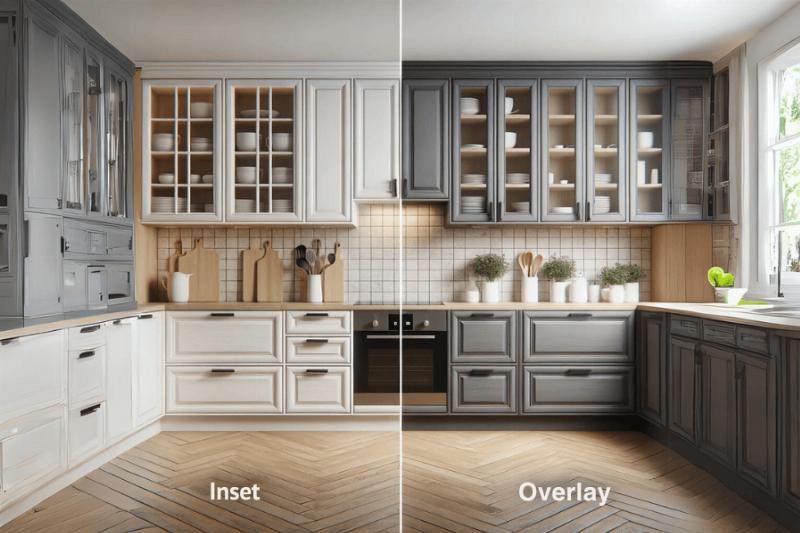


Choose between inset and overlay cabinet doors this way: pick inset if you want a classic, furniture-grade look and have the budget for it, and pick overlay if you want maximum storage, easier installation, and a more budget-friendly or modern style. Inset doors sit flush inside the face frame. Overlay doors sit on top of it.
Below we compare the two on cost, storage, durability, humidity, layout, and construction tier, with the measurements you can check for yourself on a showroom sample.
Choose between inset and overlay cabinet doors by weighing seven factors: door placement, overall look, cost, interior storage, tolerance to seasonal movement, installer skill required, and how the style reads in your neighborhood. Most homeowners decide on look and then get surprised by one of the other six, which is why the full comparison belongs up front.
The cost range and reveal dimensions below come from custom cabinetry shop data and industry pricing guides, and they hold steady across the market.
FactorInsetOverlay (full or partial)Door placementFlush inside the face frameOn top of the face frameLookTraditional, handcrafted, furniture-likeSleek and modern on full overlay, classic on partialCostRoughly 10 to 35 percent moreLower upfront costInterior storageGives up about 3/4 inch of clearanceMaximizes usable interior spaceSeasonal movementTight reveals leave less room for swellingDoor overlaps the frame, so movement hidesInstaller skillSpecialized, measured in fractions of a sixteenthMost cabinet installers are capableDaily wearFace frame absorbs the contactDoor edges absorb the contact
Neither column is the right answer on its own. A household that cooks hard in a tight galley reads that table differently from one building a showpiece kitchen in an open plan, and we design custom kitchen cabinets both ways for exactly that reason.
The difference between inset and overlay cabinet doors is where the door sits relative to the face frame. An inset door nests inside the frame opening and finishes flush with it, while an overlay door rests on the outside of the frame and covers part or all of it.
The reveal is what you actually see. Reveal means the visible gap between the door and the frame around it, and on well-built inset cabinetry that gap runs roughly 3/32 to 1/8 inch, consistent on all four sides of every door. Overlay cabinetry has no reveal in that sense, because the door covers the frame rather than fitting into it.
Consistency is the test, not tightness. An inset reveal that measures 1/8 inch at the top and 1/16 inch at the bottom tells you the door was fitted to a frame that was not square, and that is visible from across the room once you know to look for it.
The difference between full overlay and partial overlay is how much of the face frame stays visible. Full overlay doors cover nearly the entire frame and leave only a narrow line between doors, while partial overlay leaves roughly a 1 inch reveal of face frame around each door. The standard overlay dimension across the industry is 1/2 inch.
Partial overlay is the more forgiving of the two. A wider band of exposed frame absorbs seasonal wood movement and small installation variances without anything looking wrong, which is why it dominated builder cabinetry for decades. Full overlay demands tighter alignment and specialty hinges to hold a consistent line between adjacent doors.
Frameless cabinetry is a related third option where the doors mount to the box sides and there is no face frame at all, and the trade-offs there differ enough that frameless construction deserves its own comparison against inset.
Beaded inset cabinetry adds a decorative 1/4 inch bead milled around the inside of each door opening, where flush inset leaves the frame plain. The bead casts a fine shadow line around every door and drawer, which reads as the most traditional treatment available in cabinetry.
Beading raises the precision demand further. The bead has to be mitered cleanly at every corner of every opening, so a beaded inset kitchen multiplies the number of joints that must be perfect by the number of doors in the run.
Inset cabinets cost roughly 10 to 35 percent more than a comparable overlay build, with custom shops commonly placing the premium at 25 to 35 percent. The gap is labor and precision, not a markup on the look itself.
Five requirements produce that premium, roughly in order of how much they add:
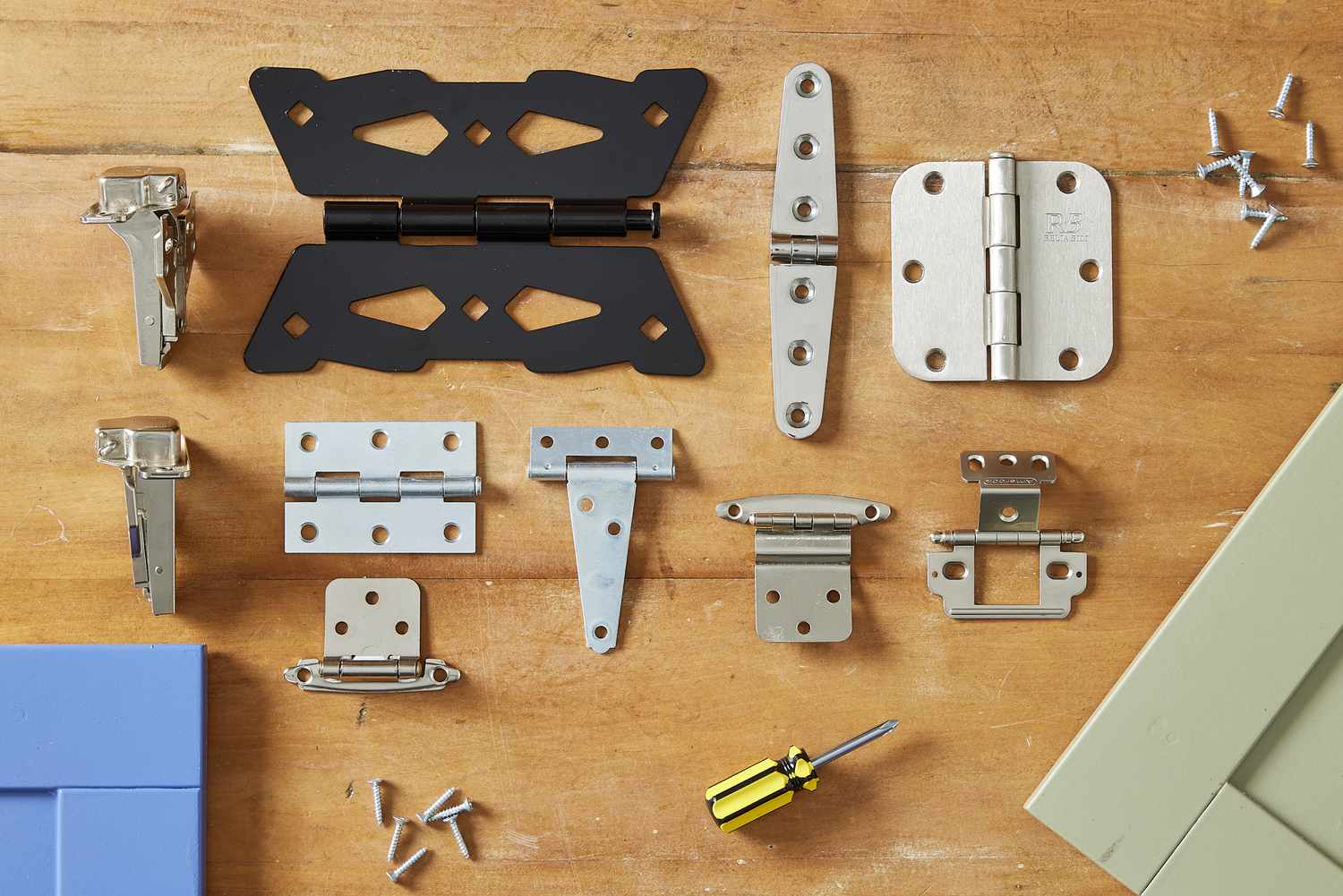
Hardware alone carries real weight in that list. Inset relies on three-way adjustable hardware to bring every door into a matching reveal, and the differences between cabinet hinges matter more on inset work than on any other cabinet style.
The most expensive cabinet door style is beaded inset in a solid hardwood with a hand-applied finish. Beaded inset stacks every cost driver at once: inset tolerances, additional milling for the bead, mitered bead joints at every opening, and specialty hardware.
Door style and door placement are separate decisions, though, and conflating them is the most common mistake in this comparison. Shaker, raised panel, and slab all describe the face of the door; inset and overlay describe where that door sits. A slab door can be inset and a raised panel door can be full overlay.
Inset cabinets are worth the money when you want construction quality you can see and plan to keep the kitchen for decades. The premium buys visible precision, and visible precision is the one quality signal a buyer cannot fake with a finish or a hardware upgrade.
The reason is simple mechanics. With overlay, the door sits over the frame and hides whatever is behind it, so a cabinet slightly out of square still looks correct. With inset, there is nowhere for an error to hide, which means a well-executed inset kitchen is proof of the materials, joinery, and installation behind it.
Inset is not worth the money when the budget forces a compromise elsewhere. Spending the premium on inset and then settling for thinner box construction or a weaker finish produces a worse kitchen than a well-built full overlay with the money put into materials.
Yes, inset cabinets lose storage space, roughly 3/4 inch of interior clearance per opening compared with overlay. The door occupies part of the frame opening instead of sitting outside it, so the usable width behind the door narrows by about the thickness of the door.
Three-quarters of an inch sounds trivial and sometimes is not. The dimension that matters is clearance for accessories, since a pull-out shelf, a lazy Susan, a drawer organizer, or a roll-out trash bin all have fixed widths that must clear the opening rather than the box. Most accessories come in sizes made for inset boxes, but the coordination has to happen during design rather than after the cabinets are built.
Planning around that is the practical answer. We size inset openings against the specific accessories a household wants from the first drawing, which removes the problem before it exists.
Humidity affects inset doors more than overlay doors because inset relies on a tight reveal that seasonal swelling can consume. An overlay door that grows slightly still functions normally, since it sits on top of the frame with nothing to bind against, while an inset door grows into a fixed opening.
Wood science sets the terms here, and it is worth stating with real numbers. The USDA Forest Products Laboratory's Wood Handbook specifies that hardwood lumber for furniture, cabinets, and millwork is dried to 6 to 8 percent moisture content. Six to eight percent is the shop target, and the same laboratory's interior moisture content map places the humid Southeast closer to 11 percent in service. Eleven percent in service means a door can arrive drier than the room it will live in and take on moisture across its first summer.
Movement follows moisture in a predictable direction. The Wood Handbook reports that unfinished kiln-dried wood stored indoors fluctuates seasonally between roughly 4 and 14 percent moisture content across most of North America, that tangential shrinkage from green to ovendry runs 6 to 12 percent against 3 to 5 percent radially, and that indoor kiln-dried stock moves perhaps one-fourth to one-half of those maximums. No finish stops the exchange either. Paint, stain, and sealer slow how fast wood takes on moisture; none of them prevent it.
Across North Alabama that science is a design input rather than a footnote. Summers here run humid for months while winter heating dries interiors toward the opposite end of the 35 to 50 percent relative humidity range recommended for wood cabinetry, so we size inset reveals and select stock with the full annual swing in mind. Material choice carries the same weight, and the reasoning behind humidity-resistant construction applies to door panels as much as to carcases.
Inset cabinet doors can stick in humid weather when the reveal was cut too tight for the climate. A properly sized reveal of 3/32 to 1/8 inch leaves enough allowance for the typical seasonal movement of a cabinet door without the door ever binding in its opening.
Binding is therefore a specification problem rather than a flaw in inset itself. Doors fitted by a shop that builds inset regularly in a humid region are cut with that swing already accounted for, which is the single strongest argument for using a local shop on inset work.
Neither style avoids daily wear; they move it to different surfaces. On an overlay cabinet the exposed door edge takes the bumped hip, the grocery bag corner, and the toddler with a toy, while on an inset cabinet the face frame around the door absorbs that contact and the door face stays recessed and protected.
The practical question is which damage you would rather repair. A chipped door edge on an overlay cabinet is a single localized spot and relatively straightforward to touch up. A dinged face frame on an inset cabinet is equally visible, but the exposed frame runs the perimeter of every door and drawer, which is a larger total surface where damage can land.
Finish choice changes the picture more than placement does. Paint shows chips clearly on both styles, while a stained hardwood develops a worn patina that tends to read as intentional, and the differences between cabinet finishes affect long-term appearance more than the inset or overlay decision does.
The trade-offs with full overlay cabinets are exposed door edges, tighter alignment demands than partial overlay, specialty hardware requirements, and reduced clearance at inside corners. Full overlay sits between partial overlay and inset in difficulty, which surprises homeowners who assume all overlay is equally forgiving.
Alignment is the one that shows. Because full overlay doors sit close together with only a narrow line between them, any variance between two adjacent doors reads immediately along that line. Partial overlay hides the same variance inside its wider band of exposed frame.
Door edges are the second. Fronts that protrude from the box are the most vulnerable point for denting, chipping, and water infiltration, particularly on painted finishes, which is why finished ends and well-captured edges matter on overlay work.
No, overlay cabinets are not outdated. Full overlay reads as clean and current, and it is the dominant choice in modern and transitional kitchens because the near-continuous run of door fronts produces a calm, uninterrupted wall.
Partial overlay is the style that can look dated, and only when it is specified without thought. A wide exposed frame paired with a dated door profile and small knobs reads as builder-grade; the same partial overlay with a considered door style and proper hardware reads as classic.
Inset fits tight kitchen layouts better, and overlay fits open layouts with generous clearances better. The reason is geometry rather than taste: overlay doors protrude further from the box and swing through a wider arc, while inset doors start flush and swing through a smaller one.
That arc becomes a real problem at inside corners. In a galley or L-shape kitchen where two runs meet, the overlay doors nearest the corner and their pulls can physically collide when both are opened at once. Installers prevent it by adding filler strips between the cabinet box and the corner, which solves the collision and costs an inch or two of cabinet width plus a visible filler in the finished kitchen.
Inset reduces that problem rather than eliminating it. Doors sitting flush need less swing clearance, so corner conflicts shrink, filler requirements drop, and walkway clearance improves in narrow runs. In a tight kitchen, the storage inset gives up inside the box it can partly win back at the corners.
Yes, inset cabinets are good for small kitchens, as long as the accessory planning happens during design. The swing-arc advantage matters most where walkways are tight, and the roughly 3/4 inch of lost interior clearance per opening is a smaller penalty than the inch or two of filler an overlay corner can demand.
The three grades of cabinets are stock, semi-custom, and custom. Stock cabinets arrive in fixed sizes with limited finish and door options, semi-custom lines allow sizing and finish choices within a set catalog, and custom shops build to any dimension in any configuration.
Door placement tracks that ladder closely. Stock lines are generally partial or full overlay only, semi-custom lines offer full overlay and sometimes inset at a premium, and true inset is effectively a custom-tier product because the tolerances it demands cannot be held in volume production. The point where stock, semi-custom cabinets, and full custom work diverge explains most of the inset price premium on its own.
Building in our own Ardmore shop is what makes inset practical for us rather than exceptional. Face frames can run continuous across multiple cabinet boxes instead of leaving a seam between each unit, which produces consistent reveals across an entire wall and is one of the clearest markers of furniture-grade custom cabinetry.
Cabinets look expensive when the reveals are consistent, the face frames are flat, the grain is matched across adjacent doors, and the hardware suits the door style. Those four things read as quality long before anyone identifies why, and three of them are construction rather than design, which is why we treat them as baseline specification on every run of kitchen cabinets we build.
Inspecting a sample tells you most of what you need to know. Look for these on any cabinet you are considering:
Hardware finishes the impression. Pulls and knobs sized correctly for the door and consistent across the room do more for perceived quality than an upgrade in wood species, and choosing cabinet hardware deliberately is the cheapest way to lift a kitchen's finished look.
The most timeless cabinet door style is the Shaker door, a flat recessed panel inside a simple square frame. Shaker works in inset and in overlay, in paint and in stain, and in traditional and modern rooms, which is exactly what timeless means in practice.
Raised panel and flat slab are the two other enduring choices, raised panel leaning traditional and slab leaning contemporary. The broader range of door styles matters separately from the inset-or-overlay question, since any of them can be built either way.
Converting overlay cabinets to inset is rarely practical on existing boxes. Inset requires face frame openings that are square to within fractions of a sixteenth of an inch and door sizes cut to those exact openings, so an existing overlay cabinet almost never has the frame accuracy the conversion needs. New doors in an overlay-to-overlay swap are straightforward; a placement change usually means new cabinetry.
Yes, you can mix inset and overlay in the same house, and it works best when the two styles live in different rooms. Mixing them inside one room reads as inconsistent rather than intentional, so a kitchen stays one style while a bath or a built-in elsewhere can take the other.
Yes, inset cabinets need hinges made specifically for inset mounting, since overlay hinges position the door outside the frame rather than inside it. Inset hinges also need three-dimensional adjustment on every door so each reveal can be brought into line, and that calibration is a meaningful share of inset installation time.
Bathroom vanities work well either way, with one caveat: a bathroom swings through wider humidity extremes than any other room in the house. Inset is entirely achievable there with a properly sized reveal and stable material, and our bathroom vanities are built with that moisture cycle accounted for from the start.
Inset cabinets add resale value in markets where buyers expect that level of finish, and read as a premium signal in higher-end neighborhoods. The broader point holds either way, since built-in and integrated cabinetry is rated essential or desirable by 72 percent of buyers in the National Association of Home Builders survey of what buyers want, and the case for how cabinetry affects resale value rests more on build quality than on placement.
Cabinet reveal means the visible gap between a door and the frame surrounding it. On inset cabinetry the reveal runs roughly 3/32 to 1/8 inch on all four sides, and on partial overlay the term describes the roughly 1 inch band of face frame left exposed around each door.
Inset and overlay cabinets last equally long when both are well built, because longevity comes from box construction, joinery, finish, and hardware rather than from door placement. Houzz research found that 84 percent of kitchen renovations involve cabinet upgrades and 68 percent replace all cabinets, and in most of those cases the cabinets are replaced for style reasons rather than failure.
Inset and overlay answer different priorities. Inset buys visible precision, a furniture-grade look, and smaller door swings in tight layouts, at roughly 10 to 35 percent more and about 3/4 inch less clearance per opening. Overlay buys maximum interior space, forgiving installation, easier seasonal behavior, and a lower price, with the door edge taking the daily knocks instead of the frame. Both are durable when they are built well, and construction quality matters more to the result than the choice between them.
We have been building cabinetry out of our Ardmore shop for more than four decades, and inset work is where a shop's tolerances stop being a claim and start being visible on the wall. If you want to see the difference in person before deciding, Classic Cabinetry will walk you through both styles against your own layout and put a 3D design in front of you before anything is built. Reach out whenever you are ready for a free estimate.