.avif)


.avif)


.avif)
How to Design a Home Office and Guest Room Combo With Custom Cabinetry
link desc
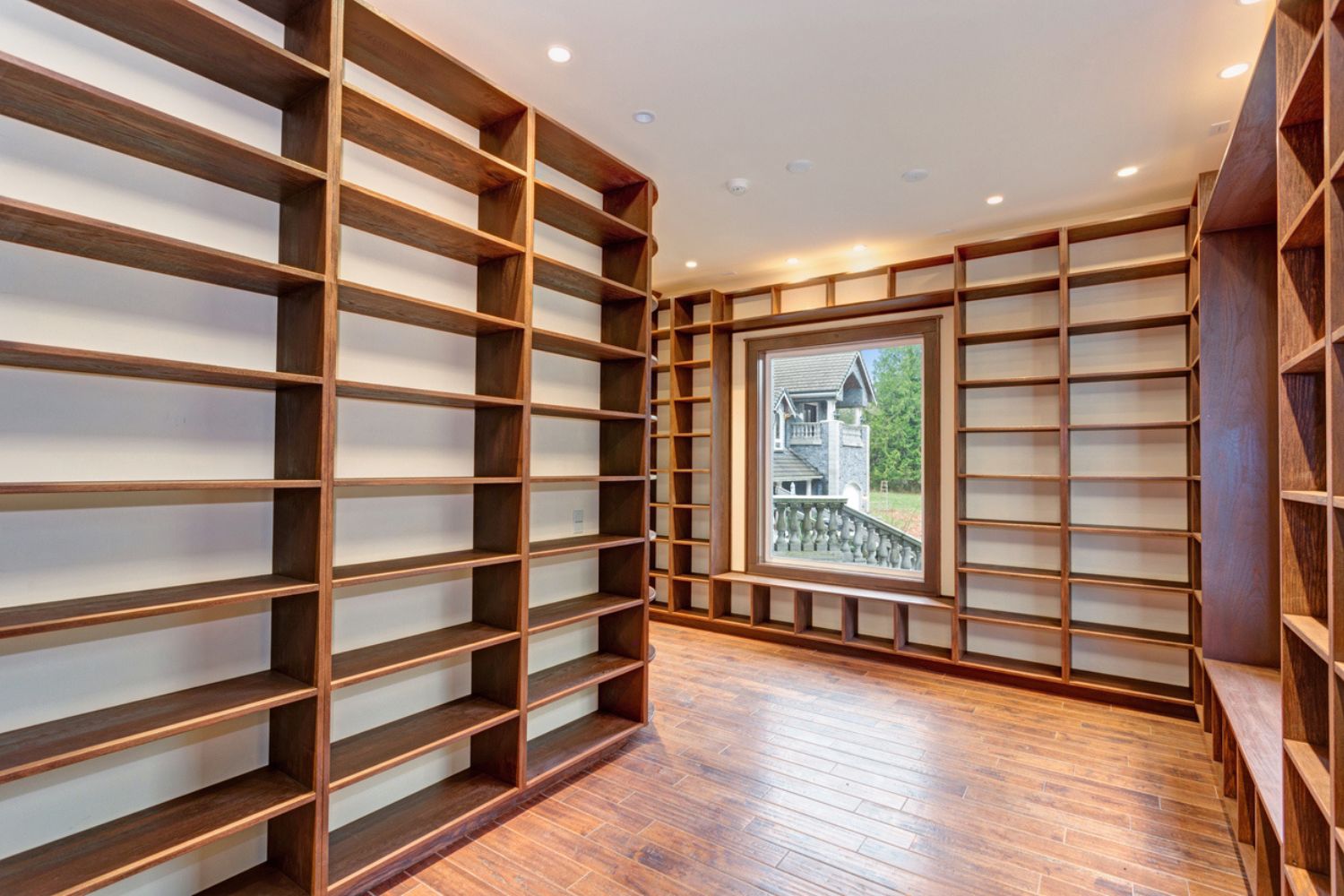


Custom built-in bookshelves cost $300 to $850 per linear foot installed, with most homeowners spending $2,000 to $7,500 for a complete project. According to HomeGuide, built-in bookshelves run $300 to $850 per linear foot total, while HomeAdvisor places the national average at $3,077 with projects typically landing between $1,399 and $4,888. According to Kirk Heritage, a custom woodworking firm, the average built-in bookshelf project runs between $3,000 and $15,000 depending on size, materials, and features. Labor makes up 70% to 80% of the total cost, according to both HomeAdvisor and HomeGuide. Built-in bookshelves add storage, architectural character, and real resale value to any room. This article breaks down every cost factor, compares premade versus custom options, and explains how to get the most from your investment.
The cost of custom built-in bookshelves varies significantly based on whether you choose premade, semi-custom, or fully custom construction, and what materials you use.
Premade built-in shelving units cost $150 to $300 per linear foot installed. According to HomeAdvisor, these units come in standard sizes from home improvement stores and are assembled and mounted on site. They work well for basic storage but come in fixed dimensions that may not fill your wall completely. The IKEA hack approach, buying stock cabinets and adding face frames, crown molding, and baseboard, is one of the most popular budget methods. According to AskDoss, this delivers results that look 90% as good as custom for about 30% of the cost.
Semi-custom built-ins cost $200 to $550 per linear foot, according to HomeGuide. These start as standard components but allow modifications to sizing, finish, and features. You get more flexibility than premade without the full price of custom. Semi-custom units often include options like adjustable shelves, choice of wood species, and coordinated crown molding that stock units do not offer.
Fully custom built-in bookshelves cost $400 to $1,200 per linear foot, according to HomeAdvisor. According to Kirk Heritage, projects on the lower end typically feature open shelving throughout and paint-grade materials, while those on the upper end span greater wall space, include custom drawers and cabinet doors, and use stain-grade hardwood. According to a professional carpenter writing for Hawthorne Crow, painted bookshelves run about $300 to $350 per linear foot, while stain-grade work (higher-quality wood with a stained finish) runs about $400 per linear foot for a complete design, build, and install.
We build custom built-in bookshelves that fit the exact dimensions of your room, because even a quarter-inch gap between the bookshelf and the wall is visible and makes the whole project look less finished.
Material / StyleCost Per Linear Foot (Installed)Best ForMDF (Paint-Grade)$150 to $400Budget projects, painted finishesPlywood$200 to $500Mid-range, strong structureSolid Hardwood (Oak, Maple)$400 to $800Stained finishes, premium lookGlass Shelving or Doors$750 to $1,200Display cases, luxury librariesFireplace Surround Built-Ins$1,000 to $8,000 (total)Living room focal pointsWindow Seat With Bookshelves$2,000 to $8,000 (total)Reading nooks, bedroomsFull Library Wall (Floor-to-Ceiling)$3,000 to $15,000 (total)Home offices, studies, living rooms
Sources: HomeGuide, HomeAdvisor, Angi, AskDoss, Kirk Heritage, FindPros, Bob Vila
Several factors affect the final cost of built-in bookshelves. The biggest drivers are size, materials, design complexity, add-on features, and labor rates in your area.
Larger bookshelves need more materials and more labor hours. According to HomeGuide, costs increase 20% to 50% for bookshelves taller than 8 feet, deeper shelves, or floor-to-ceiling installations. A standard 8-foot-wide, floor-to-ceiling unit takes 24 to 40 hours of shop and on-site time, according to AskDoss. The standard shelf depth for books is 10 to 12 inches, and going deeper adds material cost without much practical benefit for most applications.
MDF and plywood are the most affordable materials. Solid hardwood costs more but delivers a richer look and longer lifespan. According to HomeAdvisor, a 2-by-4-foot sheet of MDF costs less than $20, while a similar piece of oak runs over $35. High-end materials like glass and premium hardwoods can reach $1,300 per linear foot. Choosing the right material depends on whether you plan to paint or stain, and how much weight the shelves need to hold.
Every add-on increases the total. According to HomeGuide, drawers add $100 to $250 each, wood cabinet doors add $100 to $200 per set, glass doors add up to $400 per set, and crown molding costs $7 to $16 per linear foot. According to AskDoss, LED strip lighting runs $30 to $50 per shelf in materials, with an electrician adding $200 to $400 if no outlet is nearby. A rolling library ladder, a built-in desk section, or integrated power outlets each push the total higher.
Labor is the single biggest cost in any built-in project. According to HomeGuide, a carpenter charges $40 to $100 per hour, while a handyman charges $50 to $80 per hour for premade installations. According to AskDoss, a skilled carpenter in the Southeast charges $40 to $60 per hour, while Northeast and West Coast rates run $65 to $100 per hour. According to Angi, labor costs in high-demand regions can exceed $200 per hour. A typical 8-foot-wide unit takes 3 to 5 days to build on site, which translates to $1,200 to $3,400 in labor alone before materials.
Yes, it is cheaper to build your own bookshelves if you have the tools and skills. According to AskDoss, a DIY built-in using basic tools costs $300 to $800 in materials. The IKEA hack method, buying stock cabinets and adding custom trim, is the most popular approach and delivers a polished result for about 30% of the cost of fully custom work.
According to Bob Vila, a DIY built-in can cost as little as $400, while a custom floor-to-ceiling wall unit built by a professional can exceed $8,000. The savings are real, but so are the risks. Shelves that are not level, joints that are not tight, and units that are not properly anchored to wall studs can look amateur and create safety hazards. According to Angi, mistakes in DIY projects can lead to wasted materials and safety issues.
For a basic set of open shelves in a low-visibility room, DIY is a reasonable option. For a living room, home office, or any space where the built-ins will be a focal point, professional construction is worth the investment. The difference between "good enough" and "looks like it was always part of the house" comes down to precision, and that precision takes professional tools and experience. We build every custom bookshelf project with that level of fit because visible gaps and uneven lines are the first thing people notice.
Yes, built-in bookshelves add value to a home by improving both function and visual appeal. According to HomeAdvisor, built-in bookshelves offer a favorable return on investment, especially with quality materials and professional installation. The shelves provide practical storage, improve room aesthetics, and are securely attached, eliminating the tipping risk of freestanding units.
According to AskDoss, built-ins return 50% to 70% ROI at resale. They are considered permanent improvements that show up in home appraisals. According to Grandma's House DIY, minor interior remodeling projects that improve function and layout tend to yield 50% to 80% ROI depending on region and resale timing. Built-ins are most valuable in offices, living rooms, and primary bedrooms.
According to HomeLight, built-in bookshelves add character and help create a focal point in rooms that lack architectural details. A pair of bookcases flanking a fireplace or media zone can give a room structure that it would not otherwise have. In mid- to higher-priced homes where custom features are expected, built-ins help the home match neighborhood competition at resale. For homeowners across North Alabama, we see well-designed floor-to-ceiling bookshelves consistently improve how rooms photograph and how quickly homes sell.
Custom built-ins should cost $200 to $600 per linear foot for built-in cabinets and $300 to $850 per linear foot for built-in bookshelves, depending on materials and complexity. According to Angi, built-in cabinets average $4,500 total, with most homeowners spending $2,000 to $7,500. According to HomeGuide, built-in bookshelves average $2,000 to $7,500 total.
According to Kirk Heritage, the range for a complete custom bookshelf project is $3,000 to $15,000. Projects at the lower end measure fewer linear feet and use paint-grade material with open shelving. Projects at the upper end span larger wall spaces, include drawers and cabinet doors, and use stain-grade hardwood with specialty features like integrated lighting and charging stations.
If a quote comes in below $150 per linear foot for custom work, the quality of materials or craftsmanship may be compromised. If it comes in above $1,200 per linear foot for standard materials, you may be paying a premium for the contractor's brand rather than the quality of the work. Getting three quotes from experienced carpenters or cabinet makers and comparing itemized breakdowns is the best way to find a fair price. Understanding the difference between cabinet grades helps you evaluate what you are getting at each price point.
Bookshelves feel expensive because labor accounts for 70% to 80% of the total project cost, and skilled carpentry takes time. According to AskDoss, a single 8-foot-wide floor-to-ceiling unit takes 3 to 5 days to build and install on site. At $50 to $85 per hour, that labor alone runs $1,200 to $3,400 before a single board is purchased.
Custom work also requires precise measurement, design planning, material selection, construction, finishing (priming, painting, or staining with multiple coats), and installation that fits tightly against walls, floors, and ceilings that are rarely perfectly level. According to Sweeten, producing a high-quality painted finish can take up to five days and include up to four coats of primer and finish. That labor-intensive finishing process is often what surprises homeowners the most.
The flip side is that built-in bookshelves last decades, add resale value, and cannot be replicated by freestanding furniture. A $3,000 built-in used for 20 years costs $150 per year. A $500 freestanding bookcase that warps, wobbles, or gets replaced every 5 years costs the same or more over time without adding anything to the home's value. Looking at it that way, the investment makes sense for any room where storage, style, and permanence matter.
Saving money on built-in bookshelves comes down to smart choices about materials, features, and scope. Here are the most effective strategies.
Use a hybrid approach. According to AskDoss, buying prefab cabinet boxes for the lower section and having a carpenter build custom upper shelving cuts costs by 30% to 40% while still giving you a fully custom look at eye level. This strategy puts the money where it shows most.
Choose paint-grade over stain-grade. Painted built-ins cost significantly less because the carpenter can use MDF and plywood, caulk gaps, and achieve a smooth finish with primer and paint. Stain-grade work requires more expensive wood, flawless joints, and more labor because imperfections cannot be hidden. According to Kirk Heritage, paint-grade materials keep projects at the lower end of the cost range.
Skip glass doors and rolling ladders unless they are central to the design. Glass doors add $100 to $400 per set, and a rolling ladder adds $500 to $2,000 or more. Open shelving with lower cabinets for hidden storage delivers 90% of the function at a much lower cost.
Do the prep and demo yourself. Removing baseboard, patching walls, and priming can save $200 to $500 in labor, according to AskDoss. Leave the precision work of building, finishing, and installing the unit to the professional. Bundling bookshelf work with other projects like a home office build or a closet redesign reduces mobilization costs because the team is already on site.
Yes, built-in shelves are in style and continue to be one of the most requested features in living rooms, home offices, and primary bedrooms. According to the NKBA 2026 Kitchen Trends Report, 94% of professionals agree that homeowners are adding functional spaces with purposeful storage to their homes. That trend extends directly to built-in bookshelves and library walls.
According to Christopher Scott Cabinetry, built-in bookshelves add practical storage space, display shelving, and the cozy character everyone loves, and they also add value to the home. Investing in quality custom shelving is one of the best ways to add personality and function to a room at the same time. The current direction favors warm wood tones, clean lines, and concealed lower storage with open display shelving above. According to the 2026 Houzz Kitchen Trends Study, wood tones have overtaken white for the first time, and that warm, natural palette applies to built-in shelving just as much as it does to kitchen cabinetry.
Open shelving as primary kitchen storage is declining, but built-in bookshelves in living rooms, offices, and hallways remain as popular as ever. The key is using them where they make sense, filling a wall with purpose rather than leaving it empty, and choosing finishes that complement the rest of the room.
Making a custom bookshelf costs $3,000 to $15,000 depending on size, materials, and features. According to Kirk Heritage, projects at the lower end use paint-grade materials with open shelving across fewer linear feet. Projects at the upper end use stain-grade hardwood with drawers, cabinet doors, integrated lighting, and charging stations across larger wall spans. A standard 10-foot painted built-in runs about $3,000 to $3,500 fully designed, built, and installed.
It is cheaper to buy premade shelving than to build custom. Premade units from home improvement stores cost $150 to $300 per linear foot installed. Custom built-ins cost $300 to $850 per linear foot. However, premade units come in fixed sizes that leave gaps, and they do not add the same resale value or architectural character as custom work. For visible, high-use rooms, custom is worth the premium.
The bookshelf rule is a styling guideline that says shelves look best when they are about two-thirds full. Filling every inch creates visual clutter, while leaving too much empty space makes the shelves look unfinished. Mix books (some vertical, some stacked horizontally) with decorative objects, plants, and framed photos. Leave breathing room between groupings so each item can be seen and appreciated. Following the right design principles makes built-in bookshelves look curated rather than crowded.
Floating shelves are not out of style in 2026, but they are being used more selectively. According to the NKBA 2025 Kitchen Trends Report, open shelving is declining as primary storage in kitchens. In living rooms and offices, floating shelves work well as accent features for small displays. For serious book storage or a library wall, built-in bookshelves with structural shelving and lower cabinets are the stronger choice because they hold more weight and last longer.
A handyman charges $50 to $80 per hour to install premade shelving, according to HomeGuide. A carpenter charges $40 to $100 per hour for custom builds. Small shelving installations can take 4 to 5 hours, while larger floor-to-ceiling projects take 20 hours or more. According to Angi, hourly rates in high-demand regions can exceed $200 per hour for skilled finish carpentry.
Common built-in mistakes are building shelves that are too deep (anything over 12 inches wastes space for books), skipping adjustable shelf pins in favor of fixed shelves, not anchoring the unit to wall studs, failing to plan for electrical outlets behind the shelves, and choosing materials that cannot handle humidity in rooms near high-moisture areas. Reading about installation planning mistakes before starting helps you avoid the most costly errors.
Built-in bookshelves take 1 to 5 days to install depending on the size and complexity. According to AskDoss, a floor-to-ceiling unit with adjustable shelves, crown molding, and a paint-grade finish takes 3 to 5 days of on-site work. A simple premade installation can be completed in a few hours. Custom stain-grade work takes longer because the finishing process alone (sanding, staining, multiple clear coats) adds 1 to 2 days.
Custom built-in bookshelves are one of the most rewarding investments you can make in any room. They add organized storage, architectural character, and genuine resale value that freestanding furniture simply cannot match. Whether you spend $2,000 on a paint-grade wall of shelves or $15,000 on a full stain-grade library with cabinets, lighting, and a rolling ladder, the result is a permanent feature that makes the room feel designed, polished, and complete.
If you are ready to add built-in bookshelves to your home, Classic Cabinetry can design and build a custom solution that fits your space and your style. Call us at (256) 423-8727 to schedule a free consultation.