.avif)


.avif)


.avif)
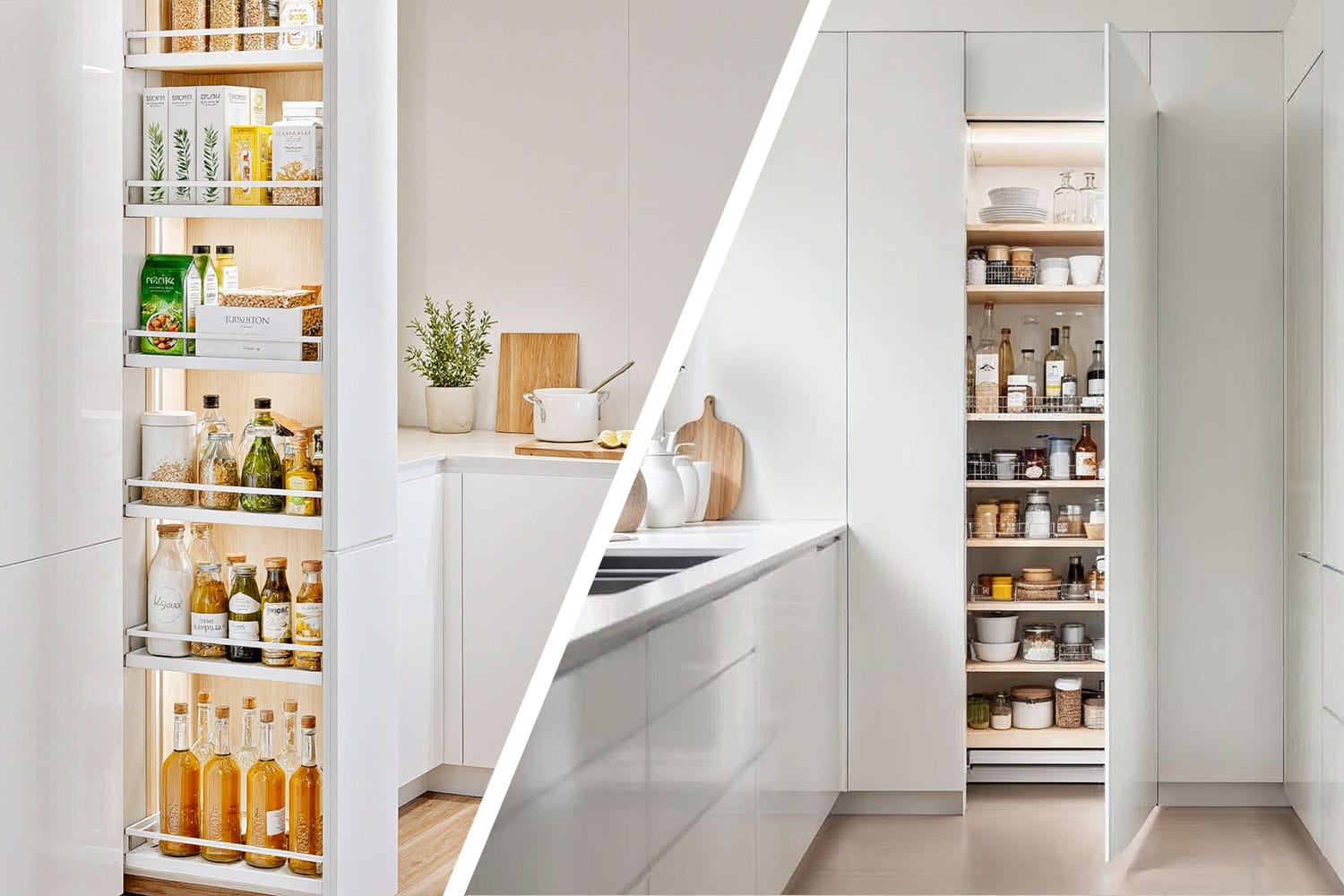
Pull-Out Drawers vs. Fixed Shelves in a Pantry, Which Is Better?
link desc
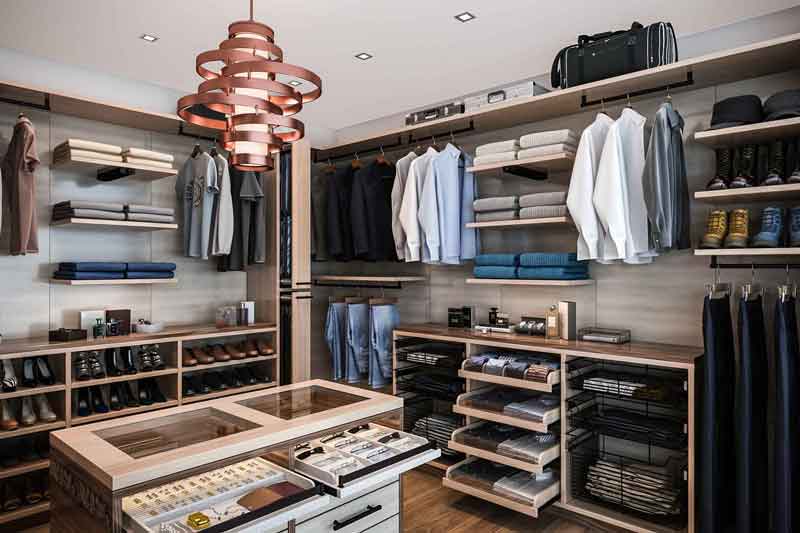


DIY closet systems are pre-made kits you buy at a store and install yourself, while custom built closets are professionally designed and built to fit your exact space, storage needs, and lifestyle. Both options organize your closet, but they differ a lot in quality, durability, and long-term value. According to a report by Business Research, the global home organization products market reached $13.27 billion in 2025, proving that homeowners everywhere are looking for smarter ways to store their belongings. This article breaks down materials, costs, lifespan, home value impact, and the features that set these two closet types apart so you can decide which one makes the most sense for your home.
The difference between a DIY closet system and a custom built closet comes down to design, materials, and how well it fits your space. A DIY system comes in pre-packaged kits with standard-sized shelves, rods, and brackets. You pick a kit off the shelf, bring it home, and put it together yourself. A custom built closet, on the other hand, starts with a professional measuring your closet, then designing a layout made just for you.
DIY systems ask you to adapt your space around the product. If your closet has an odd angle, a sloped ceiling, or an unusual depth, a pre-made kit will leave gaps and wasted inches. Custom closets are built around your exact space, so every corner and every inch gets used. A study by Global Growth Insights found that 38% of all home storage solutions now focus on closet and wardrobe systems, which shows how much importance homeowners place on getting this room right.
We see this difference every day. A custom closet becomes part of your home, like a built-in bookshelf or a fitted kitchen. A DIY kit sits inside your home, but it never truly belongs there.
The materials used in DIY closet systems are usually wire shelving, thin particleboard, painted MDF, or low-end laminate. Wire systems are the cheapest option and allow good airflow, but they leave marks on folded clothes and look utilitarian. Laminate and MDF kits give a cleaner appearance, but the boards are often thin and can chip, peel, or sag under heavy loads over time.
Most DIY kits are wall-mounted, which limits how deep the shelves can be. Because these systems do not go all the way to the floor, you lose valuable storage space at the bottom of the closet. A survey from the National Association of Professional Organizers found that people wear only 20% of their clothes 80% of the time, so the right shelving layout matters a lot for keeping frequently worn items within easy reach.
The materials used in custom built closets include solid hardwood, plywood, high-quality melamine, and solid-core laminate. These materials are thicker, heavier, and built to handle daily wear without sagging or warping. Hardware like soft-close drawer slides, heavy-duty rods, and premium hinges add function and a polished feel.
Custom systems are typically floor-based, which gives them better stability and allows for deeper shelves, drawers, and cabinets. Floor-based construction also opens the door to design touches like toe kicks, base molding, and a furniture-like look that wall-mounted DIY kits simply cannot match. People who also invest in organized pantry cabinetry see this same difference in material quality across every room.
Yes, it is cheaper to build your own closet with a DIY kit if you are only looking at the upfront price. DIY closet kits range from about $200 for basic wire shelving to around $2,500 for higher-end modular systems. Custom built closets typically start around $2,500 and can go up to $10,000 or more depending on size, materials, and features.
But the upfront price does not tell the whole story. DIY projects come with hidden costs. You may need to buy or rent tools, make multiple trips to the store, and spend a full weekend or more on installation. Mistakes waste materials and time. Research from the Soap and Detergent Association found that getting rid of clutter eliminates roughly 40% of housework, so a closet that actually works saves you time every single day for years to come.
DIY closet kits typically cost between $200 and $2,500. Basic wire rack systems from big-box stores sit at the lower end. Mid-range laminate kits with adjustable shelves and a few drawers fall in the $500 to $1,500 range. Premium modular systems that include solid wood components can push past $2,000, but even those come with standard sizes that may not perfectly fit your space.
The price of a custom closet includes professional design consultation, precise measurements, material selection, manufacturing, and expert installation. Every dollar pays for something specific. More drawers, specialty storage, doors, and accessories raise the total. The choice of wood species, finish color, and hardware style all affect cost, too. Data from Global Growth Insights shows that over 42% of homeowners now prioritize organized living spaces, which has pushed the industry to offer more options at more price points than ever before.
A bigger walk-in closet costs more than a basic reach-in because it needs more materials and labor. But you are paying for a solution that fits like a glove, performs better, and lasts far longer. Many homeowners who also upgrade their kitchen cabinets at the same time get a better overall return on both projects.
Custom closets last 15 to 20 years or more with proper care, while many DIY closet systems start showing wear within 3 to 7 years. The gap comes down to material thickness, construction quality, and how the system handles daily use.
DIY wire shelves can bend or sag under the weight of heavy clothes, shoes, and bags. Thin particleboard warps in humid conditions and chips along the edges when items bump against it. Custom closets use thicker panels, stronger joinery, and better hardware that hold up year after year. A study from the National Association of Remodelers found that homeowners who invest in custom closets see an average return on investment of about 56%, partly because the system still looks and works great at resale time.
When a DIY system fails, you usually replace the whole thing. When a custom closet needs attention, it often just needs a minor adjustment or a hardware swap. That is a big difference over a 15-year span.
Yes, custom closets increase home value. Real estate experts consistently list organized, built-in storage as a strong selling point. According to data referenced by USA Today from the National Association of Realtors, 60% of homebuyers will pay more for a home with a custom closet. That makes custom closets one of the more reliable home upgrades when it comes to attracting buyers.
A report from Angi and HomeAdvisor noted that homeowners can recoup at least 50% of their custom closet investment at resale, and in many markets the return climbs higher. Homes in the Huntsville, Alabama area benefit from this trend just like homes anywhere else. Buyers walk through a home and immediately notice whether the closets are thoughtfully designed or thrown together with a basic kit.
The connection between closets and resale value is well documented. Forbes has reported that large, well-organized closets have moved from a desired amenity to an expectation among today's buyers. A National Association of Home Builders survey ranked closet design as one of the most desirable home features, especially among younger buyers entering the market. When we build a walk-in closet for a homeowner, we are adding both daily convenience and long-term financial value.
No, a DIY closet system cannot properly fit an odd-shaped space in most cases. DIY kits come in standard factory sizes, which means they are built for rectangular closets with flat walls and standard dimensions. If your closet has angled walls, a sloped ceiling, a return wall, or an unusual depth, a pre-made kit will leave gaps, require cutting, or simply not work at all.
Custom built closets handle these challenges easily because every piece is measured and built for your specific room. Professional designers know how to work around obstructions, pipes, electrical outlets, and structural quirks that DIY kits ignore. Homeowners who also need storage in tight spaces often see similar benefits from built-in bookshelves designed for their exact walls.
FeatureDIY Closet SystemsCustom Built ClosetsTypical Cost$200 to $2,500$2,500 to $10,000+Average Lifespan3 to 7 years15 to 20+ yearsMaterialsWire, thin MDF, particleboard, low-end laminateSolid wood, plywood, high-quality melamine, solid-core laminateInstallationSelf-installed; may take a full weekend or longerProfessionally installed; typically 1 to 3 daysCustomizationLimited to standard sizes and a few modular optionsFully custom to exact dimensions, layout, and styleFit for Odd SpacesPoor; gaps and wasted space commonExcellent; built for angled walls, sloped ceilings, unusual depthsResale Value ImpactMinimal; may look temporary to buyersStrong; 50 to 60% ROI per industry dataWarrantyManufacturer warranty only (limited)Craftsmanship warranty plus manufacturer warranty on hardwareDesign SupportNone or basic phone/online toolIn-home consultation with professional designer, 3D renderings
Cost data referenced from HomeAdvisor, Angi, and industry averages. Lifespan estimates from Closet and Beyond and industry sources. ROI data from the National Association of Remodelers and Angi.
Custom closets maximize vertical space by using floor-to-ceiling storage that is designed around your specific wardrobe and belongings. A professional designer maps out where double-hang rods go for shorter items like shirts and pants, where single-hang rods fit for longer items like dresses and coats, and where shelves, drawers, and cubbies fill in the rest.
DIY kits often waste the top 12 to 18 inches of a closet because their components come in fixed heights. Custom systems take advantage of that space with upper shelves or cabinets for seasonal items, luggage, or storage bins. According to an OnePoll survey of 1,000 American women, 44% said they could not find an item in their closet at least once a month. Using every inch of vertical space and giving each item a specific home solves that problem.
We also use pull-down rods, tiered shoe racks, and stacked drawer units to squeeze every bit of function out of the available height. The right mix of closet organizers turns wasted air into usable storage. Homeowners who want the same smart use of space in other rooms often add a home office with built-in cabinetry designed for their workflow.
Yes, you can install a DIY closet system by yourself if you have basic tools, some home improvement experience, and patience. Most kits come with instructions and mounting hardware. Simple wire systems can go up in a few hours. More complex laminate or wood systems with drawers and multiple sections can take an entire weekend or longer.
The challenge is getting everything level, properly anchored into wall studs, and correctly spaced. If shelves are not level, items slide off. If brackets are not secured to studs, the whole system can pull out of the wall under the weight of your clothes. According to research compiled by the Ottawa Citizen, Americans waste more than 9 million hours every day looking for lost and misplaced items, so a poorly installed closet that creates more chaos defeats the purpose.
Professional installation removes that risk entirely. Trained installers handle measuring, cutting, leveling, and anchoring in a fraction of the time it would take most homeowners.
Yes, custom closets typically come with a warranty that covers both the craftsmanship and the hardware. Many professional closet companies offer a lifetime warranty on the construction and workmanship, plus a separate manufacturer warranty on hardware components like drawer slides, hinges, and rods.
DIY closet kits usually come with a limited manufacturer warranty, but that warranty does not cover installation errors, which are by far the most common source of problems with self-installed systems. If a shelf sags because you did not anchor it properly, the warranty will not help. A survey by the National Association of the Remodeling Industry found that 72% of homeowners who completed a closet renovation felt a greater desire to be home, partly because they trusted the quality of the work.
Knowing your closet is backed by a real warranty gives peace of mind. You are not on your own if something needs attention down the road. Homeowners who also invest in bathroom cabinets from a professional builder enjoy that same protection across multiple rooms.
The features a custom built closet can include go far beyond shelves and hanging rods. Custom designs can add pull-out shoe racks, jewelry drawer inserts, built-in hampers, belt and tie racks, valet rods, adjustable shelving, glass-front cabinet doors, LED lighting, and even a center island with a countertop for folding clothes.
Every feature is chosen based on how you actually live. If you have a large shoe collection, a designer will build a section with angled shelves sized for your shoes. If you need space for handbags, tall boots, or seasonal coats, those get their own dedicated zones. A study by DASI Innovations found that a significant 97% of homeowners valued additional closet space over attic or basement space, which proves that smart features inside a closet matter far more than raw square footage elsewhere in the house.
We find that the best closet designs combine multiple feature types into one seamless layout that feels like a personal dressing room rather than a storage box.
Yes, there are customizable options for smaller spaces, and this is actually where custom closets shine the most. A professional designer knows how to turn a tight reach-in closet into a highly functional storage zone by using double-hang rods, narrow pull-out drawers, vertical dividers, and corner solutions that DIY kits simply do not offer.
Small closets waste the most space with standard kits because the fixed dimensions leave awkward gaps. Custom systems eliminate those gaps and use every inch. There are many closet design ideas that turn even tight spaces into fully functional storage areas.
Homeowners working with compact bedrooms or older homes with smaller closets benefit the most from this approach.
Yes, a walk-in closet is worth the investment for homeowners who want more storage, a better morning routine, and a stronger resale position. According to 2025 data from HomeAdvisor, a walk-in closet installation averages between $5,000 and $7,500, and the return on investment typically ranges from 50% to 60%. That number climbs even higher in competitive housing markets where buyers expect organized, built-in storage.
Beyond the financial return, a walk-in closet changes how you start your day. Everything is visible, accessible, and in its place. A survey cited by the National Association of the Remodeling Industry found that 59% of homeowners who remodeled their closet reported an increase in daily enjoyment, and 68% felt a strong sense of accomplishment after the project was done.
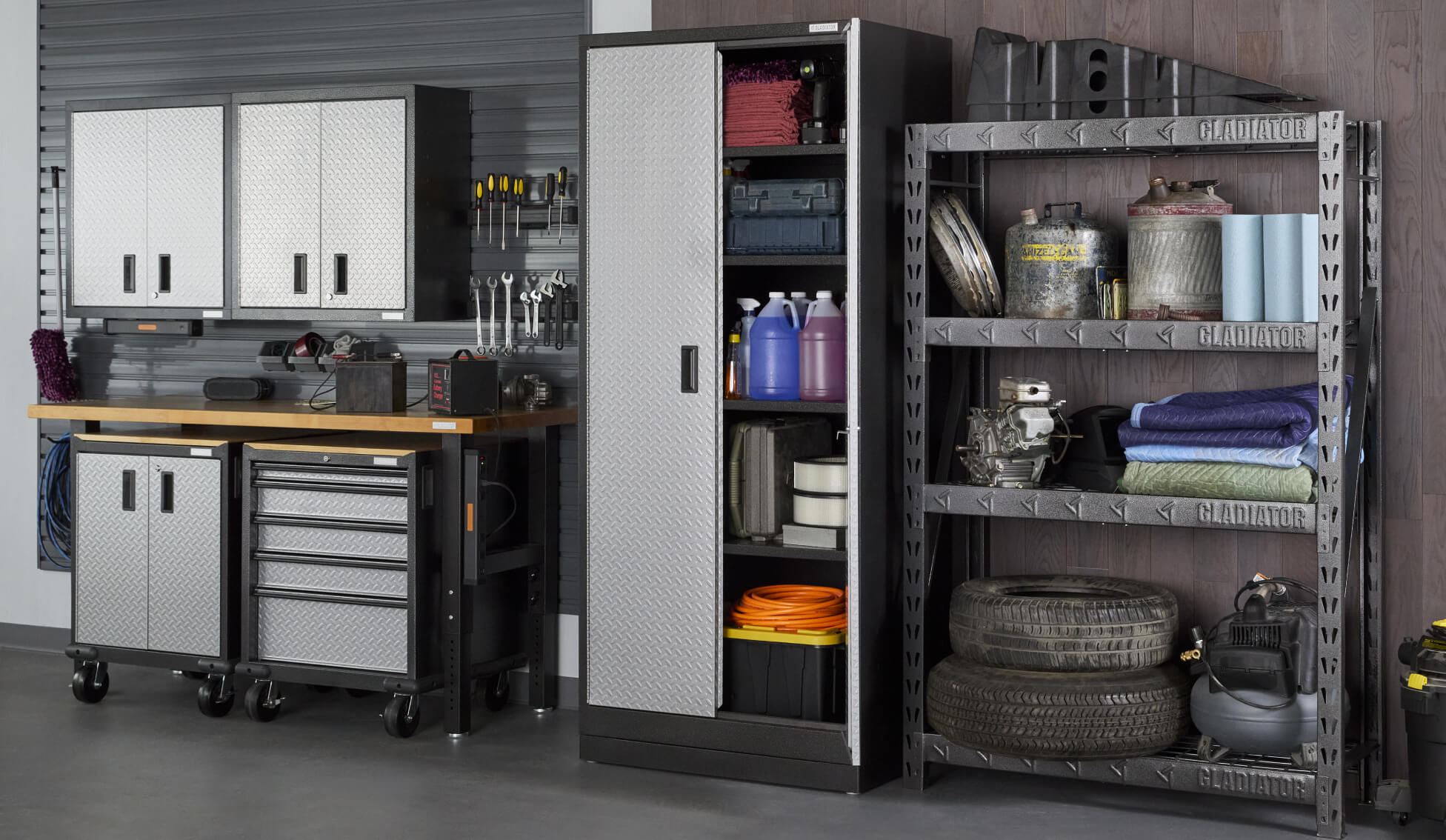
Homeowners who want to extend that organized feeling throughout the home also see great results from adding garage cabinetry to handle tools, gear, and seasonal items that would otherwise end up in the closet.
The signs you need a closet upgrade include clothes piling up on the floor, shelves sagging under weight, not being able to find what you need quickly, and running out of hanging space. If your closet feels cramped even after decluttering, the layout itself is the problem. An Alpha Phi Quarterly study found that 67% of people believe they could save up to 30 minutes a day if they were more organized, so a better closet literally gives you time back.
A custom closet takes about 3 to 6 weeks from initial consultation to finished installation. The actual in-home installation typically takes 1 to 3 days depending on the size and complexity of the design. A basic reach-in closet installs faster, while a large walk-in with drawers, doors, and lighting takes a bit longer.
DIY closet kits can be a reasonable choice for renters because most systems are removable and leave minimal damage to walls. Wire and freestanding systems work best for temporary living situations since they do not require permanent mounting. For homeowners who plan to stay long-term, a custom solution offers far better value.
Yes, a custom closet can work in a small bedroom because the entire design is built around the available dimensions. Professional designers use vertical space, narrow drawers, sliding doors, and corner-specific components to maximize storage in tight areas. A small custom closet often holds more than a large closet stuffed with a poorly planned DIY kit.
You should get a reach-in closet if your bedroom is smaller and a walk-in closet if you have the floor space to dedicate. Reach-in closets work well for guest rooms, children's rooms, and apartments. Walk-in closets are ideal for master bedrooms and homes where two people share storage space. Both types benefit from custom design.
You keep a closet organized after installation by giving every item a designated spot, doing a seasonal edit to remove unworn clothes, and putting things back in the same place after each use. A 10 Yetis survey of over 2,000 American women found that the average closet held $550 worth of unworn clothing, so regular cleanouts prevent buildup. A well-designed custom closet makes maintenance easy because the layout naturally encourages order.
DIY closet systems work for quick, budget-friendly fixes, but they come with real trade-offs in durability, customization, and long-term value. Custom built closets cost more upfront, yet they last years longer, fit your space perfectly, add to your home's resale appeal, and come with professional warranties. The right choice depends on your budget, your timeline, and how long you plan to stay in your home.
If you are ready to see what a professionally designed closet could look like in your home, Classic Cabinetry offers free in-home consultations with 3D design renderings so you can see every detail before any work begins. Give us a call at (256) 423-8727 to get started.