.png)


.png)




.png)

.png)


.png)
Commercial Kitchen Traffic Flow Optimization
link desc
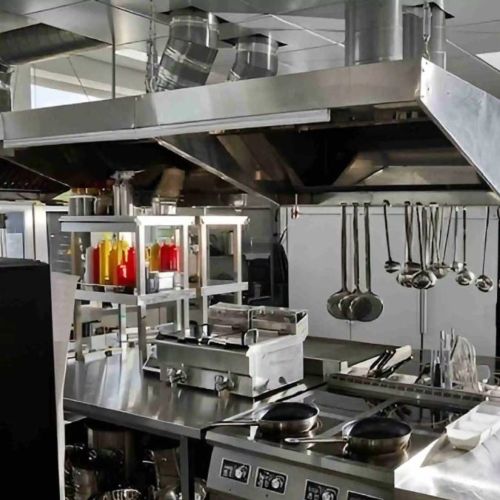


Restaurant kitchen zoning and station planning is the process of dividing a commercial kitchen into separate work areas, each with a clear purpose, so food moves from storage to prep to cooking to plating without wasted steps or cross-contamination. According to the National Restaurant Association, U.S. restaurant industry sales are projected to reach $1.55 trillion in 2026, and the restaurants that thrive are the ones with kitchens built for speed, safety, and smooth workflow. This blog covers everything restaurant owners and commercial builders in North Alabama need to know about zoning a kitchen, choosing the right layout, setting up individual stations, and following the design rules that keep staff safe and food moving fast.
Zoning in a restaurant kitchen is the practice of breaking the kitchen into distinct areas based on function. Each zone handles one stage of the food production process, from receiving and storage to food prep, cooking, plating, and dishwashing. The goal is to create a one-way flow of food that cuts down on dangerous cross-traffic and lowers the risk of cross-contamination.
Think of kitchen zoning like lanes on a highway. When every driver stays in their lane, traffic moves fast and safe. When people cut across lanes, accidents happen. The same idea applies to a busy kitchen during a Friday night rush in Huntsville, Alabama. A well-zoned kitchen keeps cooks, prep staff, and servers moving in a logical path. According to FDA Food Code guidelines, separating raw ingredient handling from ready-to-eat food zones is one of the most effective ways to prevent foodborne illness.
Restaurants that serve diverse menus benefit the most from zoning because each section of the kitchen can focus on a specific type of dish. For example, a restaurant with a full menu might zone its kitchen into a hot line, cold line, pastry area, and garde manger station. The flexibility that zoning provides is a big reason why it has become one of the most popular layout strategies for full-service restaurants across the Huntsville metro area and beyond.
The different stations in a restaurant kitchen are the storage station, prep station, cooking station (which includes saute, grill, and fry), plating and service station, and dishwashing station. Larger restaurants may also have a pastry station, garde manger station, pizza station, and an expeditor pass.
The storage station is where all incoming ingredients are organized, both in dry storage and cold storage. According to USDA research, bacteria can double in number every 20 minutes in the temperature danger zone between 40 and 140 degrees Fahrenheit, so cold storage must hold at 41 degrees or below per FDA Food Code requirements.
The prep station sits between storage and the cooking zone. This is where ingredients get washed, chopped, marinated, and portioned. The National Kitchen and Bath Association recommends a minimum countertop size of 36 inches wide by 24 inches deep for prep zones to allow safe and efficient food handling.
The cooking station is the heart of any commercial kitchen. It houses the ranges, ovens, fryers, and grills. In the classic French brigade system, this zone includes the saute station, grill station, and fry station, each manned by a specialized cook. The most experienced cooks typically work the saute station because that is where the most complex dishes are prepared.
The plating and service station is where the expeditor, or "expo," checks every dish before it goes to the dining room. Heating lamps, garnish stations, and plate storage all live here. For restaurants in Ardmore and the greater Huntsville area that rely on high-volume dinner service, a well-organized plating station can shave minutes off ticket times.
Commercial kitchens that are set up with custom commercial cabinetry at each station gain a significant advantage in organization and durability because every tool and ingredient has a dedicated, accessible home.
The five types of kitchen layout are the assembly line layout, the island layout, the zone layout, the galley layout, and the open kitchen layout. Each one fits different restaurant sizes, menu styles, and service speeds.
The assembly line layout arranges stations in a straight line from raw ingredients to finished plates. This works best for high-volume, limited-menu restaurants like pizza shops and fast-casual concepts. Food moves in one direction, which keeps things fast and consistent.
The island layout places the main cooking equipment in the center of the kitchen, with all support stations like prep, storage, and dishwashing along the walls. This circular flow makes it easy for a head chef to supervise the entire kitchen from one spot. According to restaurant design experts, the island layout is ideal for fine dining and chef-driven concepts where teamwork and communication are essential.
The zone layout divides the kitchen into blocks based on function or dish type. It is the best choice for restaurants with diverse menus that need separate work areas for hot food, cold food, baking, and cleaning. Many hotel restaurants, catering kitchens, and full-service dining rooms across North Alabama use this style.
The galley layout lines up equipment along two parallel walls. This is the go-to choice for small kitchens, food trucks, and breweries with limited floor space. The name comes from ship kitchens, where every inch of space matters.
The open kitchen layout is any of the above designs with the wall between the kitchen and dining room removed. It has become popular for restaurants that want to create a sense of theater around the cooking process.
Restaurant owners in the Huntsville area who are building new kitchens or renovating existing ones often start by choosing a layout that matches their menu and service style, then build out the zones within that framework. Investing in custom kitchen cabinets that are purpose-built for commercial environments helps each zone perform at its best.
The 30 30 30 rule for restaurants is a financial guideline that says 30% of revenue should go to food costs (cost of goods sold), 30% to labor costs, and 30% to operating expenses like rent, utilities, and insurance. The remaining 10% is the target profit margin. According to Paperchase Hospitality Accountancy, this rule gives restaurant owners a clear benchmark for tracking spending and identifying where to cut costs.
This rule connects directly to kitchen zoning and station planning because a well-designed kitchen reduces waste in all three major cost categories. An organized storage zone with proper FIFO (first in, first out) rotation cuts food waste and keeps ingredient costs closer to that 30% target. Smart station placement reduces unnecessary movement, which means fewer labor hours to produce the same number of plates. And efficient equipment placement lowers energy costs that fall into the operating expense bucket.
According to data from OysterLink's 2026 U.S. Restaurant Industry Report, traditional restaurant sales are expected to surpass $1.1 trillion in 2026, with average profit margins for full-service restaurants sitting at about 9.8%. That thin margin makes every dollar saved through better kitchen design a dollar that goes straight to the bottom line.
For restaurant owners in Huntsville and Madison County, keeping costs in check is especially important as the dining scene continues to grow rapidly. The City of Huntsville approved a $240 million retail and restaurant development in north Huntsville in late 2025, which signals even more competition ahead.
The 3 kitchen rule refers to the work triangle principle, which states that the three most-used areas of a kitchen, the sink, the stove, and the refrigerator, should be arranged in a triangle formation. Each side of the triangle should measure between 4 and 9 feet, and the total perimeter should be between 13 and 26 feet.
This concept was developed at the University of Illinois School of Architecture in the 1940s as a way to reduce wasted steps in the kitchen. While it was originally designed for residential kitchens, the core idea applies to commercial kitchens too. In a restaurant setting, the triangle translates to the relationship between the reach-in cooler or lowboy, the cutting board or sink, and the range, fryer, or oven at each individual station.
According to kitchen workflow experts at Tilit NYC, if a cook has to cross another station's path to complete a single triangle cycle, that is a design flaw that will cause accidents during peak volume. Every station in a well-planned restaurant kitchen should have its own mini triangle so each cook can work without leaving their area.
This principle is especially important for restaurants in the North Alabama region where labor can be tight. When the kitchen layout lets each cook work efficiently at their own station, you need fewer staff members to handle the same number of covers.
The six rules for designing a restaurant kitchen are: separate workstations by function, follow the one-way workflow from storage to service, place utilities strategically, allow adequate aisle width, prioritize ventilation and safety, and plan for future growth.
Separating workstations prevents cross-contamination and keeps staff from tripping over each other. CDC EHS-Net research found that food workers wash their hands when they should only about one out of every three times. A layout that naturally keeps raw meat areas away from ready-to-eat food zones adds a physical barrier on top of training.
The one-way workflow means food should travel in a single direction, from the delivery door to storage, then to prep, then to cooking, then to plating, and finally out to the dining room. Dirty dishes return through a separate path to the dishwashing zone. This prevents clean and dirty items from crossing paths.
Strategic utility placement means gas lines, electrical outlets, water sources, and drainage should match the kitchen layout from the very start. Moving plumbing or gas lines after a kitchen is built is expensive and disruptive.
Aisle width matters for safety and speed. Work aisles should be at least 42 inches wide for a single cook and 48 inches wide when multiple cooks share a space. According to restaurant design standards, these minimums prevent collisions and give staff enough room to carry hot pans safely.
Ventilation must meet local building codes, especially for the hot line where grease, smoke, and steam are constant. Proper ventilation also keeps the kitchen cooler, which reduces fatigue and lowers the risk of heat-related illness.
Planning for growth means leaving room in the layout for new equipment, expanded menu items, or increased volume down the road. A kitchen that is maxed out on day one has no room to adapt as the business grows.
Businesses across Huntsville that invest in smart kitchen cabinetry from the start can avoid costly renovations later. Purpose-built custom pantries and cabinetry for dry storage areas keep ingredients organized and accessible without eating up valuable floor space.
The golden rule of kitchen design is the work triangle, also called the golden triangle. It positions the three primary work areas, the cooking zone, the cleaning zone, and the storage zone, in a triangular layout that minimizes unnecessary movement. This concept dates back to the 1940s and remains the foundation of efficient kitchen design for both residential and commercial spaces.
According to the original guidelines developed at the University of Illinois, each leg of the triangle should be no shorter than 4 feet and no longer than 9 feet. The total of all three sides should fall between 13 and 26 feet. No major obstacles, like a tall cabinet or a traffic path, should cut through the triangle.
In commercial restaurant kitchens, the golden triangle applies at every station. The grill cook's triangle connects their cooler, cutting board, and grill. The saute cook's triangle connects their ingredient lowboy, prep area, and range. When each station has a tight, unobstructed triangle, ticket times drop and safety improves.
Many designers now layer the golden triangle concept with modern zone-based planning, creating multiple small triangles within a larger zoned kitchen. This hybrid approach gives restaurants the best of both worlds, efficiency at the individual station level and organization at the whole-kitchen level.
Most commercial restaurant kitchens have five to six core zones. These are the storage zone, the preparation zone, the cooking zone, the plating and service zone, the dishwashing and sanitation zone, and, in many cases, a dedicated waste management zone. Larger operations may add additional zones for baking, cold food, or beverage preparation.
The storage zone is the first stop for all deliveries. It includes dry storage shelves, walk-in coolers, and freezers. Positioning this zone close to the delivery entrance saves time during restocking. According to food safety best practices published by the FDA, consistent use of the FIFO method in storage zones cuts down on spoilage and food waste.
The preparation zone should sit between storage and cooking. This placement lets ingredients flow naturally from the cooler to the cutting board to the stove. Good lighting in the prep zone is critical because staff handle sharp knives and need clear visibility.
The cooking zone houses all the heat-producing equipment. It generates the most grease, steam, and noise, so it needs the strongest ventilation. According to the Bureau of Labor Statistics, full-service restaurants recorded 93,800 nonfatal injuries and illnesses in 2019 alone, and many of those occurred in the cooking zone from burns, slips, and cuts.
The plating zone is where finished dishes are inspected and sent to the dining room. Heating lamps, garnish containers, and a ticket spindle are essentials here.
The dishwashing zone needs a one-way flow of its own: dirty drop-off, scraping, washing, drying, and restocking. If this zone backs up, the entire kitchen runs out of clean plates and pans.
For restaurant projects in the Huntsville, Ardmore, and Decatur areas, working with a cabinetry partner that understands commercial needs makes zone planning much smoother. A company like Classic Cabinetry has over 44 years of experience building solutions for businesses that need durable, organized workspaces.
The person who calls out orders in a kitchen is the expeditor, also called the "expo." The expeditor stands at the pass, which is the counter where the kitchen meets the front of house. They read incoming tickets, communicate each order to the correct station, and inspect every dish before it leaves the kitchen.
In smaller restaurants, the head chef or kitchen manager often fills the expo role. In larger operations, especially fine dining restaurants and busy spots in cities like Huntsville, the expo is a dedicated position. The expeditor controls the pace of the entire kitchen. When orders are called clearly and timed correctly, every station fires their part of the dish at the right moment so everything arrives at the table together.
The pass where the expo stands is a critical piece of kitchen infrastructure. It needs to be well-lit, organized with garnish, sauces, plates, and heating lamps, and positioned where the expo can see every station. Good commercial cabinetry at the pass keeps everything within arm's reach and makes cleanup between services faster.
The six types of a commercial kitchen layout are the assembly line, island, zone, galley, open kitchen, and the ergonomic or L-shaped layout. Each layout serves a different type of restaurant concept.
Layout TypeBest ForKey AdvantageKey DrawbackAssembly LineFast food, fast casual, limited menusSpeed and consistencyNot flexible for diverse menusIslandFine dining, chef-driven conceptsVisibility and teamworkRequires large floor spaceZoneFull-service, hotels, diverse menusOrganization and separationCan create congestion between zonesGalleySmall kitchens, food trucks, breweriesMaximizes narrow spacesLimited movement roomOpen KitchenPizza shops, entertainment conceptsGuest engagement and theaterNoise and heat reach dining roomL-Shaped/ErgonomicMid-sized restaurants, cateringEfficient traffic flowMay leave dead corner space
Sources: WebstaurantStore, TouchBistro, ContekPro, Restaurant Technologies
According to a study of 722 restaurants cited by Avanti Restaurant Solutions, the average commercial kitchen is roughly 1,000 square feet, though sizes range widely from 500 to 1,375 square feet depending on the concept. The standard space allocation is 30 to 40 percent of total restaurant square footage for the kitchen and 60 to 70 percent for the dining area.
Choosing the right layout for a new restaurant in the Huntsville metro area starts with the menu. A barbecue restaurant with a limited menu might thrive with an assembly line, while a full-service Southern dining concept would likely need a zone layout with dedicated hot, cold, and pastry stations.
The three most common kitchen layouts are the assembly line, the island, and the zone layout. These three cover the vast majority of restaurant concepts, from quick-service to fine dining.
The assembly line layout is the most popular for quick-service and fast-casual restaurants. Think Chipotle or a sandwich shop where every ingredient moves in a straight line from start to finish. It is the simplest to set up and the fastest to operate.
The island layout is the second most common choice, especially for restaurants with larger kitchens where the chef needs to oversee multiple cooks at once. Placing the cooking equipment in the center with support stations around the edges creates a natural flow that encourages communication.
The zone layout is the third most common choice and the best fit for restaurants with large, varied menus. By grouping similar tasks together, from sauteing to grilling to cold prep, the zone layout prevents bottlenecks and keeps different types of food separate. This separation also supports food safety by reducing the chance of allergen cross-contact.
Restaurants in Ardmore, Madison, and Decatur that are building from scratch have the luxury of choosing a layout that perfectly matches their concept. Those renovating an existing space may need to adapt one of these layouts to fit the available square footage.
Kitchen layout mistakes include placing the dishwashing zone too far from the cooking line, cramming too much equipment into a small space, ignoring aisle width requirements, failing to plan for adequate ventilation, neglecting the storage zone, and not thinking about future growth.
The most common mistake is underestimating the space needed for support zones like storage and dishwashing. Many restaurant owners get focused on the flashy cooking line and treat everything else as an afterthought. A cramped receiving area creates a bottleneck every time a delivery truck shows up. Not enough storage leads to inventory problems and serious food safety risks.
Another frequent mistake is poor workstation placement that creates unnecessary backtracking. If the prep area is too far from the cooking line, cooks waste valuable time running back and forth. According to restaurant design experts, mapping out the workflow on paper before installing any equipment can prevent these costly errors.
Skipping proper ventilation planning is also dangerous. Commercial cooking produces large amounts of grease, steam, and heat. Without adequate exhaust systems that meet NFPA 96 standards, kitchens become uncomfortable, unsafe, and at risk for fire.
Restaurants that partner with experienced builders and cabinetry companies avoid many of these pitfalls. Custom-built garage and storage cabinetry designed for heavy-duty commercial use keeps back-of-house spaces organized and accessible.
ABC in a restaurant stands for the ABC inventory classification method, which divides inventory into three categories based on value and usage. "A" items are high-value ingredients that make up about 10 to 20 percent of inventory but account for 70 to 80 percent of total costs. "B" items are moderate in value and usage. "C" items are low-cost, high-volume products like napkins, condiments, and basic dry goods.
This classification system ties directly into kitchen zoning. A-category items like premium proteins and seafood need prime cold storage space with strict temperature monitoring. B-category items like produce and dairy need organized cooler shelving with clear FIFO rotation. C-category items can go into dry storage with simple shelving.
Using the ABC method in combination with good storage zone design helps restaurants in Huntsville and across North Alabama control their food costs. According to the National Restaurant Association, operators aim to keep food costs between 28 and 35 percent of revenue for a healthy bottom line. Proper inventory management within a well-zoned storage area is one of the most direct paths to hitting that target.
Three of the six qualities that restaurant personnel should have are strong communication skills, attention to detail, and the ability to work under pressure. These qualities connect directly to how well a kitchen team operates within a zoned station layout.
Communication is the backbone of kitchen operations. When the expo calls an order, every station needs to hear it, understand it, and respond. In a well-zoned kitchen, clear sightlines and short distances between stations make verbal communication easier, especially during a loud dinner rush.
Attention to detail matters at every station. A prep cook who portions ingredients incorrectly throws off the entire line. A saute cook who overlooks a ticket causes delays. A plating specialist who sends out a sloppy plate hurts the restaurant's reputation. Good zoning gives each person a contained work area where they can focus without distractions.
The ability to work under pressure is non-negotiable in any commercial kitchen. A smart layout helps reduce that pressure by eliminating unnecessary obstacles and giving each cook the tools they need within arm's reach. When the physical environment supports the team, staff perform better and stay longer, which helps with the retention challenges the restaurant industry faces nationwide. According to OysterLink data, the restaurant industry is expected to employ 15.9 million people by the end of 2026.
Restaurant kitchen zoning improves food safety by creating physical separation between raw ingredients and ready-to-eat foods, reducing cross-contamination risk, and establishing dedicated sanitation areas within the workflow.
According to CDC research, contaminated hands account for 9 out of 10 foodborne illness outbreaks where food was contaminated by workers. Proper zoning addresses this by placing handwashing stations at the entrance to every zone and between high-risk areas. When hand sinks are convenient and visible, staff are more likely to use them.
Color-coded systems within zones add another layer of protection. Different colored cutting boards, utensils, and storage containers for raw meat, poultry, seafood, and vegetables prevent cross-contact. A dedicated allergen-free prep zone with its own tools is increasingly common in restaurants that serve customers with food allergies.
Temperature control is built into the zoning plan as well. CDC EHS-Net research found that 1 in 7 restaurants stored food in refrigerators above the FDA-mandated 41 degrees Fahrenheit. A zoning plan that places cold storage close to prep areas and requires temperature logging at each zone helps catch these problems before they become health code violations.
The city of Huntsville, like all Alabama communities, requires restaurants to pass health inspections. A well-zoned kitchen with clear workflow separation makes passing those inspections much easier and protects the restaurant from the devastating costs of a foodborne illness outbreak. According to CDC research, a single outbreak can cost a restaurant anywhere from $4,000 to $2.2 million.
The seven types of table service are American service (plated), French service (gueridon), Russian service (silver service), English service (family style), buffet service, counter service, and tray service. Each style affects how the kitchen zones and stations need to be organized.
American plated service is the most common in Huntsville restaurants. Dishes are fully prepared and plated in the kitchen, then carried to the table by a server. This style puts the most pressure on the plating and expo station because every dish must leave the kitchen looking perfect.
French gueridon service involves finishing dishes tableside on a cart. This requires a simpler plating zone in the kitchen but a more skilled front-of-house team.
Family-style and buffet service require large batch cooking, which shifts the focus in the kitchen toward high-capacity ovens, steam tables, and holding equipment. The cooking zone needs to be designed for volume rather than individual plate presentation.
The type of service a restaurant chooses should directly influence its kitchen layout and station planning. A counter-service concept in Madison, Alabama will have very different zoning needs than a fine-dining restaurant on Holmes Avenue in downtown Huntsville.
Regardless of the service style, durable built-in cabinetry makes every station more functional. Custom built-in bookshelves and storage designed for commercial spaces can be adapted for displaying menus, storing service ware, or organizing supplies near the pass.
You plan stations for a new restaurant kitchen by starting with the menu, mapping the workflow from delivery to service, assigning square footage to each zone, selecting equipment, and then building the layout on paper before installing anything permanent.
Start with the menu because it determines everything. A seafood-heavy menu needs more cold prep space. A barbecue restaurant needs a large smoking area. A bakery-restaurant needs a dedicated pastry zone with its own ovens and proof boxes. The menu drives the equipment list, and the equipment list drives the layout.
Next, map the one-way workflow. Deliveries enter the storage zone, ingredients move to prep, prepped items go to the cooking line, cooked dishes hit the plating station, and served plates come back through the dishwashing zone. Every step should move forward, never backward.
Allocate square footage based on your priorities. According to industry standards reported by Toast and Avanti Restaurant Solutions, the kitchen typically takes up 30 to 40 percent of a restaurant's total floor space. Within that kitchen space, the cooking zone usually gets the largest allocation, followed by storage, prep, and dishwashing.
Select equipment that fits your space and volume needs. A full-size floor fryer is overkill for a restaurant that only fries appetizers. A countertop model saves floor space without sacrificing capability.
Finally, test the layout. Restaurant design consultants recommend walking through a simulated service on paper, following a single ticket from order to plate, to identify any bottlenecks before construction begins.
For restaurant projects across Huntsville, Decatur, and Ardmore, working with local craftsmen who understand commercial needs saves time and money. Custom cabinetry in Ardmore, Alabama built by a team that knows the region's building standards and business culture keeps the project on track.
The most important employee in a restaurant is the head chef or executive chef, because they control the quality of every dish that leaves the kitchen. The head chef sets the menu, manages the kitchen staff, oversees station assignments, and acts as the final quality check before food goes to the dining room.
That said, a restaurant is a team operation. The dishwasher is just as critical in a different way, because if clean plates and pans stop flowing, the entire kitchen grinds to a halt. The expeditor keeps the rhythm of service. The prep cooks set the stage for everything that happens on the line.
Good kitchen zoning supports every member of the team by giving each person the tools, space, and workflow they need to do their best work. When the sous chef does not have to cross the kitchen to grab a pan, and the dishwasher does not have to squeeze past the line cook to restock plates, everyone wins.
The three Ps of hospitality are people, product, and place. These three elements define the guest experience from the moment someone walks through the door.
People includes the entire staff, from the host to the kitchen team. A well-zoned kitchen reduces stress on staff, which translates to friendlier, more attentive service.
Product is the food and drink. Kitchen zoning directly impacts product quality. When the cooking zone is organized, ventilated, and properly equipped, dishes come out consistent and on time. When the prep zone has enough space and the right tools, ingredients are cut uniformly and portioned accurately.
Place is the physical environment, both front and back of house. A clean, organized kitchen reflects in the quality of the food and the morale of the team. Commercial spaces in Huntsville that invest in well-built fixtures and custom cabinetry for the Huntsville, Alabama area create work environments that support all three Ps at once.
The cost to zone a restaurant kitchen in Huntsville varies widely based on the size of the space, the complexity of the menu, and the equipment selected. Kitchen buildouts for full-service restaurants typically represent one of the largest startup expenses. According to industry data from Toast, the average commercial kitchen is roughly 1,000 square feet, and equipping it requires careful budgeting across storage, cooking, and sanitation zones. Working with local design partners and cabinetry builders in the Huntsville area helps control costs while getting a layout that fits the concept.
The best kitchen layout for a small restaurant is the galley layout because it maximizes every inch of a narrow space. Equipment and stations line both walls, creating a tight but efficient workflow. For very small operations like food trucks or pop-ups, the galley layout is the default. The zone layout can also work in smaller spaces if the zones are compact and well-organized. Many small restaurants in Madison and Decatur use a hybrid approach that combines elements of both.
Yes, restaurant kitchens in Alabama must follow state and local health codes that cover everything from floor materials and wall finishes to handwashing station placement and food storage temperatures. The Alabama Department of Public Health enforces these standards through regular inspections. Proper kitchen zoning makes compliance easier because it naturally separates raw and ready-to-eat foods, establishes dedicated sanitation areas, and supports the temperature control requirements set by the FDA Food Code.
Kitchen zoning reduces staff injuries by minimizing cross-traffic, keeping hazardous areas separated, and giving each worker enough space to move safely. According to the Bureau of Labor Statistics, the restaurant industry records tens of thousands of nonfatal injuries each year, including burns, cuts, slips, and strains. Proper aisle widths of at least 42 inches, non-slip flooring, clearly marked zones, and separated paths for clean and dirty items all contribute to a safer work environment.
Yes, custom cabinetry designed for commercial use makes a significant difference in restaurant kitchen organization. Purpose-built cabinets, shelving units, and storage systems keep tools, ingredients, and supplies where they are needed at each station. Unlike residential cabinetry, commercial-grade work is built to handle daily wear, heavy loads, and constant cleaning. Restaurants in the Huntsville and North Alabama area that work with experienced commercial cabinetry builders get solutions that last for years without needing replacement.
Designing and building a restaurant kitchen typically takes 6 to 12 weeks from initial planning to completed installation, depending on the size and complexity of the project. The design phase includes menu analysis, layout planning, and equipment selection. The build phase includes construction, utility installation, equipment delivery, and final inspection. Starting the planning process early and working with experienced local contractors and cabinetry specialists can prevent delays and keep the project on budget.
The kitchen zone most often overlooked by new restaurant owners is the dishwashing and sanitation zone. According to restaurant design experts, many owners focus on the cooking line and neglect the support zones that keep the kitchen running. A backed-up dishwashing station can halt the entire kitchen because cooks run out of clean pans and servers run out of plates. Giving the dishwashing zone enough space, proper drainage, and a clear one-way flow from dirty to clean prevents this common bottleneck.
Restaurant kitchen zoning and station planning is the backbone of every successful commercial kitchen. From the storage zone to the plating pass, every area needs to be thoughtfully designed for speed, safety, and consistency. With the restaurant industry projected to hit $1.55 trillion in sales in 2026 and the Huntsville dining scene growing faster than ever, getting the kitchen right from the start gives restaurant owners a real competitive edge.
Whether you are opening a new restaurant in Huntsville, renovating a kitchen in Decatur, or building a commercial space in Ardmore, the right cabinetry makes every zone work better. Classic Cabinetry has over 44 years of experience building durable, custom solutions for businesses across North Alabama. Their commercial cabinetry services are designed to fit the unique demands of restaurant kitchens, retail spaces, and professional environments. Call (256) 423-8727 today to schedule a free estimate and take the first step toward a kitchen that is built to perform.