.avif)


.avif)


.avif)
How Much Does a Custom Mudroom Cost?
link desc


The best mudroom storage solutions for shoes, coats, and backpacks are built-in cubbies, wall-mounted hooks at staggered heights, bench seating with hidden storage underneath, and individual lockers or open shelves assigned to each family member. A well-planned mudroom keeps daily clutter out of the rest of the house and saves time every morning. According to a Fixr annual homeowner survey, 81% of homeowners said extra storage was important to very important when planning home improvements. This guide covers the best ways to organize every item that comes through your door.
The best storage for a mud room is a combination of built-in cabinetry, hooks, cubbies, and bench seating that gives every item a specific home. No single piece of furniture solves everything. A mudroom needs different storage types for different items, and the best setups layer them together in a way that keeps the space clean and easy to use.
Shoes need low cubbies or pull-out trays near the floor. Coats need sturdy hooks or a short closet rod mounted at the right height. Backpacks and bags need wide hooks or open shelves that are easy to grab and go. Hats, gloves, scarves, and smaller items need baskets or closed drawers to keep them contained. A survey by the National Association for Professional Organizers (NAPO) found that 54% of Americans feel overwhelmed by clutter in their homes, and 78% do not know what to do about it. A dedicated mudroom with the right storage takes that stress away.
We design mudroom cabinetry that fits your space and your family's daily routine, from the number of cubbies to the height of every hook.
Shoes are the number one source of mudroom mess. They pile up fast, especially in families with kids. The best shoe storage keeps pairs visible, off the floor, and easy to access.
Built-in shoe cubbies are the most popular option because they give each pair its own space. A cubby that measures about 12 inches wide, 8 inches tall, and 14 inches deep fits most adult shoes comfortably. For boots and taller footwear, leave one or two cubbies at 14 to 16 inches tall. According to an IKEA study, women with shoe racks are seven times more likely to be on time for work than women without them. That alone makes dedicated shoe storage worth the investment.
Pull-out shoe trays are another strong option, especially in deeper cabinets. They slide out like a drawer, letting you see every pair without bending down or digging around. For mudrooms with limited floor space, a wall-mounted shoe rack or a vertical shoe tower keeps shoes organized without taking up room on the ground.
Hooks are the simplest and most effective way to store coats in a mudroom. They work better than hangers for everyday use because grabbing a coat off a hook takes one second, while pulling a coat off a hanger and replacing it takes several. In a busy household, that difference matters.
Install hooks at two heights. Place adult hooks at 48 to 54 inches from the floor. Place kids' hooks at 30 to 36 inches so they can hang their own coats without help. This small detail teaches kids to be independent and keeps the mudroom running smoothly even on hectic mornings.
For families with more coats than hook space, a short closet section with a rod works well. A 24-inch-wide rod holds about 8 to 10 coats. Adding this inside a custom closet section of the mudroom keeps bulkier winter gear tucked away but still easy to reach.
Backpacks are bulky, heavy, and awkward to store. The worst thing you can do is throw them on the floor by the door. The best approach is to give each family member a dedicated hook or cubby large enough to hold a full backpack.
Open cubbies that are at least 14 inches wide and 16 inches tall work well for school-age kids' backpacks. For adults with gym bags, work bags, or purses, wider hooks mounted at shoulder height let bags hang freely without sliding off. Double hooks, the kind with two prongs, hold heavier bags more securely than single hooks.
Some families prefer individual locker-style sections where each person gets their own vertical column with a hook, a shelf, and a cubby below. This "one person, one zone" setup is the most organized approach because everyone knows exactly where their things go.
To maximize mudroom space, use every vertical inch from floor to ceiling, choose furniture that serves double duty, and assign every item a specific location. Most mudrooms are small, often just 30 to 50 square feet, so wasted space is not an option.
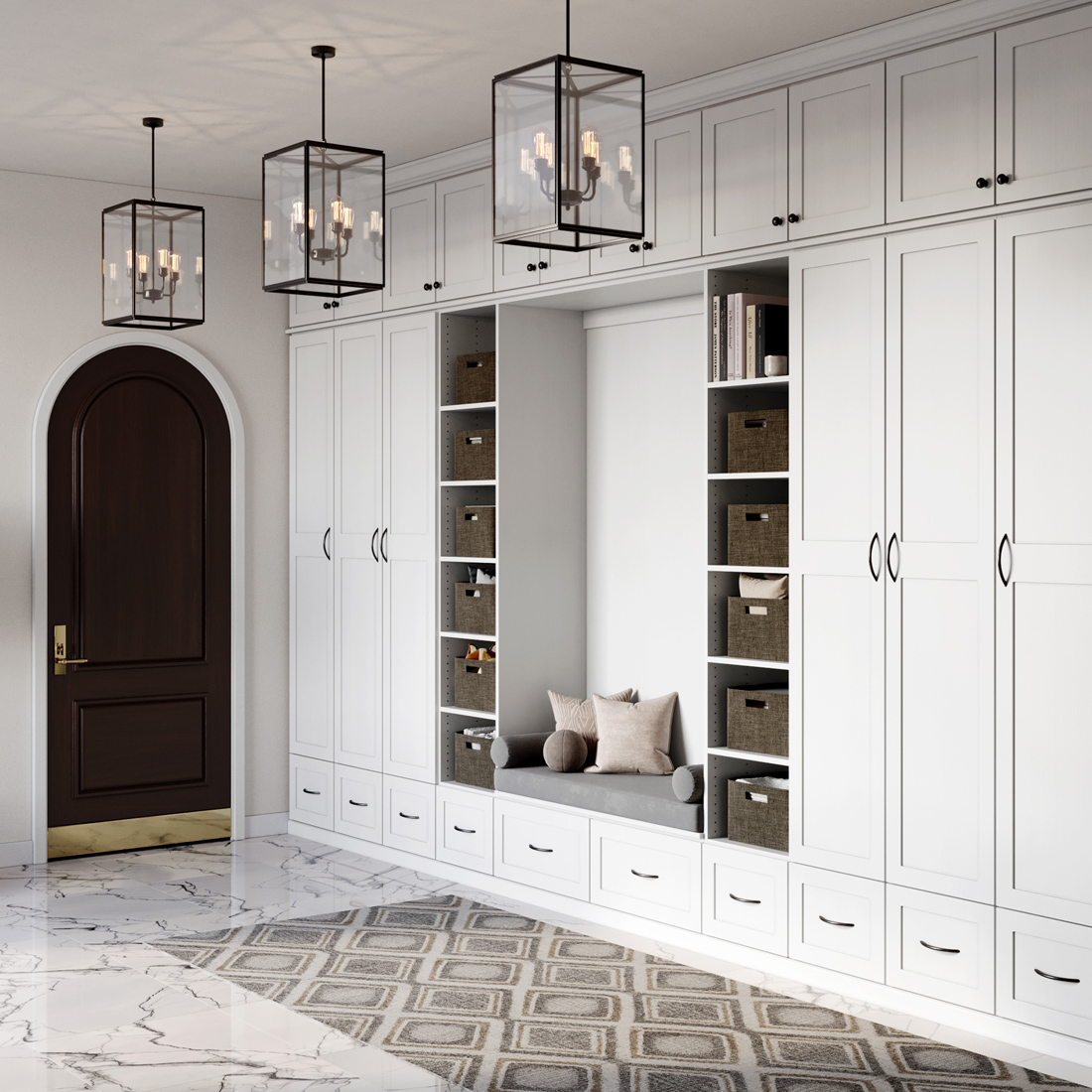
Start with a bench that has storage underneath. A built-in bench with cubbies or drawers below gives you a place to sit while putting on shoes and a hidden space for items you do not need every day, like seasonal gear or extra shoes. Above the bench, install hooks for coats. Above the hooks, add a shelf or a row of baskets for hats, gloves, and smaller accessories.
Vertical peg walls are one of the fastest-growing mudroom trends. Instead of fixed hooks, a peg wall uses adjustable pegs that can be moved up, down, or rearranged as your family's needs change. This is especially useful for families with growing kids, because you can raise the pegs as children get taller.
The back of the mudroom door is another spot most people overlook. An over-the-door organizer or a slim rack adds storage for scarves, dog leashes, umbrellas, or reusable shopping bags without taking up any wall space. According to 2024 data from the Bureau of Labor Statistics and YouGov, the average American adult loses about 17 hours per year searching for misplaced items. A mudroom that keeps everything visible and in its place cuts that wasted time significantly.
Keeping a mudroom organized comes down to two things: give every item a permanent home, and do a quick reset every evening. The mudroom is a high-traffic area, so it will get messy during the day. The goal is not perfection at all times. The goal is a system that makes cleanup fast and easy.
Label bins and baskets, especially for kids. When children can read a label or recognize a picture on their cubby, they are more likely to put things away on their own. Assign each family member a color or a specific section so there is no confusion about whose stuff goes where.
Seasonal rotation also helps. Store winter boots, heavy coats, and cold-weather accessories during summer. Swap them back in when the weather changes. This prevents overcrowding and keeps only the items you are actually using in the mudroom at any given time. A well-organized mudroom is a lot like a well-organized closet system, where everything has a place and the layout adapts to the season.
Yes, a mudroom does increase home value. According to HomeLight's 2025 renovation guide, adding a mudroom with a bench, hooks, and built-in cubbies offers approximately 50% return on investment. Realtor.com also advises that homeowners who invest in mudrooms will recoup the cost because of the feature's growing popularity among buyers.
A mudroom adds value in two ways. First, it signals to buyers that the home is well-organized and thoughtfully designed. Second, it provides a practical function that almost every family wants but many homes lack. The NKBA 2026 Kitchen Trends Report found that 94% of designers agree homeowners are adding functional spaces like mudrooms and flex-office areas to their homes. That trend shows no signs of slowing down.
The Soap and Detergent Association found that getting rid of clutter eliminates about 40% of housework in the average home. A mudroom is the first line of defense against clutter coming through the door, and buyers recognize that value immediately. Many homeowners add foyer cabinetry specifically to boost their home's function and appeal before listing.
The improvements that add the biggest value to a house are kitchen updates, bathroom remodels, and additional functional storage spaces like mudrooms and pantries. According to Remodeling Magazine's 2025 Cost vs. Value Report, minor kitchen remodels return up to 113% of their cost, making them the top-performing interior project. Bathroom remodels follow at around 74% to 80% ROI.
Mudrooms fall into the "functional upgrade" category, similar to adding a walk-in pantry or a home office. These features do not always have the highest dollar-for-dollar return, but they make a home more livable and more attractive to buyers. The NAR/NARI 2025 Remodeling Impact Report found that kitchen upgrades score a perfect 10 out of 10 for homeowner satisfaction, with 64% of homeowners reporting a greater desire to be at home after the remodel.
Built-in storage, regardless of the room, consistently ranks high with buyers. The impact on resale is strongest when the storage is custom-built, permanent, and integrated into the home's architecture rather than assembled from freestanding furniture.
Built-in mudroom storage outperforms freestanding furniture in durability, appearance, and long-term value. A freestanding hall tree or shoe rack can work in a pinch, but it moves around, collects dust behind it, and eventually looks worn. Built-in cabinetry is anchored to the walls, uses every inch of available space, and looks like a permanent part of the home.
Freestanding options make sense for renters or homeowners who are not ready to invest in a custom build. But if you own the home and plan to stay for several years, built-ins are the smarter choice. They last longer, hold more weight, and are far easier to keep clean. A built-in bench with shoe cubbies, upper shelving, and integrated hooks looks polished and professional, while a freestanding unit often looks like an afterthought.
The same principle applies to garage cabinetry and other utility storage. When the storage is built to fit the exact dimensions of the space, nothing is wasted and everything looks intentional.
A family mudroom needs to handle the volume and chaos of multiple people coming and going every day. The key is to create individual zones so each person has their own space and their own responsibility.
A four-person family needs at least four locker-style sections, each about 15 to 18 inches wide. Each section should include a hook for a coat, a shelf or cubby for a backpack or bag, and a lower cubby or drawer for shoes. If space allows, add a small basket inside each zone for personal items like keys, wallets, sunglasses, or phone chargers.
For families with young kids in the Ardmore, Alabama area, we often recommend a bench height of about 18 inches, which is comfortable for both adults and children. Below the bench, shoe cubbies keep the floor clear. Above the bench, hooks and a top shelf provide vertical storage that takes advantage of every inch of wall height.
A message center near the mudroom, like a small bulletin board or a dry-erase calendar, adds another layer of organization. Families can post schedules, permission slips, and reminders right where everyone will see them on the way out the door.
A home looks outdated when it has poor storage, dated finishes, cluttered entryways, and rooms that do not serve a clear function. Homes without a mudroom or a proper drop zone often have shoes piled by the door, coats draped over chairs, and backpacks on the floor. That kind of visual clutter makes the entire home feel older and less cared for, even if the rest of the house is in good shape.
According to the 2026 NKBA Kitchen Trends Report, 92% of designers say a home's personality shows through its design, and buyers notice functional spaces immediately. A well-built mudroom is one of the easiest ways to make a home feel current and intentional. It signals that the homeowner thought about how the house is actually used, not just how it looks.
Other features that make a home look outdated include kitchen cabinets with worn finishes, bathrooms without adequate storage, and entryways without any organizational system. Updating these areas, even modestly, can completely change how a home feels when you walk through the door.
The materials you choose for mudroom cabinetry need to handle moisture, dirt, heavy daily use, and occasional rough treatment. This is not a living room. Mudrooms take a beating from wet boots, muddy shoes, dripping umbrellas, and kids tossing backpacks.
Plywood cabinet boxes are the strongest option, lasting 25 to 30 years with proper care. Solid wood face frames and doors add durability and a premium look. For shelving that holds heavy items like boots and bags, 3/4-inch plywood is the standard because it resists sagging under weight.
Painted finishes in matte or satin sheens are the most practical for mudrooms because they hide scuffs and fingerprints better than high-gloss surfaces. Semi-gloss works well near the bench area where spills and dirt are most likely, since it wipes clean easily. A solid cabinet maintenance routine, like wiping surfaces monthly and tightening hardware seasonally, keeps everything looking sharp for years.
Storage FeatureBest ForRecommended SizeWhere to PlaceBuilt-in shoe cubbiesDaily shoes, kids' sneakers12" W x 8" H x 14" D per cubbyBelow bench or at floor levelTall boot cubbiesRain boots, winter boots12" W x 16" H x 14" DLower section, end of benchCoat hooks (adult)Everyday coats, jacketsMounted at 48" to 54" heightAbove bench or along wallCoat hooks (kids)Children's coats, backpacksMounted at 30" to 36" heightDedicated kid zoneOpen locker sectionsBackpacks, gym bags, purses15" to 18" W per personFull height, one per family memberUpper shelf with basketsHats, gloves, scarves, seasonal itemsFull width of mudroom, 12" to 14" DTop of wall, above hooksBench with storage belowSeating plus hidden shoe or gear storage18" seat height, 14" to 16" D belowCenter or along one wall
Sources: Family Handyman closet and mudroom dimension recommendations; Angi standard closet and storage sizing guide; This Old House mudroom design standards.
A mudroom needs to be at least 30 square feet to be functional for a small family. A space as narrow as 5 feet wide and 6 feet long can hold a bench, hooks, and shoe storage for two to three people. Larger families benefit from 50 to 80 square feet, which allows for individual locker sections and additional drawer storage.
Yes, you can add a mudroom to an existing home by converting an underused space like a back porch, a section of the garage, a laundry room entry, or even a wide hallway. Many homeowners create a mudroom by adding small mudroom cabinets to an existing wall near the main entry point. No structural changes are needed in most cases.
The best flooring for a mudroom is durable, water-resistant, and easy to clean. Ceramic or porcelain tile, luxury vinyl plank (LVP), and sealed concrete are the top choices. Avoid hardwood and carpet in a mudroom because they absorb moisture and stain easily from muddy shoes and wet gear.
A mudroom should have a door if it connects directly to the garage or the outside, because the door acts as a barrier against drafts, noise, and dirt. If the mudroom is an open alcove off a hallway, a door is not necessary. Some homeowners prefer a barn door or a pocket door to save space while still being able to close off the area when guests visit.
You need at least two hooks per family member in a mudroom, one for a coat and one for a bag or backpack. A family of four should have a minimum of eight hooks. Adding two to four extra hooks for guests, dog leashes, or umbrellas is a smart move that prevents overflow on busy days.
Yes, a garage entry can serve as a mudroom and is one of the most common locations for one. Adding a built-in bench, hooks, and drawer storage along the wall between the garage door and the house entry transforms an otherwise wasted hallway into a fully functional drop zone.
A great mudroom does not need to be big. It just needs to be smart. The right combination of cubbies, hooks, a bench, and assigned zones turns even a small space into the most useful room in the house. Every shoe, coat, and backpack gets a home, and every morning gets a little easier.
If you are ready to turn your entryway into an organized, built-in mudroom that your whole family will actually use, Classic Cabinetry builds every piece to fit your space and your life with over 44 years of craftsmanship behind it. Call us at (256) 423-8727 to schedule a free estimate.