.avif)


.avif)


.avif)
Soft-Close Hinges vs. Standard Hinges, Is the Upgrade Worth It?
link desc
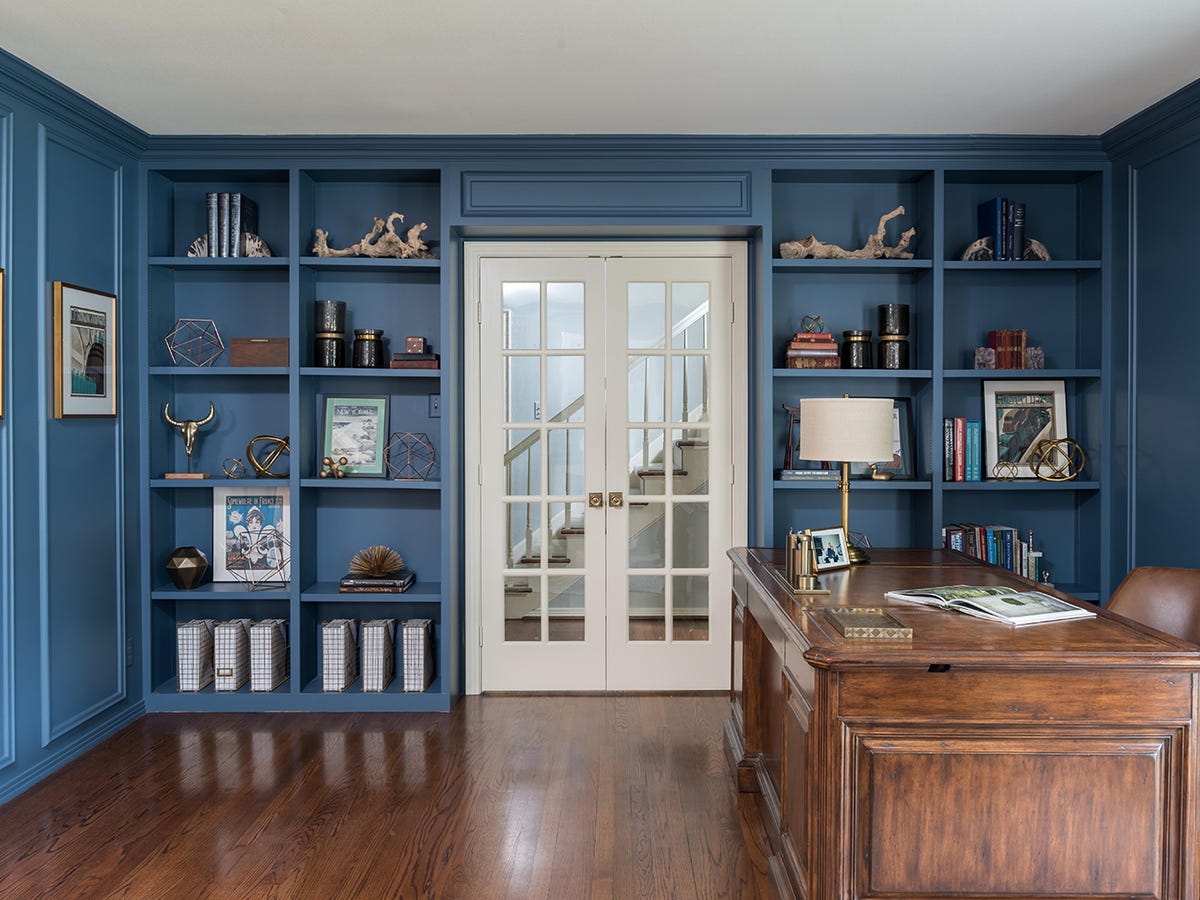


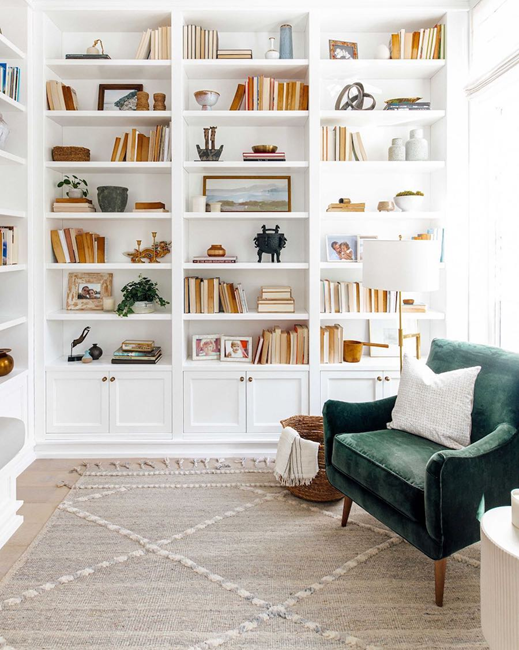
You design built-in bookshelves that fit your room by measuring the wall space first, choosing a depth and height that match both the room's proportions and the items you plan to store, selecting materials that hold up over time, and finishing the unit with trim that blends into the room's existing architecture. A 2025 Angi homeowner survey found that 72% of buyers ranked built-in storage among the top three features influencing their purchase decision. Built-in bookshelves deliver that storage while adding architectural character that freestanding furniture cannot match. This guide walks through every decision, from shelf dimensions and material selection to room placement, styling, and the mistakes that cost homeowners money.
Design built-in bookshelves that fit your room by following a measured, step-by-step planning process that accounts for wall dimensions, ceiling height, room function, and the objects the shelves will hold. Skipping the planning step is the most common reason built-ins look awkward or waste space.
The planning process follows a clear order:
Each of those steps connects to the next. The wall measurements determine the maximum depth and height. The intended contents determine shelf spacing. The material determines the finish. Built-in bookshelves designed through this sequence fit the room because every dimension serves a purpose.
The best depth for built-in bookshelves is 10 to 12 inches for standard book storage. That range accommodates most hardcover books, which measure 6 to 9 inches wide, and standard paperbacks at 5 to 8 inches, according to data published by Designing Idea. A 12-inch shelf fits the widest common book sizes with 1 to 2 inches of clearance behind the spines.
Depth beyond 12 inches creates a visual problem: books sit too far back on the shelf, leaving an empty gap at the front that looks unfinished. Depth under 10 inches limits storage to paperbacks and small objects only. Wayfair's bookcase buying guide confirms that the industry standard for bookcase depth is 12 inches, making it the single most common dimension across manufactured and custom units.
Built-in bookshelves recessed into an alcove or wall niche can use a shallower depth of 8 to 10 inches because the shelves sit inside the wall plane rather than projecting into the room. That shallower depth works well in hallways and narrow rooms where a 12-inch projection would crowd the walkway. Homes across north Alabama often feature alcoves beside fireplaces and in hallway niches where shallower built-ins maximize storage without reducing floor space.
Built-in bookshelves should be 72 to 84 inches tall for standard rooms with 8- to 9-foot ceilings, or floor to ceiling for rooms where a full library wall effect is desired. Multiple dimension guides, including Belleze and George's Furniture, confirm the 72-to-84-inch range as the standard residential bookshelf height.
Height affects both storage capacity and visual weight. A 72-inch unit (6 feet) leaves 24 inches of open wall above the shelves in a standard 8-foot room. That gap can feel intentional with crown molding capping the top, or it can feel like a missed opportunity. An 84-inch unit (7 feet) closes most of that gap and creates a stronger architectural presence. A floor-to-ceiling unit eliminates the gap entirely and delivers the maximum storage volume from a single wall.
Yes, built-in bookshelves should go floor to ceiling when the room has standard or tall ceilings and the goal is a full library wall that maximizes vertical storage. Floor-to-ceiling bookshelves create a dramatic focal point that designers call the "library wrap," one of the top interior design trends for 2025 and 2026, according to Homes & Gardens.
The floor-to-ceiling approach works best in living rooms, home offices, and dedicated reading rooms where the full-height shelving adds character without making the room feel smaller. In bedrooms and smaller spaces, mid-height built-ins (48 to 60 inches) paired with a window seat or display surface on top often work better because they keep the upper wall open and airy. Home office cabinetry frequently combines floor-to-ceiling shelving on one wall with a built-in desk below for a complete workspace.
The space between bookshelf shelves should be 9 to 12 inches for standard book storage. That spacing, confirmed across sources including Homenish, Quiet Minimal, and SpryInterior, allows most books to stand upright with 1 to 2 inches of clearance above the tallest volume on each shelf.
Varying the shelf spacing within a single unit creates both visual interest and practical flexibility. Set lower shelves at 12 to 14 inches apart for oversized art books and coffee table editions. Set middle shelves at 10 to 11 inches for standard hardcovers. Set upper shelves at 8 to 9 inches for paperbacks and small decorative objects. Adjustable shelf pins on 32-millimeter (mm) spacing allow repositioning without drilling new holes. Fixed cleats are stronger but permanent.
Shelf span matters as much as spacing. Shelves wider than 36 inches in particleboard or MDF sag under heavy book loads without a center support, according to Belleze's bookcase dimension guide. Solid hardwood or 3/4-inch plywood holds longer spans without deflection. Keeping individual shelf spans under 32 inches eliminates the sagging risk entirely regardless of material.
The best material for built-in bookshelves depends on whether the shelves will be painted or stained; MDF delivers the smoothest painted finish, plywood provides the strongest structural performance, and solid hardwood offers the richest stained appearance. Each material handles weight, moisture, and finishing differently.
Medium-density fiberboard (MDF) is the most popular choice for painted built-ins. MDF's smooth, grain-free surface accepts primer and paint without visible wood grain telegraphing through the finish. Young House Love and other DIY builders use 1/2-inch MDF panels for bookshelf construction specifically because the material creates a cleaner painted result than plywood. The downside is moisture sensitivity; MDF swells when exposed to water and loses structural integrity in humid environments.
Plywood, especially 3/4-inch birch or maple plywood, offers better strength and moisture resistance than MDF. Plywood's layered construction resists warping and supports heavier loads across longer spans. Marine-grade plywood adds waterproof adhesive between veneers for rooms with higher humidity. The tradeoff is cost and surface quality; plywood's edge grain requires edge banding or face frames to look finished.
Solid hardwood (oak, maple, walnut, cherry) produces the most durable and visually striking built-ins when stained rather than painted. Hardwood shelves resist denting, hold heavy loads, and last decades. According to HomeAdvisor, built-in bookshelves cost an average of $3,080, but projects using solid hardwood can run $5,000 to $20,000 depending on size and complexity. Custom bookshelves built from solid hardwood carry a premium because the material and craftsmanship produce a result that MDF and plywood cannot replicate.
MaterialBest ForShelf Span LimitMoisture ResistanceFinishMDF (1/2" or 3/4")Painted built-ins28-32" without supportLowSmooth, grain-freeHardwood Plywood (3/4")Strength + paint or veneer36" without supportModerateRequires edge bandingSolid HardwoodStained built-ins36-42" without supportHighRich natural grainStock Upper CabinetsBudget base unitsPre-built to 30-36"Varies by brandUnfinished or pre-primed
Sources: HomeAdvisor (cost data), Belleze (span limits), Young House Love (MDF usage), Thrifty Decor Chick (stock cabinet dimensions: 12" deep upper cabinets)
Arrange bookshelves in a room by placing them where they solve a storage problem and create a focal point at the same time. The best placement turns dead wall space into useful, attractive storage that anchors the room's layout.
Living rooms benefit most from built-in bookshelves flanking a fireplace, framing a window, or covering an entire accent wall. The flanking arrangement creates symmetry that draws the eye to the center feature. A full accent wall of shelving, the "library wrap" trending in 2026 design circles, transforms a plain room into a space with immediate character. Material selection should match the room's existing trim and millwork so the built-ins look original to the house.
Home offices perform better with built-in bookshelves behind or beside the desk, keeping reference materials and supplies within arm's reach. Hallways and landings use shallow built-ins (8-10 inches deep) that add storage without narrowing the walkway. Bedrooms work best with mid-height units topped with a reading lamp or display surface rather than floor-to-ceiling shelving, which can overwhelm a sleeping space.
Build shelves around a fireplace by constructing matching bookcase units on each side of the firebox, extending from the floor (or a base cabinet) to the ceiling or mantel height, with the shelf depth aligned to the depth of the fireplace surround. This flanking arrangement is the most popular built-in bookshelf configuration in American homes.
The key measurement is the distance between the edge of the fireplace surround and the side wall. That distance determines the width of each bookcase unit. Matching the shelf depth to the depth of the mantel surround (typically 5 to 8 inches) creates a flush front plane that looks intentional. Deeper shelves that project past the mantel look like an afterthought. Crown molding connecting the two bookcase units across the top of the fireplace ties the entire wall into a single architectural feature. Custom closets follow the same principle of measuring the available space first and building to fill it precisely.
Built-in bookshelves outperform freestanding bookcases in fit, stability, storage density, and long-term value, while freestanding bookcases offer portability and lower upfront cost. The choice depends on whether you plan to stay in the home or move within a few years.
Built-ins attach directly to wall studs, which eliminates the tipping hazard that freestanding units pose, especially in homes with children. Built-ins fill the exact wall dimensions with zero gaps on either side, which freestanding units cannot do because they come in fixed widths (24, 30, 36, or 48 inches). That precision fit is what makes built-ins look like part of the house rather than furniture pushed against a wall.
Freestanding bookcases move with you. A $200 IKEA bookcase travels to the next apartment. A $5,000 custom built-in stays with the house and becomes part of the property's value. Realtor.com classifies built-ins as "semi-permanent upgrades" that appraisers factor into property valuations. Freestanding furniture carries no appraisal weight regardless of its quality or cost. For homeowners committed to a property, built-in shelving delivers the stronger return.
Yes, built-in bookshelves add home value when they are made with quality materials, installed with professional craftsmanship, and placed in rooms where buyers expect finished storage. According to Remodeling Magazine's 2024 Cost vs. Value report, minor interior remodeling projects that improve function and layout yield 50% to 80% ROI depending on region and timing.
A certified residential appraiser quoted by HomeLight confirmed that built-in bookshelves increase a property's value when constructed from hardwood rather than MDF and installed with expert craftsmanship. The Angi Home Report found that homes with custom built-in storage sell 20% faster and command 10% to 15% higher prices than comparable homes without built-ins. That speed and price premium reflect how strongly buyers respond to organized, permanent storage.
The value impact depends on placement. Built-ins in living rooms, home offices, and family rooms generate the strongest buyer response. Built-ins in bedrooms or highly personal spaces can narrow appeal if the design limits how future owners use the room. Home value increases most when built-ins solve a visible storage problem and look like they belong in the house.
The same pattern holds across all types of custom cabinetry. Resale impact improves whenever a permanent storage solution replaces clutter and makes a room feel more finished to potential buyers.
The latest bookshelf trends include floor-to-ceiling "library wrap" walls, the "bookshelf wealth" aesthetic that mixes books with curated objects, integrated LED accent lighting, bold painted interiors (deep greens, navy, cobalt), and modular adjustable track shelving. Homes & Gardens identified the library wrap as one of the top interior design trends for 2026, while Tribesigns reported that wooden bookshelves peaked at a Google Trends search interest score of 78 in August 2025.
The "bookshelf wealth" trend, driven by social media, treats shelves as a curated display of personality rather than pure book storage. Designers recommend mixing books stacked both vertically and horizontally, adding ceramics, framed photographs, small plants, and sculptural objects to create visual variety. The goal is shelves that look collected over time, not arranged in a single afternoon.
Painted bookshelf interiors have replaced the plain white back panel. A deep green or navy blue back wall behind light-colored shelves creates contrast that highlights every object on the shelf. Integrated LED strip lighting on the underside of each shelf illuminates the contents and adds warmth to the room without visible fixtures. Pantry cabinetry uses the same integrated lighting approach to illuminate contents inside closed cabinets.
Style a bookshelf like a designer by grouping items in clusters of three, varying the height and texture of objects on each shelf, and leaving 20% to 30% of the shelf space empty to prevent visual clutter. Professional stylists call that empty space "negative space," and it is what separates a curated display from an overcrowded shelf.
Start with the largest items first. Place tall books, vases, or framed prints at the ends of each shelf to create visual anchors. Fill the center with smaller objects like candles, small plants, or stacked paperbacks. Alternate the orientation of books between vertical and horizontal to break up repetitive lines. A horizontal stack of two or three books topped with a small object creates a pedestal effect that adds depth.
Color coordination ties the entire unit together. Group books by spine color in loose clusters rather than strict rainbow order. Neutral tones (white, cream, tan, gray) calm the overall display, while a few bold-colored objects per shelf add energy. A mudroom cabinetry project applies the same organizing logic: group similar items, vary heights, and leave breathing room.
Decorate a built-in bookshelf by treating each shelf as a separate composition and mixing functional items (books, baskets, bins) with decorative objects (art, plants, photos) so the unit serves both storage and display purposes.
Designers recommend this mix of items across a full built-in unit:
Avoid filling every inch of shelf space. The negative space between objects gives the eye a place to rest and makes each item stand out. Overloaded shelves lose the curated, designer feel that makes built-ins look expensive.
The common bookshelf mistakes are choosing the wrong depth for the room, skipping the trim and molding that make shelves look built-in, using materials that sag under heavy loads, and overcrowding every shelf with objects. Each mistake reduces both the function and the visual impact of the investment.
Wrong depth is the most frequent error. A 14-inch-deep shelf in a narrow hallway makes the passage feel cramped. A 10-inch shelf in a living room leaves oversized art books hanging over the front edge. Measure what the shelves will hold before committing to a depth. The standard 10-to-12-inch range works for 90% of residential book collections.
Skipping crown molding, baseboard, and face frames is the mistake that separates a "shelf on a wall" from a true built-in. These trim elements close the gaps between the shelf unit and the ceiling, floor, and walls. Caulking those seams and painting the trim to match the room's existing woodwork makes the shelves look original to the house. Without trim, even expensive shelving looks like an add-on. Proper kitchen cabinets follow the same trim logic, and the principle transfers directly to bookshelf projects.
Material failure shows up as sagging. A 36-inch MDF shelf loaded with hardcover books bows within months because MDF's internal fiber structure compresses under sustained weight. Switching to 3/4-inch plywood or adding a center support eliminates the sag. HomeAdvisor notes that labor accounts for 70% to 80% of built-in bookshelf project budgets, so investing in the right material during construction prevents expensive repairs later.
Make a cheap bookcase look expensive by adding crown molding to the top, baseboard to the bottom, face frames to the front edges, a painted or wallpapered back panel, and integrated lighting. These finishing details cost far less than replacing the entire unit and produce a dramatic visual upgrade.
Crown molding across the top closes the gap between the bookcase and the ceiling, creating the illusion that the unit was built into the room. A 3- to 5-inch crown molding costs a few dollars per linear foot and installs with a nail gun and wood glue. Baseboard along the bottom edge matches the room's existing base trim, reinforcing the built-in appearance.
A painted back panel transforms the cheapest bookcase. Remove the thin hardboard backer, replace it with 1/4-inch MDF, prime it, and paint it a contrasting color (deep green, navy, charcoal, or even a bold wallpaper). The colored backdrop highlights everything on the shelf and makes the entire unit feel intentional. LED puck lights or adhesive LED strip lights mounted under each shelf add warmth and drama for under $30 per shelf. These are the same techniques we apply to every custom project, because the finishing details determine whether a bookshelf looks like furniture or like architecture.
Make a bookcase look nicer by editing the contents down to 70-80% of the shelf capacity, grouping objects by color and height, and adding at least one non-book item per shelf such as a plant, photo frame, or decorative object. Removing dust jackets from hardcovers creates a uniform, tonal look that many designers prefer over the visual noise of colorful dust jackets.
The standard bookshelf width is 31 to 32 inches for freestanding units, with sizes ranging from 24 inches for narrow models to 48 inches for wide units, according to multiple dimension guides including Homenish and Designing Idea. Built-in bookshelves are custom-cut to the exact wall width, so they are not limited to standard sizes.
Yes, you can add built-in bookshelves to an existing wall without major construction by building a cabinet frame that attaches directly to wall studs. The frame sits against the wall, and face frames, crown molding, and baseboard close the seams to create a flush, built-in appearance. No wall demolition is required for surface-mounted built-ins.
Built-in bookshelves made from solid hardwood or 3/4-inch plywood last 30 to 50 years or more with minimal maintenance. MDF built-ins last 15 to 25 years in dry, climate-controlled rooms. Longevity depends on material quality, finish durability, and whether the installation was properly anchored to wall studs.
Yes, built-in bookshelves work in small rooms when designed with a shallow depth (8 to 10 inches) and positioned to use vertical space rather than floor space. A narrow floor-to-ceiling unit beside a doorway or window adds significant storage capacity without reducing the room's usable area. The key is keeping the depth proportional to the room width.
Built-in bookshelves cost $1,399 to $4,888 on average, according to HomeAdvisor. Fully custom built-ins run $400 to $1,200 per linear foot, while prefab built-in units cost $150 to $300 per linear foot installed. Labor accounts for 70% to 80% of the total project budget for professionally installed units.
Built-in bookshelves that fit your room start with accurate measurements, follow standard dimensions that the industry has tested for decades, and finish with trim details that make the shelves look like they were always part of the house. The right depth (10-12 inches), the right spacing (9-12 inches between shelves), and the right material for your budget and style produce a result that freestanding furniture cannot replicate. Data from the 2025 Angi Home Report shows that homes with built-in storage sell faster and for higher prices, which means this investment pays for itself over time.
At Classic Cabinetry, we have been designing and building custom built-in bookshelves for homeowners across north Alabama and middle Tennessee for more than 44 years. If you are ready to turn a blank wall into the centerpiece of your room, call us at (256) 423-8727 for a free estimate.