.avif)


.avif)


.avif)
Best Custom Closet Accessories You Did Not Know You Needed
link desc


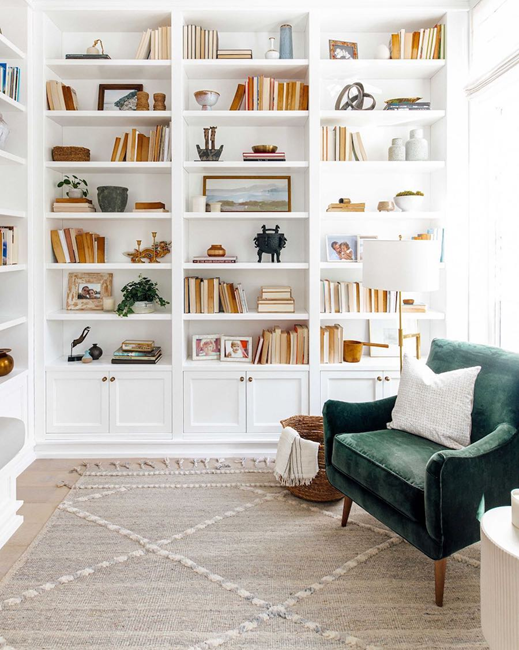
Hiring a pro is worth it for built-in bookshelves if you want a flawless, permanent focal point, but DIY makes sense if you have basic skills, proper tools, and a tight budget. DIY materials and hacks run $500 to $2,000 for lumber, trim, and paint or prefab units like the IKEA Billy bookcase. Professional installation starts at $1,500 to $6,000 for a standard single wall and scales to $7,000 to $15,000+ for massive, floor-to-ceiling hardwood custom carpentry, according to data from HomeAdvisor and HomeGuide. The right choice depends on the complexity of the design, the condition of your walls, the tools you already own, and how visible the finished product will be in your home. This blog walks through the full cost breakdown, what separates a DIY build from professional work, and how to decide which path fits your project.
DIY built-in bookshelves are units a homeowner designs, builds, and installs without a professional carpenter, while custom built-ins are constructed by a skilled craftsman to fit a specific wall, room, and purpose from the ground up. The difference runs deeper than who holds the saw. DIY built-ins typically start with prefabricated bookcases or store-bought lumber assembled using basic joinery, pocket screws, and brad nails. Custom built-in bookshelves start with precise field measurements of the room, account for walls that are not perfectly plumb, and use construction techniques like dado joints, face frames, and scribed edges that produce a permanent, furniture-grade result.
Custom built-ins become part of the home's architecture. They sit flush against walls, wrap around corners, and integrate with crown molding and baseboards so the shelving looks like it has always been part of the room. DIY built-ins, by contrast, are often freestanding units pushed against a wall and trimmed out to create the appearance of a built-in look. The gap between those two outcomes is what shapes the entire cost, quality, and resale conversation that follows.
Built-in bookshelves cost between $150 and $1,200 per linear foot depending on the material, the design complexity, and whether you choose a DIY approach, a prefab hack, or fully custom construction. According to HomeAdvisor, the national average for built-in bookshelves is $3,069, with most homeowners paying between $1,399 and $4,874 total. That range covers everything from a simple alcove shelf made of MDF to a wall-length hardwood library with integrated lighting, cabinet doors, and decorative trim. The table below breaks down four common approaches side by side so you can compare the real cost, timeline, and quality tradeoffs at a glance.
ApproachMaterial CostInstalled Cost (8 ft. Wall)TimelineSkill LevelFinish QualityDIY from Lumber$500 - $1,500$500 - $2,000 (no labor)3 - 6 weekendsIntermediate to AdvancedVaries widelyIKEA Hack (Billy)$300 - $800$400 - $1,200 (no labor)1 - 2 weekendsBeginner to IntermediateModerateSemi-Custom (Premade)Included in install$1,200 - $3,5001 - 2 weeksProfessionalGoodFully Custom (Hardwood)Included in install$3,500 - $10,000+2 - 4 weeksProfessionalExcellent
The cost gap between DIY and professional becomes clearer when you look at where the money actually goes. According to data from Angi, professional carpenter hourly rates range from $70 to $150, with rates in high-demand regions exceeding $200 per hour. Labor accounts for 70-80% of any professional built-in bookshelf project, according to AskDoss, which is why the jump from a $500 DIY material bill to a $4,000 professional quote feels so steep. What that labor pays for is precision, speed, and a finish that holds up for decades.
Every add-on pushes the total higher. Drawers add $100 to $250 each, according to HomeGuide. Wood cabinet doors add $100 to $200 per set. Glass doors cost up to $400 per set. Crown molding runs $7 to $16 per linear foot. LED strip lighting runs $30 to $50 per shelf in materials, plus $200 to $400 for an electrician if no outlet exists nearby. Understanding these line items helps you compare quotes accurately and decide which features your project truly needs.
Yes, building bookshelves yourself is cheaper in material costs alone, but the total cost of a DIY project often runs higher than homeowners expect once tools, wasted lumber, and time are factored in. A 4x8 sheet of 3/4-inch birch plywood costs $50-$70. An IKEA Billy bookcase costs about $80. Those material numbers look appealing until you add the tools you do not already own. A miter saw runs $200-$400. A brad nailer costs $80-$150. A router, clamps, a level, sandpaper, primer, and paint add another $100-$300. If you are buying tools specifically for this project, the savings shrink fast.
Material waste is another hidden cost that DIYers undercount. According to the Buildculate construction waste guide, DIY and small room remodel projects produce 15-20% material waste, compared to 5-8% for professional work. First-time builders miscut boards, split trim pieces, and buy lumber that warps before installation. A survey cited by RubyHome found that 4 out of 5 people attempting DIY projects make mistakes, and 45% report completely botching a project. A separate Hippo Insurance survey found that 38% of homeowners who made a DIY mistake ended up paying $500 or more in repair costs. Those repair costs eat directly into whatever material savings the DIY approach offered in the first place.
You should hire a pro for built-in bookshelves when the project involves uneven walls, complex features like cabinet doors and integrated lighting, or a room where the built-ins will serve as a permanent focal point. Professional carpenters bring three advantages that DIYers cannot replicate on a first or second project: the ability to scribe against uneven surfaces, access to specialized tools, and the speed to complete the work in days rather than weeks. Each of these advantages matters more as the complexity and visibility of the project increases.
Scribing is the process of tracing the irregular surface of a wall, floor, or ceiling onto a piece of wood so the wood can be cut to match the surface exactly, and it is the single biggest skill gap between DIY and professional built-in construction. According to the Journal of Light Construction, scribing is something professional finish carpenters do multiple times per day. The technique uses a compass or dividers set to the width of the widest gap between the cabinet and the wall. The carpenter runs the compass along the wall while it transfers the wall's contour onto the wood. The wood is then trimmed along that scribe line using a jigsaw, belt sander, or hand plane until the piece fits flush.
Walls in most homes are not perfectly flat or plumb. Floors slope. Ceilings sag toward the center of the room. These imperfections are invisible until you try to install a square, rigid cabinet against them. A gap of even 1/4 inch between a shelf unit and the wall is immediately noticeable, and caulk only hides so much. Professional carpenters scribe every contact point so the finished shelving fits with near-zero gaps, which is what makes custom built-in bookshelves look like they were always part of the house. Without scribing, built-ins look installed rather than integrated, and that difference is exactly what buyers, guests, and appraisers notice.
Complex features like integrated lighting, glass-panel cabinet doors, hidden compartments, crown molding returns, and decorative arches require specialized tools and techniques that most homeowners do not have access to. A professional cabinet maker handles integrated LED wiring, concealed hinge installation, and crown molding miters as routine parts of the build sequence. A DIYer attempting a crown molding return for the first time can spend an entire afternoon on a single corner joint, and the result often shows the struggle.
Handling complex features also means managing the order of operations. A professional installs the face frame before the shelves, scribes before fastening, and finishes the interior before hanging doors, all in a tested sequence that avoids rework. DIYers frequently discover mid-project that they painted before scribing, or fastened before checking level, which forces them to disassemble and redo sections. The learning curve is real, and it costs time, materials, and finish quality. Knowing the difference between a stock vs. custom cabinet helps set realistic expectations for what each approach can actually deliver.
A professional carpenter completes a standard 8-foot built-in bookshelf unit in 3 to 5 days, while the same project takes a homeowner 20 to 40+ hours spread across multiple weekends. According to data from AskDoss, a single floor-to-ceiling unit involves measuring, cutting, assembling, scribing, fastening, caulking, priming, painting, and installing trim, all in a focused sequence. A professional who builds floor-to-ceiling bookshelves regularly moves through each step without hesitation because every problem the room presents is one they have solved hundreds of times before.
DIY timelines stretch for two reasons. First, each step takes longer because the homeowner is learning while building. Measuring twice and cutting once is good advice, but measuring three times and still cutting slightly off is the reality for most first-time builders. Second, DIY projects happen in fragments, a few hours on Saturday, another session the following weekend, and context switching adds rework. Paint and primer need drying time between coats, which alone adds days. The extended timeline also means the room is unusable for weeks, with tools, sawdust, and half-finished shelves occupying the space the entire time.
DIY makes sense for built-in bookshelves when the space is simple, the design is straightforward, and you already own the right tools and know how to use them safely. Not every built-in project requires a professional. A basic open shelving unit in a secondary room, built with careful measurements and decent materials, can produce a result that serves its purpose well and saves a significant amount of money.
DIY is a strong choice in these situations:
Safety is a real consideration that DIY enthusiasts sometimes underweight. According to data reported by the National Electronic Injury Surveillance System, U.S. emergency rooms see over 400,000 visits annually caused by power tools. Table saws, circular saws, nail guns, and utility knives account for 120,000 of those visits each year, according to Family Handyman. If you have never used a miter saw or a brad nailer, a built-in bookshelf project is not the safest place to learn. The tools required for this kind of work demand respect and practice before they produce reliable results.
The tools you need to build a built-in bookshelf include a miter saw, a circular saw, a brad nailer, a power drill, a level, clamps, a tape measure, a router, and a sander at minimum. This is not a hammer-and-screwdriver project. Each tool serves a specific function in the construction sequence, and skipping any of them produces visible quality problems in the finished product.
If you already own most of these tools, the DIY path saves real money. If you would need to buy the full set, the tool investment alone adds $500 to $1,000 to your total project cost before you cut a single board. That tool cost narrows the gap between DIY and hiring a carpenter considerably, especially for a one-time project.
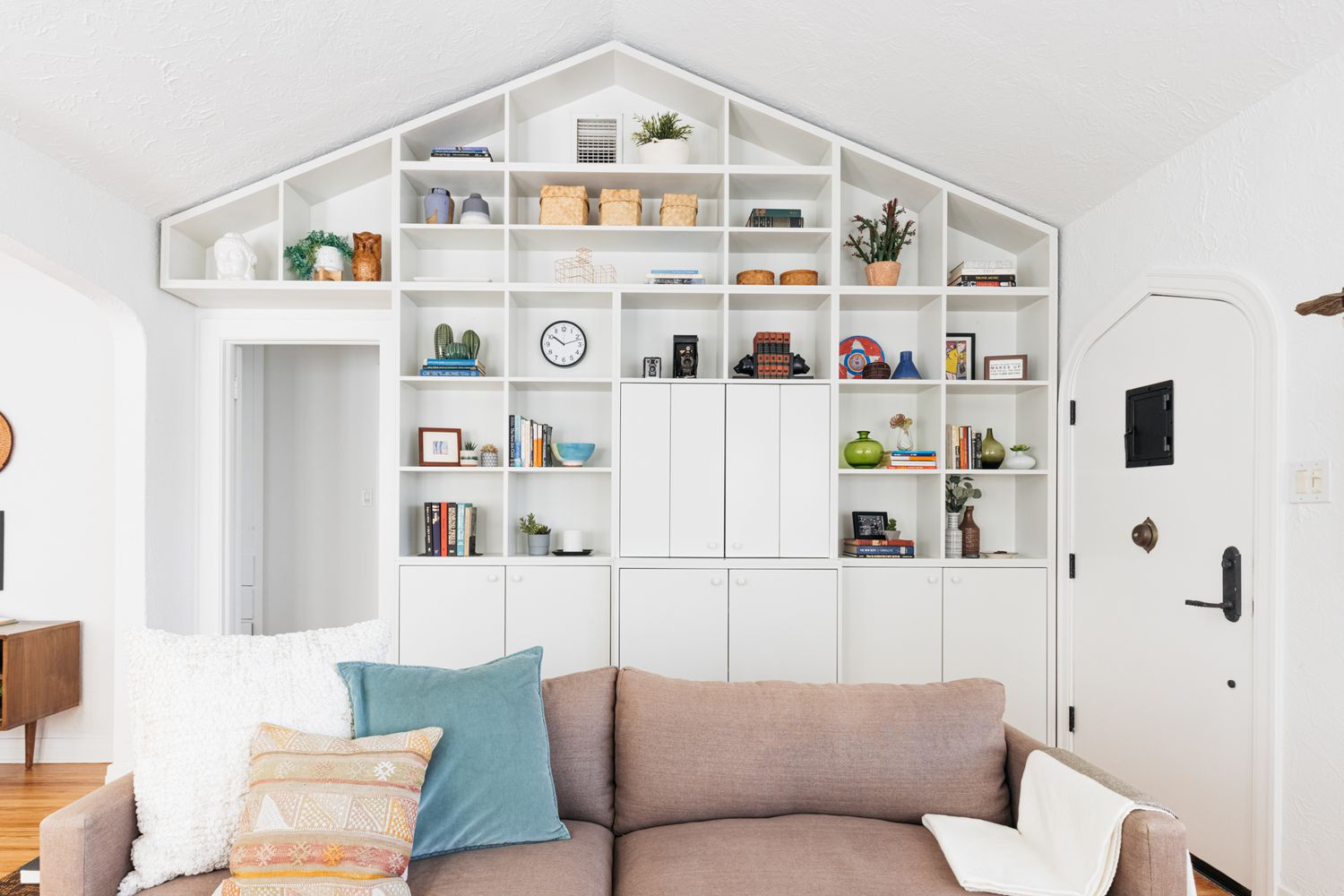
Yes, you can use IKEA bookcases as built-ins by anchoring them to the wall, adding a face frame of trim boards, and finishing with crown molding and baseboards to create a built-in appearance. The IKEA Billy bookcase hack is one of the most popular DIY built-in projects on the internet. IKEA has sold over 140 million Billy bookcase units worldwide since 1979, and the Billy's simple box shape makes it a natural starting point for a budget-friendly faux built-in.
The process involves purchasing multiple Billy bookcases, securing them to wall studs, covering the exposed sides with thin plywood or lauan panels, adding 1x2 or 1x3 poplar trim boards between and around the units to create a face frame, and finishing the top with crown molding and the bottom with baseboards. The entire assembly is then primed with a shellac-based primer, which is required for laminate surfaces, and painted to match the room's trim. The result can look surprisingly close to custom work when done carefully, and the total material cost typically lands between $300 and $800 for a standard wall.
The limitations of the IKEA hack are structural. Billy bookcases are made from particle board with a melamine or paper foil coating. Particle board is weaker than plywood or solid wood, and it sags under sustained weight over longer shelf spans. A standard Billy shelf spans approximately 30 inches, which keeps sag manageable in the short term, but loading those shelves with heavy hardcover books over several years will produce a visible bow. The depth of a standard Billy is 11 inches, which cannot be changed without building a custom base, and 11 inches is shallow for larger displayed items or record albums.
The IKEA hack also cannot produce flush integration with uneven walls. The boxes are rigid rectangles. If the wall is not flat, gaps will appear, and trim can only cover so much. This is why the IKEA hack works best for bedrooms, playrooms, home offices, and secondary living spaces where the expectations for finish quality are moderate. For a living room focal wall or a space where the built-ins need to look like permanent architecture, the hack's limitations become obvious.
The best material for built-in bookshelves is 3/4-inch cabinet-grade plywood for most residential projects, because it offers the strongest combination of load capacity, warp resistance, and cost efficiency. The material choice affects how long shelves stay straight under weight, how well the surface takes paint or stain, and how the finished product ages over daily use. Choosing the right material is one of the most important decisions in any cabinetry project, and the wrong choice shows up years after installation when shelves sag or finishes peel.
Medium-density fiberboard (MDF) is the least expensive option at roughly $30-$45 per 4x8 sheet. MDF machines smoothly, takes paint beautifully, and produces clean edges without grain telegraphing through the finish. The drawback is structural. MDF sags more than plywood under sustained loads, especially on shelves spanning more than 30 inches. MDF also absorbs moisture and swells at cut edges, which makes it a poor choice for rooms with fluctuating humidity, a real concern for homeowners across North Alabama where seasonal humidity swings are significant.
Cabinet-grade plywood, typically birch or maple veneer over a multi-ply core, offers the best balance of strength, workability, and cost. A 3/4-inch plywood shelf spanning 36 inches can support 50+ pounds without visible deflection over time. Plywood resists warping better than MDF and solid wood because its cross-laminated layers counteract wood movement. The cost of cabinet-grade plywood runs roughly $50-$90 per 4x8 sheet, making it more expensive than MDF but significantly cheaper than solid hardwood.
Solid hardwood, including oak, maple, cherry, and walnut, is the premium choice for built-in bookshelves in high-visibility rooms. Hardwood produces a rich, natural grain pattern that paint-grade materials cannot replicate. Solid hardwood shelves can be refinished multiple times over their lifespan, and their strength exceeds both plywood and MDF at equivalent thicknesses. The cost of solid hardwood boards ranges from $4 to $12+ per board foot depending on the species, making it 3 to 5 times more expensive than plywood for the same shelf area.
Built-in bookshelves can hold 20 to 50+ pounds per linear foot of shelf depending on the material, the shelf thickness, the unsupported span length, and how the shelf is supported. Shelf sag is a function of material stiffness, span length, and load. A 36-inch span is the practical maximum for a 3/4-inch shelf of any material before deflection becomes visible under a full load of books.
A standard hardcover book weighs about 1 to 2 pounds. A 36-inch shelf fully loaded with hardcovers holds roughly 25 to 40 pounds. At that load, a 3/4-inch MDF shelf will deflect visibly within 1 to 2 years. A 3/4-inch plywood shelf shows slight deflection over 3 to 5 years. A 3/4-inch solid hardwood shelf remains straight for decades. Adding a 1x2 hardwood strip, called a front-edge stiffener, to the front edge of a plywood shelf effectively doubles its resistance to sag and eliminates visible deflection. Professional carpenters routinely add front-edge stiffeners because the technique costs very little and dramatically extends shelf life. This shelf-engineering detail is one of many small decisions that professionals handle automatically and DIYers often overlook until the damage is already visible.
Yes, built-in shelves are worth it because they maximize wall space, add architectural character, and increase a home's resale value when constructed with quality materials and professional craftsmanship. Built-in shelving does what freestanding furniture cannot. It transforms dead wall space into functional storage while becoming a permanent part of the room's architecture. According to a 2022 Houzz survey, 62% of homeowners consider built-in shelving or cabinetry to significantly increase the resale value of a home.
The financial data supports that perception. According to Remodeling Magazine's 2024 Cost vs. Value report, minor interior remodeling projects that improve function and layout yield between 50% and 80% return on investment. The NAR/NARI 2025 Remodeling Impact Report found that closet renovations recover 83% of their cost at resale, and Americans spent an estimated $603 billion on home remodeling in 2024. Built-in bookshelves fall into the same value category as closet renovations and custom cabinets that increase home value, provided the construction quality is high and the design appeals broadly to future buyers.
The "worth it" calculation shifts depending on construction quality. Well-built custom bookshelves with solid materials, clean joinery, and a professional finish add value. Poorly executed DIY bookshelves with visible gaps, sagging shelves, and uneven paint can reduce a home's appeal. A certified residential appraiser quoted by HomeLight noted that built-in bookshelves made with hardwood rather than MDF contribute more reliably to appraised value. The choice between DIY and custom is ultimately a choice about what kind of value you want the built-ins to deliver. Resale impact depends almost entirely on the quality of the finished product, not whether the homeowner or a pro did the work.
You decide between DIY and hiring a professional by honestly evaluating four factors: the complexity of the design, the condition of the walls, your existing tool set, and how much the finished result needs to impress. A basic open shelving unit in a playroom with flat walls is a very different project than floor-to-ceiling hardwood bookshelves flanking a living room fireplace. Both are called "built-ins," but they demand entirely different skill levels, tools, and timelines.
The Google AI Overview for this topic puts it simply: hiring a pro is worth it for a flawless, permanent focal point; DIY makes sense with basic skills, proper tools, and a tight budget. That is the right framework. If perfection is the goal and the built-ins will be the first thing people see when they walk into the room, a professional carpenter delivers a result that a first-time DIYer cannot match. If function is the primary goal and cosmetic perfection is secondary, a well-planned DIY project or an IKEA hack can produce shelving that serves the space well at a fraction of the professional cost.
A hybrid approach also works for some homeowners. You handle the demolition, painting, and shelf styling yourself, then bring in a professional for the measuring, cutting, assembly, and installation. This hybrid splits the labor cost while keeping the precision work in experienced hands. However you approach it, the goal is the same: built-in bookshelves that look intentional, hold up under daily use, and add real value to the home for years to come.
No, built-in bookshelves are not outdated. Built-ins have been a sought-after architectural feature since the American Craftsman style became popular over a century ago, and they remain one of the most requested interior upgrades in 2025 and 2026. Design trends shift between painted and stained finishes, between open shelving and closed cabinets, and between modern flat-panel doors and traditional shaker styles, but the built-in bookshelf itself has never gone out of style. Well-designed built-in shelving adds character and function that freestanding furniture cannot match, which is why real estate professionals consistently list custom storage as a feature that buyers actively look for.
The disadvantages of built-ins are permanence, cost, and reduced flexibility in room layout. Built-in bookshelves cannot be moved to a different wall or taken with you when you sell. They are a permanent modification, and removing them can leave damaged drywall, paint mismatch, exposed flooring gaps, and trim repairs behind. The cost of quality built-ins is substantially higher than freestanding bookcases, with professional installation averaging $3,069 according to HomeAdvisor. If the built-ins are poorly constructed, they can decrease rather than increase a home's value, making construction quality a non-negotiable factor in the decision.
You make built-in bookshelves look better by painting the back wall of the shelving a contrasting color, adding integrated LED lighting to highlight displayed items, mixing books with decorative objects to create visual variety, and grouping items in odd numbers for a balanced, curated appearance. Painting the shelving the same color as the room's trim creates a cohesive look that blends the built-in with the room's architecture. Swapping out standard shelf pins for adjustable supports lets you customize shelf spacing for different item heights, which eliminates the awkward gaps that make built-ins look cluttered rather than styled.
Yes, built-in bookshelves increase home value when they are constructed with quality materials and professional craftsmanship. According to Remodeling Magazine's 2024 Cost vs. Value report, minor interior projects that improve function and layout recover 50-80% of their cost at resale. A certified residential appraiser quoted by HomeLight confirmed that built-in bookshelves made with hardwood and expert joinery contribute more reliably to appraised value than those built with particle board or MDF. Quality is the variable that separates built-ins that add value from built-ins that hurt a listing's appeal.
You should hire a finish carpenter, a cabinet maker, or a custom cabinetry company to make built-in bookshelves. A finish carpenter specializes in trim work, joinery, and the precise fitting required for built-in installations. A cabinet maker builds custom units in a shop and installs them on site. A custom cabinetry company offers the full process from design consultation through material selection, fabrication, and professional installation. For complex projects involving design decisions, material guidance, and integration with the room's existing architecture, a full-service custom cabinetry company provides the most comprehensive solution. Carpenter hourly rates range from $40 to $100 per hour, with higher rates in metropolitan areas, according to HomeGuide.
The choice between DIY built-in bookshelves and hiring a professional comes down to what the project demands and what result you need. A basic IKEA hack in a playroom is a rewarding weekend project that saves real money. Floor-to-ceiling hardwood shelving in a living room is a job for a skilled carpenter who can scribe, join, and finish at a level that adds permanent value. The cost gap between the two approaches is real, but so is the quality gap, and quality is what determines whether built-ins become a home's best feature or its biggest regret.
If you are ready to see what custom built-in bookshelves can look like in your space, Classic Cabinetry offers free design consultations and brings over 44 years of craftsmanship to every project. Call us at (256) 423-8727 to start the conversation.